
FreightWaves CEO Predicts 50% Tariff Impact on Cargo Market in 2025
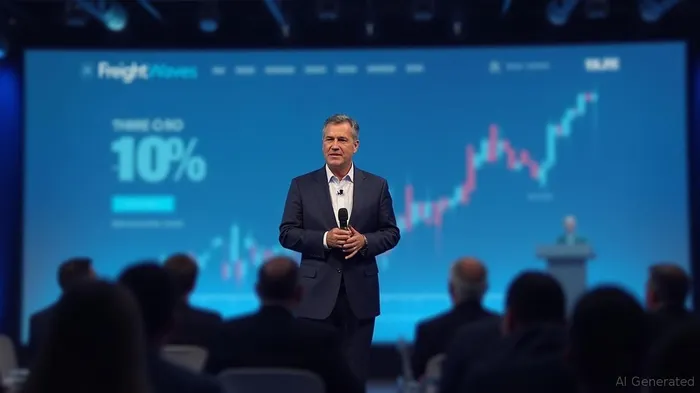
Craig Fuller, a prominent figure in the freight industry, has expressed optimism about the cargo market in the second half of 2025. He attributes this optimism to the current state of the supply chain, which he describes as being in an unusually uncertain period. Fuller, the founder and CEO of FreightWaves, highlighted the unpredictable nature of tariff policies, particularly those related to reshaping global supply chains. He noted that while it is difficult to predict the exact outcomes of these policies, there is a possibility of reaching some form of agreement, albeit with significant uncertainty.
Fuller's insights were shared during an appearance on the weekly podcast "Street Signals," produced by State StreetSTT-- Markets. The podcast, hosted by TimTIMB-- GraffGRAF--, the head of European macro strategy, features discussions on market and macroeconomic trends with strategists, traders, and industry leaders. Graff emphasized the challenges of predicting the economic impact of widespread tariffs on U.S. imports, especially given the rapidly changing news landscape. He pointed out that just hours before the recording, President Donald Trump announced a 50% tariff on EU goods starting June 1, only to postpone it to July 9. Graff noted the difficulty in assessing the timing, direction, and magnitude of these impacts on the economy.
Fuller, who grew up in the trucking industry, provided an insider's perspective on the complex dynamics of the freight market amidst ongoing changes in global trade. He emphasized that the freight logistics industry is one of the most fragmented markets globally, with approximately 400,000 trucking companies and countless participants. This fragmentation presents significant challenges but also offers opportunities for data-driven insights. The conversation revealed how current tariffs are disrupting global supply chains, with Graff highlighting the unpredictability of their economic impact and the difficulty of making predictions in a constantly changing news environment. These dynamics underscore the critical role of high-frequency data in predicting economic cycles and supply chain disruptions.
Fuller acknowledged that the freight market is currently experiencing volatility due to tariffs and changes in trade policies. Despite these challenges, he remains optimistic about the market's prospects for the second half of the year. He emphasized the influence of high-frequency data and FreightWaves' ability to predict market trends, including potential recessions and recovery periods. His outlook suggests that due to the uncertainty in international trade, businesses may overprepare their inventories, which he believes will be beneficial for the freight industry in the short term. Additionally, Fuller anticipates that geopolitical tensions will lead to increased procurement from the Americas.
The state of the freight market reflects broader economic activity, with industries such as trucking and international container shipping serving as barometers for consumer demand and industrial cycles. Trucking data, in particular, is highly sensitive to consumer activity, providing real-time insights into the U.S. goods economy. Meanwhile, the international container market is highly responsive to changes in global trade policies, making it a focal point for trade tensions. Fuller cited FreightWaves' ability to predict economic changes using freight data, noting that in February 2022, the company warned of an impending "freight recession," which was confirmed six weeks later by rising inventory levels among retailers. During the post-pandemic reopening, FreightWaves' data showed a 40% drop in container volumes, contradicting optimistic forecasts and demonstrating similar foresight.
Comparing current challenges to those during the pandemic, Fuller observed that both periods have put significant pressure on supply chain systems. He stressed the need for a nuanced understanding of fragmented supply chains to effectively address these pressures. As trade policies continue to evolve, relying on comprehensive freight market data has become more crucial than ever, aiding in economic forecasting and response strategies. This approach has given FreightWaves insights that even major industry participants often lack. Fuller cited an example from February 2022, when despite a seemingly strong economy, FreightWaves' data indicated an impending "freight recession." Six weeks later, major retailers like Walmart, Target, and Amazon confirmed excessive inventory levels, validating FreightWaves' predictions. This was later referred to as the "FreightWaves recession." By November, international container freight volumes had dropped by 40%, proving FreightWaves' analysis correct.
Fuller explained that the advantage of high-frequency data is the ability to observe a large sample of the goods economy. Due to the fragmented nature of the freight market, large companies are often better equipped to withstand economic cycles. They typically only realize the extent of the situation when it collapses in the later stages of the cycle. This early detection capability has a dual effect. In February 2020, during the pandemic's onset, FreightWaves was notably optimistic about the recovery of the goods economy. Bloomberg dubbed Fuller the most optimistic person in the U.S. due to his insights into a strong V-shaped recovery. Freight data clearly indicated a swift and robust recovery.
When asked about the most effective freight data for understanding economic cycles, Fuller emphasized the different uses of various indicators. For real-time insights into U.S. goods economy activity, particularly consumer activity, trucking data is the most reliable due to its sensitivity to changes in consumer demand. For upstream activities like industrial cycles or inventory replenishment, long-haul trucking provides valuable insights. Meanwhile, the international container market reflects global demand and activity. Fuller noted that the current focus on the international container market is due to its responsiveness to changes in trade policies. He observed that Trump's actions have created significant instability in the market, although this does not necessarily provide clear insights into consumer activity.
Comparing current supply chain challenges to those during the COVID-19 pandemic, Fuller recalled how the global economy was shut down and then restarted with massive stimulus injections. The surge in demand coupled with supply shortages led to unprecedented disruptions that could not be resolved by simply "flipping a switch" to restart the global supply chain system. Fuller offered a forward-looking perspective on the future of global supply chains. He predicted that as uncertainty in international trade relations persists, businesses will increasingly seek diversified procurement strategies. This diversification could benefit regions like the Americas, which may become key beneficiaries of supply chain restructuring. Fuller emphasized that as businesses adapt to changing trade conditions, regions like the I-35 corridor in Texas could become crucial logistics hubs. Despite the ongoing challenges posed by high-frequency tariff disruptions, the flexibility and foresight provided by comprehensive data analysis will be indispensable in navigating these turbulent times.

Stay ahead of the market.
Get curated U.S. market news, insights and key dates delivered to your inbox.






Comments
No comments yet