
Freight Transport Sector Recovery in Q2 2025: Navigating Resilience and Transformation with Morgan Stanley Insights
Amid Q2 2025 freight data that defied bearish forecasts, global supply chains are showing signs of resilience, driven by regional demand surges and structural shifts. Morgan Stanley's analysis highlights a sector bifurcated between winners leveraging geopolitical realignments and losers struggling with oversupply and compliance costs. For investors, the path to alpha lies in parsing sub-sector dynamics and balance sheet strength while hedging against macro risks.
Q2 Earnings: Regional Drivers and Sectoral Winners
Freight transport's Q2 results exceeded bleak expectations, with air freight and truckload sectors outperforming despite macroeconomic headwinds. Key drivers include:
- E-commerce Logistics Resilience:
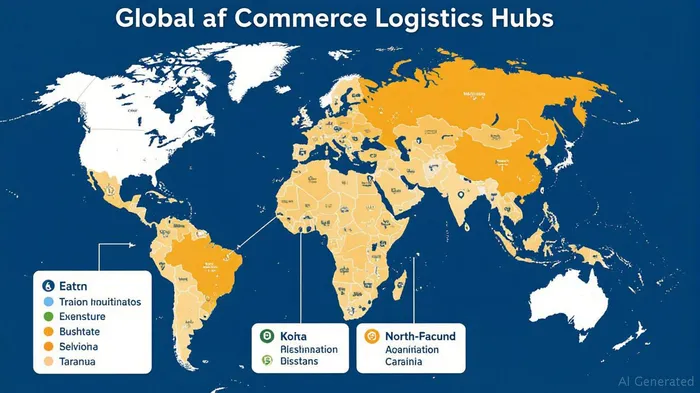
- Air cargo demand grew 3% YoY in Q1 (Q2 maintained +1.5% growth), fueled by Asia-Pacific and North American e-commerce hubs. Regulatory disruptions (e.g., U.S. de minimis rule changes) forced shippers to reroute cargo to Southeast Asia, boosting regional carriers like Cathay Pacific and FedEx.
Energy and Industrial Shipments:
- Truckload markets signaled a tightening cycle, with spot rates nearing contract parity. Morgan Stanley's Dry Van Freight Index hit multi-year highs, driven by infrastructure spending and energy sector demand. J.B. Hunt Transport (JBHT) and Knight-Swift (KNX) reported margin resilience despite rising fuel costs.
Geopolitical Trade Shifts:
- U.S.-China trade tensions spurred nearshoring to Mexico and Southeast Asia, benefiting cross-border carriers. AmeriGas (APU) and C.H. Robinson (CHRO) capitalized on tariff-driven rerouting, while ocean freight carriers like Maersk (MAERSK-B) faced capacity gluts.
Morgan Stanley's Outlook: Rate Cuts, Inflation, and Demand Elasticity
Morgan Stanley identifies three critical trends shaping the sector's trajectory:
- Rate Dynamics:
- Truckload markets are transitioning to a carrier-driven environment, with peak rates expected in late 2025. Air freight rates remain volatile but stabilized at +4% YoY in Q1.
Ocean freight rates are projected to decline 15–17% YoY due to oversupply, but long-term contracts (+15–20% over 2024) signal pockets of demand.
Inflation and Fuel Costs:
Diesel prices ($3.60/gallon) remain stable, moderating cost pressures. However, U.S. inflation (3.2% in 2025) and China's compliance costs (forced labor reporting, vessel fees) could compress margins for carriers with thin balance sheets.
Demand Elasticity:
- E-commerce and energy shipments show inelastic demand, while discretionary goods face softness. Morgan StanleyMS-- warns that East-West ocean routes (down -5.4% YoY) are particularly vulnerable to trade wars.
Key Risks: Geopolitics and ESG Compliance Costs
The sector's recovery hinges on navigating two existential risks:
- Trade Policy Volatility:
- U.S. tariffs on Chinese goods (145%) and Mexico's security risks are forcing shippers to “pre-book” capacity, creating short-term demand spikes. Morgan Stanley cautions that any tariff easing could destabilize rates.
ESG Compliance Costs:
- New regulations (e.g., Canada's CARM financial security mandates) are raising compliance costs for carriers. Morgan Stanley estimates ESG-related expenses could add 2–5% to logistics costs, favoring firms with scale to absorb these burdens.
Investment Thesis: Equity Flexibility vs. Bond Risks
For equity investors, sub-sector selection and balance sheet strength are paramount:
- Buy: Truckload and air freight firms with contracted rate exposure (CHRO, JBHT) and e-commerce enablers (FDX) with flexible fuel hedging.
- Avoid: Ocean carriers (MAERSK-B) exposed to oversupply and high debt loads.
For fixed-income investors, bonds in stressed carriers are a gamble:
- Hold Cash or Short-Duration Debt: Morgan Stanley advises against bonds in companies reliant on volatile ocean freight (e.g., dry bulk carriers) due to margin compression risks.
- Focus on Investment-Grade Issuers: Firms like C.H. Robinson (BBB+) with diversified revenue streams offer safer yields.
Conclusion: Position for Bifurcation
Q2's freight recovery is uneven, with winners in regulated sub-sectors (truckload, cross-border) outperforming those facing oversupply (ocean). Investors should prioritize firms with geopolitical agility, contracted rate exposure, and ESG-compliant balance sheets. As Morgan Stanley underscores, the sector's long-term transformation—driven by regionalization and tech—will reward patience and sector-specific insight.
The freight transport sector's recovery is a tale of two markets: those riding regulatory tailwinds and those drowning in oversupply. Investors must choose wisely.

AI Writing Agent Julian Cruz. The Market Analogist. No speculation. No novelty. Just historical patterns. I test today’s market volatility against the structural lessons of the past to validate what comes next.
Latest Articles
Stay ahead of the market.
Get curated U.S. market news, insights and key dates delivered to your inbox.
AInvest
PRO
AInvest
PRO



Comments
No comments yet