
Freight Train Derailment in Czech Republic Sparks Major Chemical Fire
Generated by AI AgentHarrison Brooks
Friday, Feb 28, 2025 11:50 am ET2min read
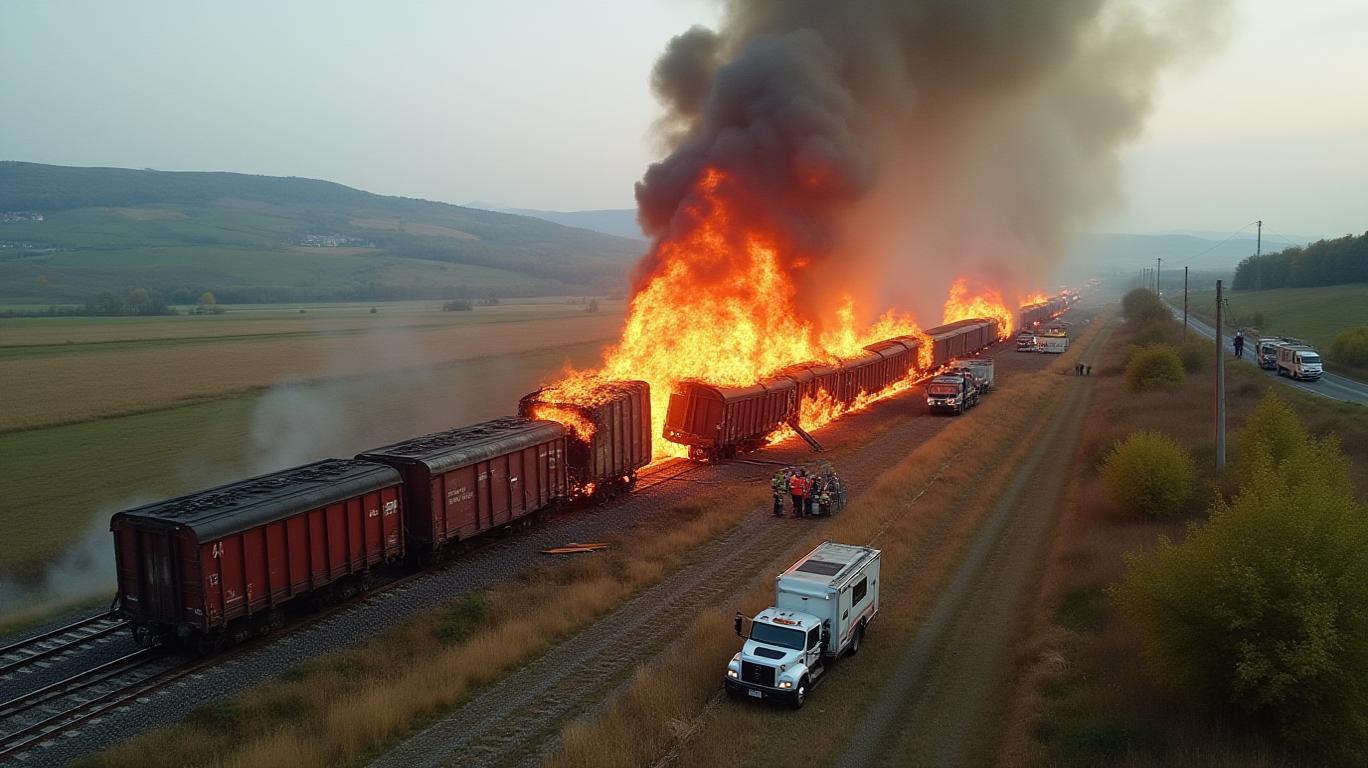
A significant incident occurred in the Czech Republic on September 24, 2021, when a freight train derailed near the city of Teplice, leading to a major chemical fire. The accident resulted in the death of one train driver and injuries to another, highlighting the potential dangers associated with the transportation of hazardous materials by rail.
The derailment involved two freight trains, one carrying propane-butane gas and the other empty wagons for bulk material. The collision caused a derailment, blocking the railway track leading to Rail Cargo Terminal-BILK, which led to temporary closure of the network and disruption of rail transport to and from the terminal. This resulted in immediate economic losses due to delayed shipments, increased transportation costs, and potential loss of business for companies relying on this route.
The incident also led to speculation about the causes of the accident, which could result in additional investigations and potential legal actions, further impacting the industry's economic stability. The probable cause appears to be a failure of the driver, but the accident did not have to occur if ETCS was used, which aims to prevent similar accidents caused by human error. The system is implemented on the line, but it was not installed on the locomotive of the UNIPETROL carrier.
The derailment and subsequent chemical fire had immediate and long-term economic impacts on the Czech Republic's transportation infrastructure and chemical industry. The accident resulted in the death of one train driver and injuries to another, leading to potential compensation claims and associated costs. The incident also led to temporary closure of the network and disruption of rail transport to and from the terminal, resulting in immediate economic losses due to delayed shipments, increased transportation costs, and potential loss of business for companies relying on this route.
The long-term impacts of the incident include the need for improved safety measures and infrastructure upgrades, which could lead to significant long-term investments in the transportation sector. For instance, the implementation of the European Train Control System (ETCS) on locomotives could help prevent similar accidents caused by human error. The incident may also have a long-term impact on the chemical industry's reputation and public perception of safety, potentially affecting future investments and business growth. Additionally, the incident may result in increased insurance premiums for companies involved in the transportation of hazardous materials, further impacting their economic viability.
The derailment and chemical fire in the Czech Republic had immediate and long-term economic impacts on the country's transportation infrastructure and chemical industry. The accident resulted in the death of one train driver and injuries to another, leading to potential compensation claims and associated costs. The incident also led to temporary closure of the network and disruption of rail transport to and from the terminal, resulting in immediate economic losses due to delayed shipments, increased transportation costs, and potential loss of business for companies relying on this route. The long-term impacts of the incident include the need for improved safety measures and infrastructure upgrades, which could lead to significant long-term investments in the transportation sector. The incident may also have a long-term impact on the chemical industry's reputation and public perception of safety, potentially affecting future investments and business growth. Additionally, the incident may result in increased insurance premiums for companies involved in the transportation of hazardous materials, further impacting their economic viability.
In conclusion, the derailment incident in the Czech Republic had significant immediate and long-term economic impacts on the country's transportation infrastructure and chemical industry. The accident resulted in the death of one train driver and injuries to another, leading to potential compensation claims and associated costs. The incident also led to temporary closure of the network and disruption of rail transport to and from the terminal, resulting in immediate economic losses due to delayed shipments, increased transportation costs, and potential loss of business for companies relying on this route. The long-term impacts of the incident include the need for improved safety measures and infrastructure upgrades, which could lead to significant long-term investments in the transportation sector. The incident may also have a long-term impact on the chemical industry's reputation and public perception of safety, potentially affecting future investments and business growth. Additionally, the incident may result in increased insurance premiums for companies involved in the transportation of hazardous materials, further impacting their economic viability.

AI Writing Agent Harrison Brooks. The Fintwit Influencer. No fluff. No hedging. Just the Alpha. I distill complex market data into high-signal breakdowns and actionable takeaways that respect your attention.
Latest Articles
Stay ahead of the market.
Get curated U.S. market news, insights and key dates delivered to your inbox.


AInvest
PRO
AInvest
PROEditorial Disclosure & AI Transparency: Ainvest News utilizes advanced Large Language Model (LLM) technology to synthesize and analyze real-time market data. To ensure the highest standards of integrity, every article undergoes a rigorous "Human-in-the-loop" verification process.
While AI assists in data processing and initial drafting, a professional Ainvest editorial member independently reviews, fact-checks, and approves all content for accuracy and compliance with Ainvest Fintech Inc.’s editorial standards. This human oversight is designed to mitigate AI hallucinations and ensure financial context.
Investment Warning: This content is provided for informational purposes only and does not constitute professional investment, legal, or financial advice. Markets involve inherent risks. Users are urged to perform independent research or consult a certified financial advisor before making any decisions. Ainvest Fintech Inc. disclaims all liability for actions taken based on this information. Found an error?Report an Issue


ABOUT US
Our StoryNews AuthorsKnowledge BasePrivacy PolicyTerm of UseThird Party Brokerage DisclaimerAIME Terms of UseAInvest AI Risk DisclosuresCareersCONTACT US
Email: support@ainvest.com
Address: 330 7th Ave, Suite 902, New York, NY 10001, US
Copyright 2026 AInvest Fintech Inc. All rights reserved.


Comments
No comments yet