
Freeport-McMoRan Surges to 128th in U.S. Trading Activity as Legal Scrutiny and Mine Incident Send Shares Down 3.88% Despite $970M Volume Spree
 Aime Summary
Market Snapshot
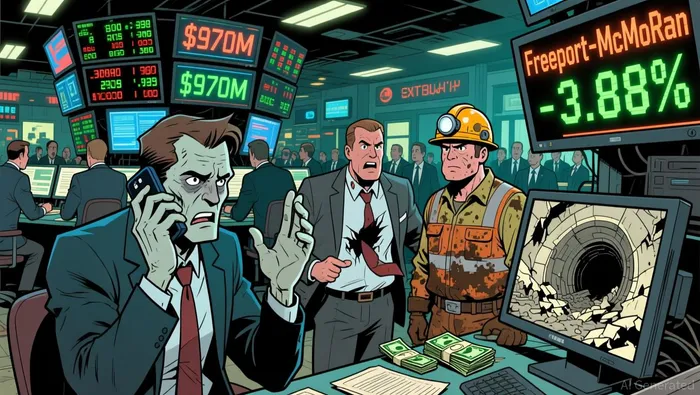
Freeport-McMoRan (FCX) experienced a significant surge in trading activity on November 6, 2025, , . This elevated volume ranked FCXFCX-- 128th among U.S. equities by daily trading activity, underscoring heightened investor attention. Despite the robust volume, , reflecting a sharp reversal in sentiment. The disparity between high volume and negative price movement suggests heightened volatility driven by either market uncertainty or a specific catalyst, such as regulatory scrutiny or operational risks.
Key Drivers
The primary factor behind FCX’s recent performance is an ongoing securities class action investigation led by the Rosen Law Firm. On September 24, 2025, Freeport-McMoRanFCX-- issued a press release updating stakeholders on a fatal incident at its Grasberg Block Cave mine in Indonesia. The company disclosed that two employees had been fatally injured in a mud rush event on September 8, 2025, which it had previously reported. , . The Rosen Law Firm alleges that FreeportFCX-- may have disseminated materially misleading information to the public, potentially violating securities laws. The firm is now seeking to represent shareholders in a class action to recover losses, further exacerbating investor concerns about corporate transparency and operational safety.
The mine incident itself remains a critical operational risk. The Grasberg mine, a cornerstone of Freeport’s global operations, has long been a source of both revenue and regulatory scrutiny. The fatal accident has reignited debates over safety protocols and environmental compliance in the region, where the company faces complex regulatory and community relations challenges. While Freeport has not disclosed immediate operational disruptions from the incident, the reputational damage and legal exposure could pressure its long-term earnings and capital expenditures. Additionally, the lawsuit’s outcome may influence investor perceptions of management’s ability to mitigate risks in high-stakes environments.
A secondary but notable development is the appointment of A. Cory Stevens as President and Chief Operating Officer of Freeport Americas, effective December 1, 2025. Stevens, who previously oversaw the Indonesian smelter project, is expected to enhance operational oversight in North and South America. While this leadership shift signals a strategic focus on growth and operational optimization, its impact on short-term stock performance is likely muted. The appointment does not address the immediate legal and operational risks tied to the Grasberg incident, which remain the dominant near-term concerns for investors.
The recent 3.88% price drop also aligns with broader market dynamics. Asahi Life Asset Management’s purchase of new FCX shares on November 6 suggests some institutional confidence, but the overall sell-off indicates that market participants are prioritizing caution. The elevated trading volume suggests increased position adjustments, with investors either hedging against further legal risks or capitalizing on short-term volatility. Analysts have maintained a “Moderate Buy” rating for FCX, , but the stock’s recent underperformance highlights the fragility of its investment narrative amid unresolved operational and regulatory challenges.
In summary, Freeport-McMoRan’s stock performance on November 6, 2025, reflects a confluence of legal uncertainty, operational risks, and leadership transitions. The securities class action and mine incident are the most material drivers, overshadowing positive developments like the leadership appointment. Until these issues are resolved, the company’s ability to attract sustained investor confidence remains constrained, with volatility likely to persist.

Encuentren esas acciones que tienen un volumen de transacciones muy alto.
Latest Articles
Stay ahead of the market.
Get curated U.S. market news, insights and key dates delivered to your inbox.
AInvest
PRO
AInvest
PRO



Comments
No comments yet