
Freeport-McMoRan's Shares Plunge Amid Safety Failures and Lawsuits, Trading Volume Surges to 157th in U.S. Markets
 Aime Summary
Market Snapshot
On November 17, 2025, , closing at a level that reflected ongoing investor concerns. Despite the drop, the company’s stock saw a significant surge in trading volume, . This elevated volume ranked FCXFCX-- 157th in total trading activity across U.S. markets, underscoring heightened investor activity amid the ongoing legal and operational turmoil. The stock’s performance contrasts with its recent volatility, .
Key Drivers
The collapse of FCX’s stock price and the subsequent class-action lawsuits stem from a confluence of operational, legal, and geopolitical factors tied to the Grasberg Block Cave mine in Indonesia. At the center of the controversy is a September 9 landslide that trapped seven workers, . The incident exposed critical safety deficiencies at the mine, where the company allegedly downplayed risks despite historical warnings about the preventable nature of such events. An cited in the news highlighted that the landslide was a known hazard linked to mining methods, suggesting systemic failures in risk management.
Compounding the operational fallout, the Indonesian government’s commercial stake in the mine intensified scrutiny. The September 25 Bloomberg report emphasized that the incident strained relations between Freeport-McMoRanFCX-- and Jakarta, with officials potentially seeking greater control over the asset. This geopolitical tension amplified investor fears about regulatory overreach and operational disruptions, . The Indonesian government’s 51% ownership stake in PT Freeport Indonesia (PTFI) has long been a point of contention, and the recent tragedy could accelerate demands for expanded influence.
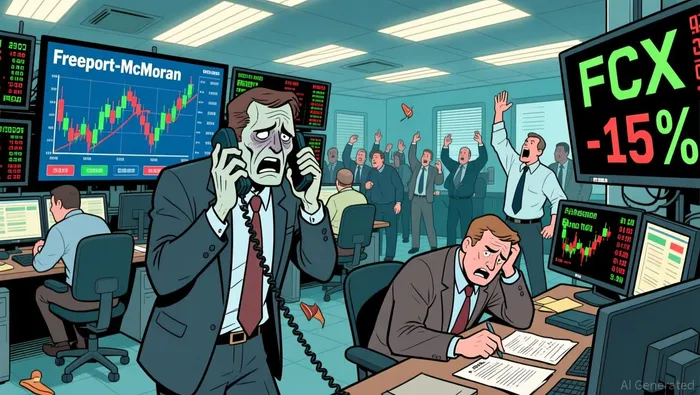
The legal ramifications have also weighed heavily on investor sentiment. Multiple law firms have filed class-action lawsuits alleging securities fraud, accusing the company of misleading investors about safety protocols and operational risks. The lawsuits contend that Freeport-McMoRan’s public statements—emphasizing data-driven safety measures and behavioral science—were disingenuous, masking unsafe practices that foreseeably endangered workers. These allegations, combined with the fatalities reported on September 24, have eroded trust in management and triggered regulatory investigations. The lawsuits further note that the company failed to disclose the heightened risks of litigation, reputational damage, and regulatory scrutiny, all of which contributed to the stock’s volatility.
Operational impacts from the mine suspension further exacerbated the sell-off. , directly linking reduced production to the halted operations. These figures, disclosed in a September 24 update, underscored the financial materiality of the incident and raised concerns about the company’s ability to meet production targets. The Grasberg mine is a critical asset for Freeport-McMoRan, contributing a significant portion of its global output, and any prolonged disruption threatens its revenue streams.
Finally, the broader market context of the lawsuit and operational failures has amplified the stock’s downward trajectory. The class-action filings, spanning multiple law firms, indicate a coordinated effort to hold the company accountable, with investors seeking redress for losses incurred between February 2022 and September 2025. The legal proceedings, pending in the U.S. District Court for the District of Arizona, also risk reputational damage, deterring institutional investors and further pressuring the stock. Collectively, these factors—safety failures, geopolitical tensions, operational disruptions, and legal challenges—have created a perfect storm for FCX, driving its recent performance and signaling long-term risks for the mining giant.

Busquen esos activos que tengan un volumen de transacciones muy alto.
Latest Articles
Stay ahead of the market.
Get curated U.S. market news, insights and key dates delivered to your inbox.
AInvest
PRO
AInvest
PRO



Comments
No comments yet