
Freeport-McMoRan's Legal and Safety Controversies Drive 155th-Highest U.S. Trading Volume
 Aime Summary
Market Snapshot
On December 1, 2025, Freeport-McMoRanFCX-- (FCX) closed with a 0.21% gain, adding to a volatile trading session marked by a 61.79% surge in trading volume to $0.63 billion—the 155th highest volume in the U.S. equity market. While the stock’s modest rise contrasts with a 5.9% drop in late September 2025 following a fatal mining incident, the elevated volume suggests renewed investor scrutiny. This activity coincides with ongoing legal challenges and regulatory scrutiny tied to safety practices at the company’s Indonesian operations, which have dominated headlines since mid-2025.
Key Drivers
The recent trading activity in FCXFCX-- reflects a confluence of legal, operational, and reputational pressures stemming from its Grasberg mine in Indonesia. Three separate class-action lawsuits filed in December 2025 allege securities fraud, accusing the company and senior executives of misleading investors about safety protocols at the mine. According to the complaints, Freeport-McMoRan overstated its commitment to worker safety, failing to disclose risks associated with its mining practices that were “reasonably likely to result in worker fatalities.” The lawsuits, consolidated under a class period from February 15, 2022, to September 24, 2025, highlight a pattern of alleged misrepresentation that culminated in a tragic incident in September 2025.
The catalyst for the lawsuits was a landslide at the Grasberg Block Cave mine in September 2025, which trapped seven workers and led to the suspension of operations. FreeportFCX-- initially reported the incident on September 9, 2025, but subsequent updates revealed that two workers had died and five remained missing. The company’s stock plummeted $2.77 per share, or 5.9%, following the initial announcement. The lawsuits argue that the company’s prior assurances about safety procedures—emphasized in public statements and disclosures—were demonstrably false, as the mine’s practices failed to prevent foreseeable risks.
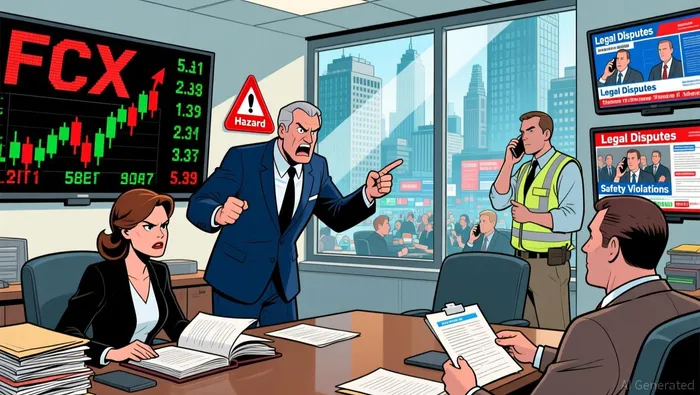
Regulatory and reputational fallout from the incident further exacerbated investor concerns. The lawsuits suggest that Freeport’s alleged negligence extended beyond operational failures, potentially exposing the company to regulatory penalties and reputational damage. The Indonesian government, which holds a commercial interest in PT Freeport Indonesia, has not publicly commented on the legal actions, but its involvement could amplify scrutiny. The lawsuits also note that the company’s failure to disclose these risks created a heightened threat of litigation and regulatory action, which investors were allegedly kept unaware of during the class period.
Investors now face a critical deadline: January 12, 2026, to seek lead plaintiff status in the consolidated cases. The legal proceedings, pending in the U.S. District Court for the District of Arizona, could result in significant financial liabilities for Freeport-McMoRan. While the December 1 trading session showed a slight rebound, the elevated volume underscores ongoing uncertainty. The lawsuits and the mine incident collectively highlight systemic governance and operational risks that could weigh on the stock’s long-term performance, particularly as courts and regulators scrutinize corporate accountability in high-risk industries.
The December 1 volume spike may also reflect investor attempts to hedge exposure ahead of the legal deadlines or reassess the company’s risk profile. However, with two fatalities confirmed and five workers still missing, the human cost of the incident remains a stark reminder of the challenges facing mining operations in complex geopolitical and environmental contexts. For FCX, the path forward will depend on resolving these legal disputes, addressing regulatory concerns, and rebuilding trust with stakeholders—a process that could take years to fully unfold.

Stay ahead of the market.
Get curated U.S. market news, insights and key dates delivered to your inbox.
AInvest
PRO
AInvest
PRO



Comments
No comments yet