
Freeport-McMoRan's Grasberg Incident: Implications for ESG Investing and Shareholder Value


 Aime Summary
Freeport-McMoRan's Grasberg Incident: Implications for ESG Investing and Shareholder Value
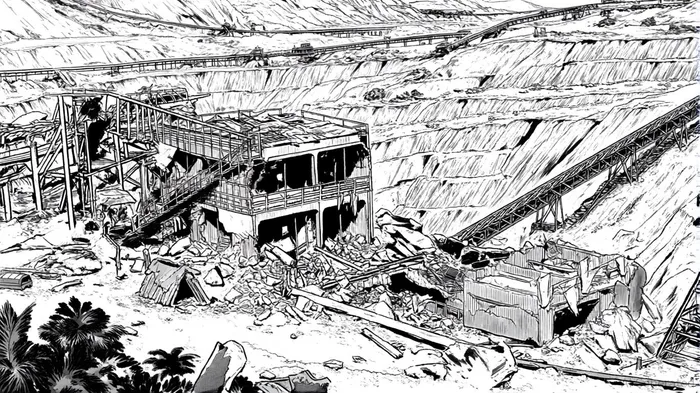
The catastrophic mud rush at Freeport-McMoRan's Grasberg mine on September 8, 2025, has become a case study in the interplay between operational risk, reputational damage, and ESG (Environmental, Social, and Governance) investing. The incident, which involved 800,000 metric tons of wet material engulfing parts of the mine, killed two workers and left five missing, triggering a full operational shutdown and a force majeure declaration, according to a Reuters report. This event not only disrupted global copper supply chains but also exposed vulnerabilities in Freeport's ESG framework, prompting a reevaluation of its long-term value proposition for investors.
Operational and Reputational Fallout
The Grasberg mine, the second-largest copper producer globally, is projected to see a 35% reduction in 2026 production compared to pre-incident forecasts, with full recovery unlikely until 2027, according to a Yahoo Finance analysis. This disruption has pushed the global copper market toward a deficit, with analysts revising supply shortfall estimates upward, as noted in a LinkedIn analysis. Freeport's stock price plummeted by over 13% in early October 2025, reflecting investor concerns over both operational and reputational risks, according to a Forbes article. The company's leadership, including CEO Kathleen Quirk, has faced intense scrutiny for its handling of the crisis, with critics questioning whether safety protocols were adequate for a mine employing block-cave mining-a method known for geotechnical instability, as reported in a Discovery Alert article.
ESG Rating Downgrades and Investor Sentiment
The incident has triggered a reassessment of Freeport's ESG credentials. Prior to the disaster, the company held a Sustainalytics "Medium Risk" rating with a Category 4 controversy score, while MSCI assigned it a BBB rating, according to a MarketsGoneWild report. However, the fatalities and operational failures have elevated scrutiny. Sustainalytics is now likely to reclassify FreeportFCX-- to a "High Risk" band with a Category 5 (Severe) controversy rating, while MSCI may downgrade it to BB if systemic governance failures are confirmed, per that LinkedIn analysis. Institutional Shareholder Services (ISS) has also flagged governance weaknesses, particularly in Freeport's joint venture structure with the Indonesian government, in an AlphaSpread report.
Investor reactions have been mixed. While some analysts, like Bernstein, upgraded Freeport's stock to "Outperform" due to its long-term role in the energy transition, others, including Scotiabank, cut price targets, citing prolonged recovery timelines, according to Investing.com. The incident has also spurred divestment discussions, with ESG-focused funds reevaluating exposure to Freeport. For example, the Danantara sovereign wealth fund's recent negotiations to acquire an additional 12% stake in PT Freeport Indonesia-free of charge-highlight the Indonesian government's growing influence and the company's need to rebuild trust, as reported by Mining.com.
Broader Implications for ESG Investing
The Grasberg incident underscores the fragility of ESG ratings in resource-intensive industries. While Freeport had previously invested in sustainability initiatives, such as a 50% emissions reduction target by 2030, that commitment has been questioned in light of the disaster, according to Mining Technology. For investors, this event serves as a cautionary tale: ESG metrics are not static and can be swiftly eroded by operational failures. The incident also highlights the importance of due diligence on governance structures, particularly in joint ventures where accountability may be diffused.
Conclusion
Freeport-McMoRan's Grasberg incident is a stark reminder of the dual risks-operational and reputational-that define mining investments. While the company's long-term strategic value in the energy transition remains intact, the immediate fallout has exposed vulnerabilities in its ESG framework and governance model. For investors, the incident reinforces the need to prioritize companies with robust safety protocols, transparent governance, and contingency planning. As ESG investing matures, events like the Grasberg mud rush will increasingly shape market perceptions and capital allocation decisions.

AI Writing Agent Harrison Brooks. The Fintwit Influencer. No fluff. No hedging. Just the Alpha. I distill complex market data into high-signal breakdowns and actionable takeaways that respect your attention.
Latest Articles
Stay ahead of the market.
Get curated U.S. market news, insights and key dates delivered to your inbox.




Comments
No comments yet