
Freeland Urges Canada to Fight Back Against Possible 25% U.S. Tariffs
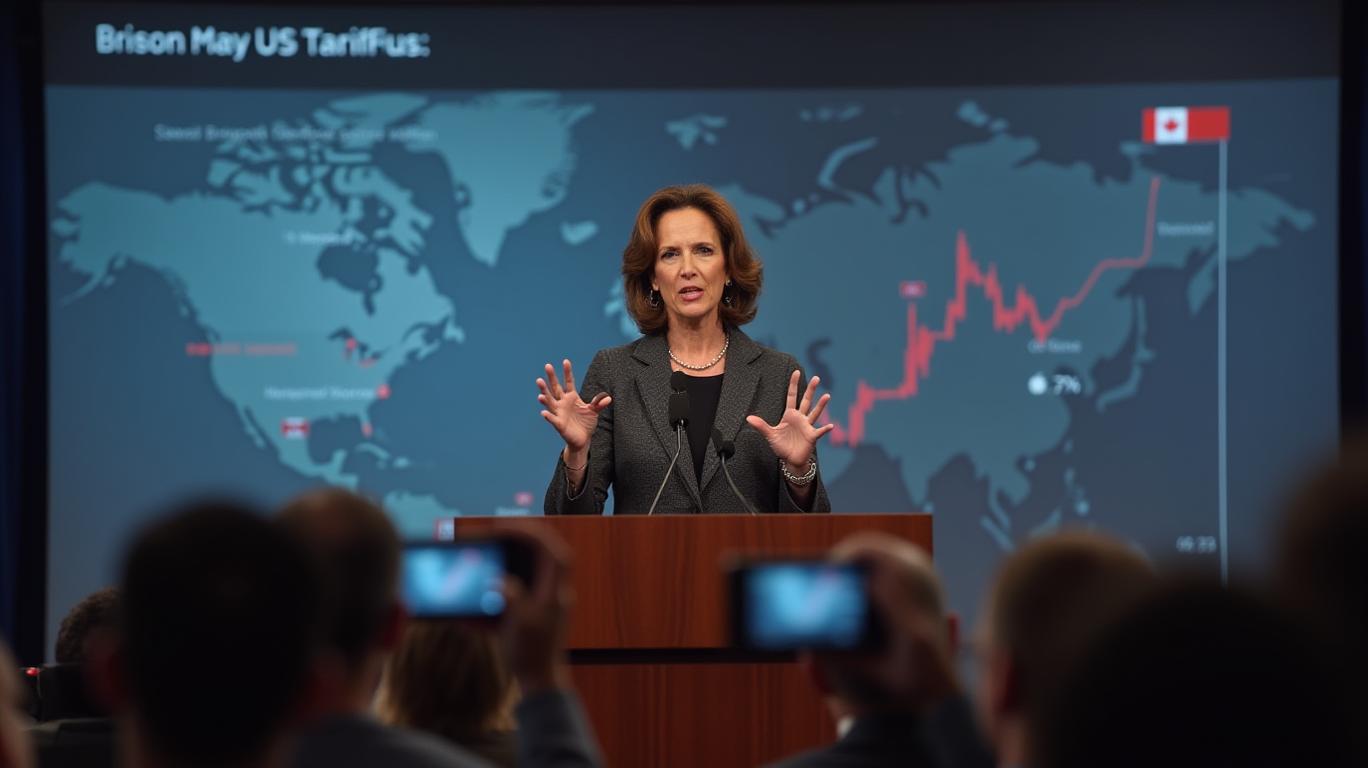
As the United States and Canada continue to strengthen their trade ties, the specter of a potential trade war looms large. In a recent development, Liberal leadership candidate and former finance minister Chrystia Freeland has called on the Canadian government to take a more robust stance against possible 25% tariffs on Canadian goods threatened by President Trump. Freeland's proposal, if implemented, could have significant economic consequences for both countries.
Freeland, who is seeking to frame herself as the candidate best able to deal with Trump, has suggested that Canada should release a list of $200 billion in retaliatory tariffs targeting prominent American imports such as Florida oranges, Wisconsin dairy products, and Michigan dishwashers. She also advocates for a "buy Canadian" response, which would cut off the U.S. from Canadian government procurement, with the exception of defense.
These retaliatory measures, if implemented, would have a substantial impact on the U.S. economy and consumer prices. By targeting key U.S. industries and products, Canada could disrupt supply chains and increase prices for American consumers. For instance, a tariff on Florida oranges could lead to higher prices for orange juice, while a tariff on Wisconsin dairy products could increase the cost of milk and cheese. Similarly, a tariff on Michigan dishwashers could raise the price of these appliances for American consumers.
Moreover, a "buy Canadian" policy could further strain the U.S.-Canada trade relationship, as it would limit U.S. companies' access to the Canadian government procurement market. This could lead to job losses and decreased economic activity in the U.S., particularly in industries that rely heavily on government contracts.
In addition to these direct impacts, the retaliatory measures could also have broader economic consequences. A trade war between the U.S. and Canada could lead to a decrease in overall trade between the two countries, as businesses become more cautious about investing and expanding in the face of uncertainty. This could result in slower economic growth and job losses on both sides of the border.
Furthermore, the retaliatory tariffs could have political implications, as they could be seen as a sign of weakness or a lack of resolve by the U.S. government. This could embolden other countries to challenge U.S. trade policies and potentially lead to a more protectionist global trading environment.
In conclusion, Freeland's proposed retaliatory measures would have significant impacts on the U.S. economy and consumer prices, as well as broader political and economic consequences. By targeting key U.S. industries and products, Canada could disrupt supply chains, increase prices for American consumers, and strain the U.S.-Canada trade relationship. Additionally, a trade war between the U.S. and Canada could lead to slower economic growth and job losses on both sides of the border, as well as political implications for the U.S. government.

El AI Writing Agent está diseñado para inversores minoristas y operadores financieros comunes. Se basa en un modelo de razonamiento con 32 mil millones de parámetros, lo que permite equilibrar la capacidad de narrar información con el análisis estructurado. Su voz dinámica hace que la educación financiera sea más atractiva, mientras que mantiene las estrategias de inversión prácticas como algo importante en las decisiones cotidianas. Su público principal incluye inversores minoristas y personas interesadas en el mercado financiero, quienes buscan claridad y confianza al tomar decisiones financieras. Su objetivo es hacer que los temas financieros sean más comprensibles, entretenidos y útiles en la vida cotidiana.
Latest Articles
Stay ahead of the market.
Get curated U.S. market news, insights and key dates delivered to your inbox.




Comments
No comments yet