
Using Free Cash Flow Yield and Operational Efficiency to Identify Strong Investment Opportunities
 Aime Summary
Investors are always on the lookout for companies that generate strong, sustainable returns. Two often-overlooked metrics—Free Cash Flow Yield (FCF Yield) and Operational Efficiency—can help uncover such opportunities. Together, they provide a clearer picture of a company’s financial health and long-term potential. This article explains these concepts, how they influence stock performance, and how you can use them to make smarter investment decisions.
Understanding the Core Concepts
Free Cash Flow Yield measures how much cash a company generates relative to its market value. It’s calculated by dividing a company’s free cash flow (FCF) by its market capitalization. FCF is the cash left after a company pays for operating expenses and capital expenditures. A higher FCF Yield suggests the company is generating more cash relative to its size, which can indicate value or strong profitability.
Operational Efficiency refers to how effectively a company uses its resources to produce goods or services. A company with high operational efficiency controls costs, manages assets well, and converts revenue into profits. Key indicators include operating margin (operating income divided by revenue) and return on assets (ROA). Rising efficiency metrics often signal a company’s ability to adapt and thrive in competitive markets.
How to Apply These Metrics
Investors can use FCF Yield and Operational Efficiency to screen for stocks with strong fundamentals. For example: - Value Investing: Look for companies with high FCF Yields (e.g., above 5%) and stable or improving operational efficiency. These firms may be undervalued by the market but have strong cash-generating potential. - Growth Investing: Focus on companies with rising operational efficiency metrics, even if their FCF Yields are moderate. This suggests the company is improving its cost structure or scaling effectively, which can drive future growth.
Combining these metrics helps avoid pitfalls like overvalued ‘growth’ stocks or struggling ‘value’ stocks. For instance, a company with a high FCF Yield but declining operational efficiency may be cutting costs unsustainably, risking long-term performance.
Case Study: Costco’s Sustained Success
Costco (COST) is a prime example of a company that excels in both FCF Yield and operational efficiency. 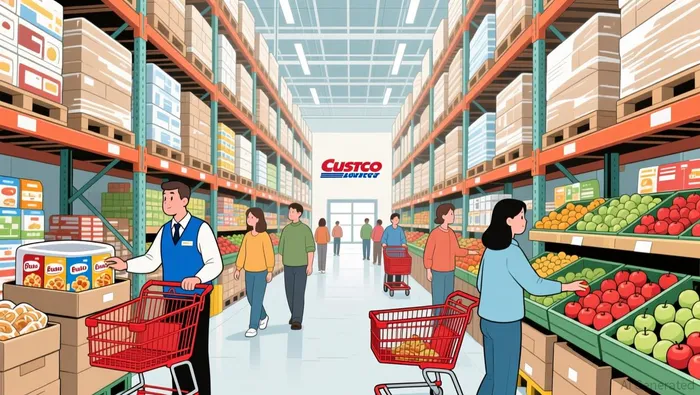 Over the past decade, Costco has consistently maintained an operating margin of around 4-5%, which is low for a retail company but balanced by its high asset turnover (a measure of how efficiently assets generate revenue). Its FCF Yield has averaged about 3-4%, reflecting steady cash generation despite its large size. Investors who recognized Costco’s efficient use of capital (e.g., low inventory costs, membership model) and consistent cash flow have benefited from its long-term growth and dividend increases.
Risks and Considerations
While these metrics are powerful, they’re not foolproof. A high FCF Yield might reflect declining revenue or a shrinking market, not just strong cash flow. Similarly, improving operational efficiency could mask underlying issues, such as underinvestment in innovation. Always cross-check these metrics with other indicators like debt levels, industry trends, and management quality. Diversification and a long-term perspective are key to mitigating risks.
Key Takeaways
- Free Cash Flow Yield highlights companies generating cash relative to their size, while Operational Efficiency reveals how effectively they use resources.
- Use these metrics together to identify undervalued companies with sustainable growth potential.
- Real-world examples like Costco show how these principles translate to long-term success.
- Always consider broader market conditions and company-specific risks before investing.
By incorporating FCF Yield and operational efficiency into your analysis, you can build a more informed and balanced investment strategy—one that prioritizes both value and resilience in the ever-changing stock market.

Stay ahead of the market.
Get curated U.S. market news, insights and key dates delivered to your inbox.


AInvest
PRO
AInvest
PRO



Comments
No comments yet