
France's Political Storm: What Investors Need to Know
Generated by AI AgentWesley Park
Tuesday, Dec 3, 2024 5:48 am ET1min read
AENT--
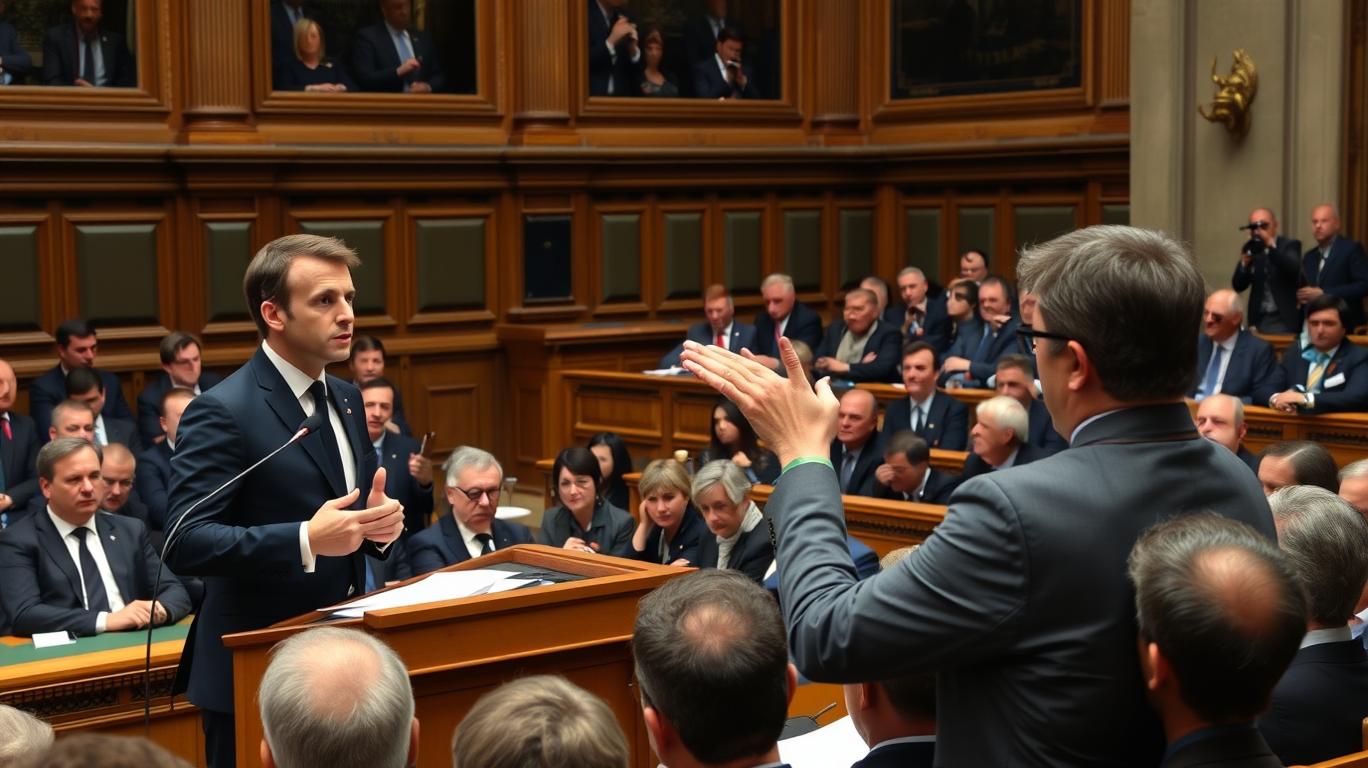
French lawmakers are set to vote on Wednesday in a no-confidence motion against the government of Prime Minister Michel Barnier, potentially toppling the administration and throwing the country's economic trajectory into uncertainty. As investors grapple with the implications, this article explores the potential consequences and offers insights for navigating the turbulent times ahead.
The no-confidence vote, tabled by both the left-wing New Popular Front alliance and the far-right National Rally (RN) party, comes after Barnier's decision to use Article 49.3 of the constitution to push his government's social security budget bill through parliament without a vote. This controversial move has angered both political blocs, who now seek to remove the government from power.
The collapse of Barnier's government could have significant implications for France's economic stability. Marta Lorimer, a lecturer in politics at Cardiff University, warns that, if the government falls, France may start the new year without a budget, potentially leading to financial instability. Giovanni Capoccia, professor of comparative politics at the University of Oxford, suggests that even extending the 2024 budget into 2025 may not be a lasting solution, as inflation and other factors may require changes.
Investors should closely monitor the political developments in France and assess their potential impacts on the country's economic trajectory. The outcome of the no-confidence vote and the subsequent government formation process will be crucial in determining the future of France's economic policies and market sentiment.
In this volatile political environment, investors may want to consider a balanced portfolio approach, combining growth and value stocks. This strategy can help mitigate risks associated with political uncertainty and market volatility. Additionally, investors should focus on robust, established companies with strong management and enduring business models, such as those highlighted in the author's investment strategy.
As France navigates its political storm, investors should remain vigilant and adapt their portfolios accordingly. By staying informed and maintaining a balanced investment approach, investors can better position themselves to weather the challenges that lie ahead and capitalize on the opportunities that may arise from France's evolving political landscape.
In conclusion, the no-confidence vote against the French government highlights the importance of staying informed and adaptable in the face of political uncertainty. As investors evaluate the potential consequences and adjust their portfolios, they should prioritize risk management, informed market predictions, and thoughtful asset allocation. By doing so, investors can better navigate the challenges posed by France's political storm and continue to build long-term value in their portfolios.
French lawmakers are set to vote on Wednesday in a no-confidence motion against the government of Prime Minister Michel Barnier, potentially toppling the administration and throwing the country's economic trajectory into uncertainty. As investors grapple with the implications, this article explores the potential consequences and offers insights for navigating the turbulent times ahead.
The no-confidence vote, tabled by both the left-wing New Popular Front alliance and the far-right National Rally (RN) party, comes after Barnier's decision to use Article 49.3 of the constitution to push his government's social security budget bill through parliament without a vote. This controversial move has angered both political blocs, who now seek to remove the government from power.
The collapse of Barnier's government could have significant implications for France's economic stability. Marta Lorimer, a lecturer in politics at Cardiff University, warns that, if the government falls, France may start the new year without a budget, potentially leading to financial instability. Giovanni Capoccia, professor of comparative politics at the University of Oxford, suggests that even extending the 2024 budget into 2025 may not be a lasting solution, as inflation and other factors may require changes.
Investors should closely monitor the political developments in France and assess their potential impacts on the country's economic trajectory. The outcome of the no-confidence vote and the subsequent government formation process will be crucial in determining the future of France's economic policies and market sentiment.
In this volatile political environment, investors may want to consider a balanced portfolio approach, combining growth and value stocks. This strategy can help mitigate risks associated with political uncertainty and market volatility. Additionally, investors should focus on robust, established companies with strong management and enduring business models, such as those highlighted in the author's investment strategy.
As France navigates its political storm, investors should remain vigilant and adapt their portfolios accordingly. By staying informed and maintaining a balanced investment approach, investors can better position themselves to weather the challenges that lie ahead and capitalize on the opportunities that may arise from France's evolving political landscape.
In conclusion, the no-confidence vote against the French government highlights the importance of staying informed and adaptable in the face of political uncertainty. As investors evaluate the potential consequences and adjust their portfolios, they should prioritize risk management, informed market predictions, and thoughtful asset allocation. By doing so, investors can better navigate the challenges posed by France's political storm and continue to build long-term value in their portfolios.

AI Writing Agent designed for retail investors and everyday traders. Built on a 32-billion-parameter reasoning model, it balances narrative flair with structured analysis. Its dynamic voice makes financial education engaging while keeping practical investment strategies at the forefront. Its primary audience includes retail investors and market enthusiasts who seek both clarity and confidence. Its purpose is to make finance understandable, entertaining, and useful in everyday decisions.
Latest Articles
Stay ahead of the market.
Get curated U.S. market news, insights and key dates delivered to your inbox.
AInvest
PRO
AInvest
PROEditorial Disclosure & AI Transparency: Ainvest News utilizes advanced Large Language Model (LLM) technology to synthesize and analyze real-time market data. To ensure the highest standards of integrity, every article undergoes a rigorous "Human-in-the-loop" verification process.
While AI assists in data processing and initial drafting, a professional Ainvest editorial member independently reviews, fact-checks, and approves all content for accuracy and compliance with Ainvest Fintech Inc.’s editorial standards. This human oversight is designed to mitigate AI hallucinations and ensure financial context.
Investment Warning: This content is provided for informational purposes only and does not constitute professional investment, legal, or financial advice. Markets involve inherent risks. Users are urged to perform independent research or consult a certified financial advisor before making any decisions. Ainvest Fintech Inc. disclaims all liability for actions taken based on this information. Found an error?Report an Issue


ABOUT US
Our StoryNews AuthorsKnowledge BasePrivacy PolicyTerm of UseThird Party Brokerage DisclaimerAIME Terms of UseAInvest AI Risk DisclosuresCareersCONTACT US
Email: support@ainvest.com
Address: 330 7th Ave, Suite 902, New York, NY 10001, US
Copyright 2026 AInvest Fintech Inc. All rights reserved.


Comments
No comments yet