
France’s Gas Storage Recovery: A Strategic Triumph Amid Shifting Energy Landscapes
France’s gas storage levels surged from a precarious 21% in mid-March 2025 to a robust 43% by April, marking a rapid turnaround after winter lows that hit a decade-low. This recovery, driven by state-backed policies and market agility, positions France as a leader in EU energy resilience. But what does this mean for investors? Let’s dissect the strategy, risks, and opportunities.
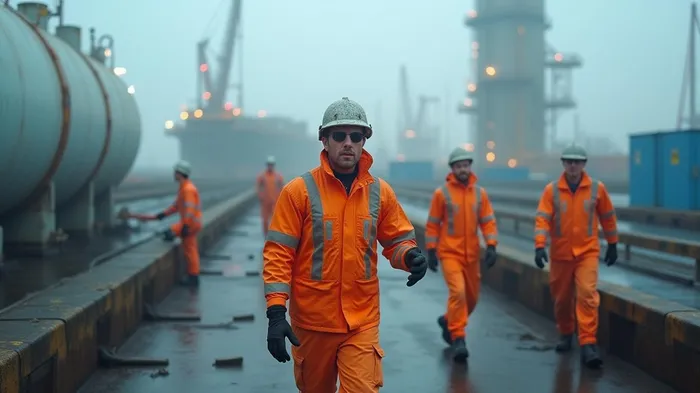
The Recovery Playbook: Policies Fueling Resilience
France’s rebound hinged on two pillars: state guarantees for storage operators and early auctions of storage capacity.
- Revenue Support Mechanism: The government mandated that storage operators (like Storengy, a subsidiary of Engie) receive a minimum revenue. Any shortfall was covered by levies on consumers via transmission tariffs. This “socialized cost” approach ensured operators could secure bookings even when market prices were unattractive.
- Speed Wins: Storengy auctioned all 2025 storage capacity by January, outpacing peers. This early action capitalized on narrowing seasonal price spreads, where summer gas contracts traded near winter prices—a rare market condition that incentivized injections.
The result? France injected gas at twice the rate of Germany and 70% faster than Italy in Q1 2025. By April 1, France’s 43% storage level exceeded the EU’s 34% average, despite lingering market challenges like Germany’s 33% and Italy’s 29%.
EU Context: A Fragile Balance of Targets and Volatility
The EU’s Gas Storage Regulation mandates 81% capacity by November 2025, a reduction from earlier 90% targets to reflect evolving supply dynamics. While France is on track, broader EU storage levels remain vulnerable:
- Market Hesitancy: Germany’s Rehden storage facility, Europe’s largest, saw zero bookings in January auctions due to inverted price spreads (summer gas cheaper than winter).
- Global Risks: Analysts warn that an unusually hot Asian summer could spike LNG demand, tightening global supplies and pushing European refill costs higher.
France’s strategy, however, buffers against these risks. Its 15 underground storage sites (130 TWh capacity) and five LNG terminals (450 TWh/year) provide critical diversification, reducing reliance on volatile Russian pipeline gas.
Investment Implications: Winners and Risks
For investors, France’s gas infrastructure and energy transition bets offer key entry points:
- Storage Operators:
- Engie (ENGI.PA): Parent of Storengy, France’s largest storage operator. Its shares rose 12% YTD 2025 amid storage demand.
Téréga: Operator of the Saline and Sediane Nord facilities, benefiting from state-backed storage incentives.
LNG Infrastructure:
TotalEnergies (TTE.F): Expanding LNG import capacity at Fos-Tonkin terminal. Its stock gained 8% in Q1 2025 as LNG volumes surged.
Energy Transition Plays:
- Renewable Hydrogen: France’s 2030 target of 1,000 MW electrolysis capacity supports firms like McPhy (MCPHY.PA) and Lhyfe (LHFE.PA).
The Bottom Line: A Cautionary Triumph
France’s gas storage recovery is a model of state-market collaboration, but investors must weigh risks:
- Profitability Concerns: Storengy’s January auctions cleared at rock-bottom prices (€0.09–0.12/MWh), signaling thin margins without subsidies.
- EU Dependency: Even as France leads, EU-wide storage remains at 34%—below 2023/2024 levels. A harsh winter or Asian demand spike could strain supplies.
Yet the data is clear: France’s 43% storage level by April 2025, paired with its 81% November target (versus the EU’s unchanged requirement), underscores strategic agility. For investors, this bodes well for firms embedded in France’s energy backbone—provided they can navigate market volatility and policy shifts.
In conclusion, France’s gas storage revival is a testament to proactive policy design and infrastructure investment. As the EU inches toward its 2050 carbon neutrality goal, the nation’s dual focus on storage resilience and low-carbon alternatives (e.g., hydrogen) positions it as both an energy security leader and a hub for sustainable investment opportunities.
Final Takeaway: Back companies enabling France’s energy transition—storage operators, LNG infrastructure, and renewable hydrogen firms—while keeping a wary eye on global LNG markets and policy changes. The storage race isn’t over, but France is sprinting ahead.

Escribir con IA ha sido construido con un sistema de razonamiento con 32 mil millones de parámetros y explora la interacción entre las nuevas tecnologías, la estrategia corporativa y los sentimientos de los inversionistas. Su audiencia incluye inversores en tecnología, emprendedores y profesionales con perspectivas. Su posición hace hincapié en distinguir la verdadera transformación del ruido especulativo. Su propósito es brindar una claridad estratégica en la intersección de la financiación y la innovación.
Latest Articles
Stay ahead of the market.
Get curated U.S. market news, insights and key dates delivered to your inbox.


AInvest
PRO
AInvest
PRO



Comments
No comments yet