
France's Economic Outlook: What Investors Should Watch Now
 Aime Summary
France's economy is showing mixed signals in early 2026, with some sectors showing resilience and others facing headwinds. Investors are increasingly turning to macroeconomic indicators like GDP growth and inflation to assess the country's direction. The key risk for investors is rising uncertainty over government policy and external trade tensions.
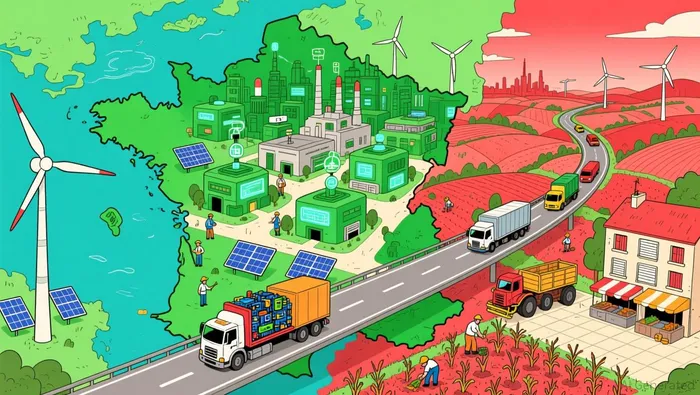
France’s economy has long been a bellwether for European markets, and 2026 is no different. With global uncertainties persisting and local policy shifts gaining traction, investors are recalibrating their strategies to account for the evolving landscape. The question isn’t whether France matters—it does—but how it’s evolving in a way that affects global markets and portfolios.
France’s economic growth is expected to slow in 2026, . While that’s better than the previous year, it falls short of the 2% threshold often cited as the baseline for strong European growth. Inflation remains a concern, , which is down from early 2025 peaks but still above the European Central Bank’s target. Meanwhile, .
Crucially, consumer confidence is waning, particularly in rural areas and among younger demographics. That trend is raising alarms for policymakers and investors alike, especially as it could lead to a self-reinforcing cycle of reduced spending and slower growth. While France isn’t in a recession, the economy is showing signs of uneven growth, with manufacturing and tech sectors performing better than traditional industries like agriculture and tourism.
France’s appeal to international investors has long been rooted in its diverse economy and deep institutional market structure. Its stock market, centered around the , is home to global names like Airbus, L’Oréal, and Saint-Gobain. These companies are not only leaders in their respective industries but also deeply integrated into global supply chains, meaning their performance can ripple across international markets.
Another factor is the country’s relatively stable political environment. While France has seen social unrest and political shifts, especially in the past few years, the government has largely maintained continuity in economic policy. That stability is a plus for foreign investors who want to avoid the volatility seen in some other European markets. Additionally, France has made significant investments in green energy and innovation, aligning with global trends that could attract ESG-focused capital.
Still, there are risks. Trade tensions with key partners, particularly in Asia and North America, have created uncertainty in export-driven sectors. Additionally, rising interest rates in the U.S. and the Eurozone have made borrowing more expensive for French companies, particularly in the real estate and construction industries.
The CAC 40 is up modestly year-to-date, but performance has been uneven. Tech and energy companies have outperformed, while traditional industries like banking and retail have underperformed. That divergence mirrors global trends, as investors shift capital toward high-growth areas and away from sectors with lower returns.
Investor sentiment is also being shaped by macroeconomic signals. The Bank of France has indicated that monetary policy will remain cautious for the foreseeable future, keeping rates steady and signaling limited intervention. That has led some analysts to speculate that the government may prioritize fiscal policy over monetary tools to stimulate growth in the second half of the year.
At the same time, ESG factors are playing a growing role in market dynamics. French companies are under increasing pressure to meet sustainability benchmarks, which is affecting everything from capital allocation to regulatory scrutiny. For , that means not all stocks are created equal—those that fail to adapt to these evolving standards could face higher volatility and lower valuations.
Looking ahead, there are several key developments to monitor. First, the upcoming budget announcement in March could offer insight into how the government plans to address inflation and support economic growth. If fiscal easing is announced, that could boost market sentiment; if not, investors may become more cautious.
Second, the performance of French tech firms will be critical. With the global shift toward AI and automation accelerating, companies like OVHcloud and Capgemini are positioned to benefit—provided they continue to secure international contracts and navigate regulatory challenges.
Finally, investors should keep an eye on the European Central Bank’s policy trajectory. A shift in the broader Eurozone could have a direct impact on French markets, particularly in terms of capital flows and currency stability. As always, diversification remains key, but for those with a specific interest in France, staying informed on these trends is essential.

Stay ahead of the market.
Get curated U.S. market news, insights and key dates delivered to your inbox.


AInvest
PRO
AInvest
PRO



Comments
No comments yet