
France’s BTF Yield Jumps 23 BPS Amid Tapering Liquidity
 Aime Summary
France 12-Month BTF Auction yield rose to 2.585 in March 2026 from 2.353 in the previous period. - The increase indicates tighter liquidity conditions and rising borrowing costs for the French government. - This data point is closely watched as it reflects market sentiment, inflation expectations, and monetary policy pressures. - However, the auction occurred in isolation and should be interpreted alongside broader European Central Bank (ECB) policy and inflation data.
In a single week, the yield from France's 12-month BTF (Bons du Trésor à Forte Liquidity) auction surged significantly in March 2026, reaching 2.585% compared to 2.353% in the prior period. Conducted at 22:00 local time, this yield increase is notable not just for its magnitude, but for what it signals about market expectations and broader macroeconomic conditions. The BTF is a liquidity-enhanced government bond, popular among institutional and retail investors for its flexibility and high liquidity. 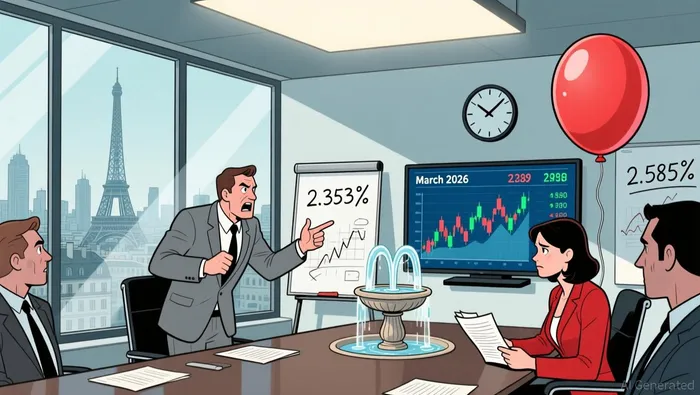 A rising yield typically indicates tightening credit conditions or higher demand for returns in a low-yield environment.
What the March 2026 12-Month BTF Auction Yield Revealed
The BTF auction is a key tool the French government uses to manage short-term financing needs and gauge investor sentiment in the domestic and broader European bond markets. The increase in yield from 2.353% to 2.585% over the past period reflects a combination of factors, including elevated inflation expectations and a broader search for yield amid persistently low long-term rates. This is consistent with trends observed in other major bond markets, where central banks have shifted toward tighter monetary policy and inflation remains sticky.
The 12-month BTF is particularly sensitive to liquidity conditions and short-term monetary policy expectations. A higher yield may indicate that investors are pricing in a higher risk-free rate, either due to expectations of future central bank tightening or because inflation expectations are rising. In the current macroeconomic environment, where global growth remains uneven and inflationary pressures linger, this increase is seen as a signal that market participants may be preparing for further monetary tightening or higher inflation outcomes.
How This Yield Compares to Previous Auctions and Market Expectations
The rise to 2.585% is the highest yield since the onset of tighter monetary conditions in late 2025. When compared to the previous reading of 2.353%, it shows a 23 basis points increase. While there were no forecasts available for this specific auction, this move appears to be in line with expectations among macro-aware investors, who had anticipated tighter monetary conditions in the European context.
The 12-month BTF auction is often interpreted as a barometer of market risk sentiment, particularly in the context of the broader European Central Bank (ECB) policy cycle. While the auction itself is not a direct policy signal, it reflects how investors are pricing in future rate expectations and inflation risks. The rise in yields could indicate growing expectations for a more hawkish ECB stance in the coming months, particularly if inflation remains stubbornly above target.
Why the BTF Yield Matters for Investors and Monetary Policy
For investors, the BTF yield is a useful short-term gauge of liquidity conditions and borrowing costs in the European government bond market. In particular, it helps assess how the ECB's monetary policy is being interpreted and priced in by market participants. A rising BTF yield may signal that investors are demanding higher returns for holding government debt in a higher-inflation or higher-rate environment.
Additionally, the BTF is a highly liquid instrument, making it a key benchmark for short-term interest rates in France. As such, it is often used as a proxy for the risk-free rate in various financial instruments and strategies. A rising yield may also indicate that investors are becoming more cautious or less accommodative in their financing decisions, which could have knock-on effects for credit markets and economic activity more broadly.
What Investors Should Watch Next
While the BTF yield is a useful indicator, it is just one piece of a larger macroeconomic puzzle. Investors should continue to monitor upcoming ECB policy decisions and related inflation data, particularly in the eurozone, for further clarity on the path of monetary policy. The March 2026 BTF yield increase could be a precursor to a broader tightening cycle, but it must be interpreted in the context of overall economic conditions and the ECB's policy framework.
Looking ahead, the most important data points for investors will include the next ECB interest rate decision, eurozone CPI and PPI figures, and other yield curve indicators such as the 10-year German Bund yield and the ECB's deposit rate. These will help determine whether the increase in the BTF yield is part of a broader shift in market expectations or a temporary liquidity-driven move.

Stay ahead of the market.
Get curated U.S. market news, insights and key dates delivered to your inbox.


AInvest
PRO
AInvest
PRO



Comments
No comments yet