
The Fragile Link: Consumer Spending and Logistics Equity Volatility in a Deteriorating Demand Environment
 Aime Summary
The U.S. consumer has long been the engine of economic growth, but as signals of weakening demand grow louder—rising interest rates, inflationary pressures, and a tightening labor market—the ripple effects are becoming impossible to ignore. For investors in logistics and transportation equities, the stakes are particularly high. These companies operate in a sector that is both a beneficiary and a barometer of consumer behavior. When demand surges, they thrive; when it falters, they face margin compression, capacity overhangs, and operational inefficiencies.
The Consumer-Logistics Feedback Loop
The logistics and transportation sector is inextricably tied to the health of consumer spending. E-commerce, which now accounts for nearly 15% of U.S. retail sales, has been a tailwind for companies like United Parcel ServiceUPS-- (UPS), FedExFDX-- (FDX), and J.B. Hunt Transport ServicesJBHT-- (JBT). However, as consumers tighten their belts—evidenced by a recent pullback in discretionary spending and a slowdown in retail sales—the demand for freight services is poised to contract.
Consider the air freight segment, which has seen capacity outpace demand in recent quarters. Carriers such as FedEx and DHL (part of Deutsche Post DHL Group) are already grappling with rate declines as shippers push for discounts. Meanwhile, trucking companies face a dual challenge: higher fuel costs and a shrinking pool of drivers, both of which erode profitability when volume growth stalls.
Risks in a Downturn: Capacity, Leverage, and Commodity Exposure
The most immediate risk lies in overcapacity. Warehousing, for instance, has seen a surge in construction over the past five years, driven by the e-commerce boom. But as demand softens, vacancy rates are rising, particularly in secondary markets. Prologis (PLD), a leader in industrial real estate, has already signaled a shift in tenant demand toward smaller, last-mile facilities—a trend that could leave large, older warehouses underutilized.
Similarly, railroads like Union Pacific (UNP) and CSX (CSX) face headwinds from slowing manufacturing and construction activity. These companies rely heavily on the movement of bulk commodities and industrial goods, sectors that are acutely sensitive to macroeconomic cycles. A prolonged slowdown in housing starts or automotive production could translate into sharply lower freight volumes.
Investors must also scrutinize balance sheets. Many logistics firms have taken on significant debt to fund expansion during the post-pandemic boom. As interest rates remain elevated, refinancing risks and cash flow constraints could amplify vulnerabilities.
Opportunities in Adaptation and Resilience
Yet, even in a downturn, opportunities emerge for those who can navigate the chaos. The first lies in consolidation. As smaller players struggle with liquidity, larger firms with strong balance sheets may acquire distressed assets at favorable valuations. For example, DHL's recent foray into same-day delivery services highlights how companies are pivoting to capture niche markets insulated from broader demand shifts.
Second, technology-driven efficiency gains could serve as a buffer. Autonomous trucking, AI-powered route optimization, and warehouse automation are not just buzzwords—they are existential imperatives. Companies like NFI (NFI) and Locus Robotics, which specialize in logistics automation, are positioned to benefit as traditional players seek to cut costs.
Finally, the green transition offers a long-term tailwind. As consumers and regulators push for sustainable supply chains, firms that invest in electric vehicles (EVs) or carbon-neutral operations could gain a competitive edge. Consider the recent partnerships between logistics giants and EV manufacturers like Rivian (RIVN) to electrify delivery fleets—a move that aligns with both regulatory trends and consumer preferences.
A Call for Prudence and Precision
For investors, the key is to avoid broad generalizations. Not all logistics equities are created equal. Those with diversified revenue streams, low leverage, and a focus on high-growth niches (e.g., cold chain logistics, last-mile delivery) are better positioned to weather the storm. Conversely, companies reliant on single-use industrial assets or volatile commodity freight should be approached with caution.
The Federal Reserve's tightening cycle may not yet be over, and the consumer's ability to absorb higher borrowing costs is being tested. In this environment, logistics and transportation equities will remain a volatile but potentially rewarding segment—for those who can separate the resilient from the fragile.
As the sector braces for a potential correction, the question for investors is not whether demand will fall, but how quickly companies can adapt. The answer to that question will determine which logistics stocks emerge stronger—and which become casualties of a shifting landscape.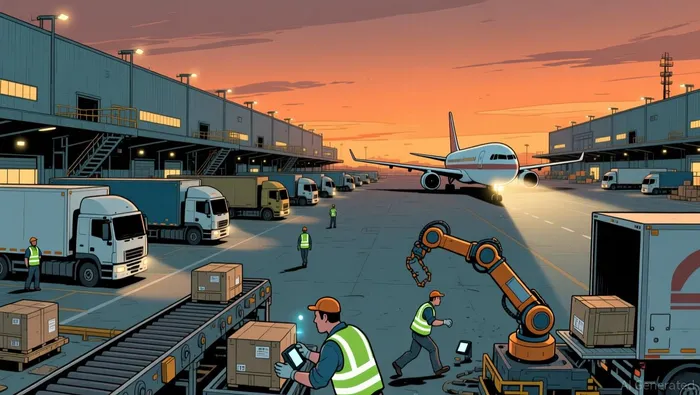

Stay ahead of the market.
Get curated U.S. market news, insights and key dates delivered to your inbox.




Comments
No comments yet