
The Fragile Foundation of Fed Credibility: Warsh's Vision and the Risks for Investors
 Aime Summary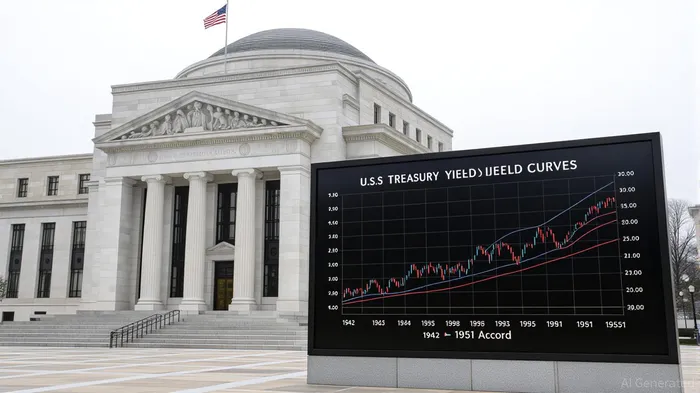
Kevin Warsh, a prominent figure in the Republican Party's effort to reshape the Federal Reserve, has recently staked out a position that risks reigniting a decades-old debate about the central bank's independence. His remarks—ranging from critiques of Jerome Powell's leadership to proposals for a new accord with the Treasury—underscore a growing tension between the Fed's institutional autonomy and the political pressures of a Trump-era economic agenda. For investors, the implications are clear: any erosion of the Fed's credibility could destabilize financial markets and erode long-term returns.
The Historical Precedent of Fed Credibility
The 1942–1951 period of yield curve control offers a cautionary tale. During World War II, the Fed agreed to peg long-term Treasury rates at 2½ percent to ensure the government could finance the war. This policy, while politically expedient, relied on the Fed's credibility to maintain investor confidence. By 1951, as inflationary pressures mounted, the Fed broke the agreement, leading to a sharp rise in long-term yields and capital losses for investors who had structured portfolios around the assumption of fixed rates. The 1951 Accord, which formally separated monetary and fiscal policy, restored the Fed's independence but also exposed the fragility of its credibility when political and economic demands collided.
Warsh's recent call for a new accord mirrors this history. He argues that the Fed's current balance sheet and coordination with the Treasury could benefit from clearer boundaries, akin to the 1951 agreement. However, his proposal risks repeating the same pitfalls. As the 1940s demonstrated, when the Fed's credibility is tied to short-term political goals—such as managing inflation from Trump's tariffs or justifying rate cuts—the long-term stability of financial markets can unravel.
Political Pressures and the Credibility Deficit
Warsh's criticism of Powell's leadership centers on what he calls a “credibility deficit” stemming from the Fed's forays into areas outside its mandate, such as climate risk and housing policy. While these initiatives aim to address systemic risks, Warsh argues they dilute the Fed's core mission and invite political interference. This is particularly evident in the current political climate, where President Trump's public demands for rate cuts have forced the Fed into a defensive posture.
The Fed's independence is not absolute, as Warsh rightly notes. Yet, its credibility hinges on its ability to insulate monetary policy from political cycles. The 1951 Accord succeeded because it created a firewall between the Fed and Treasury, allowing the central bank to act based on economic data rather than political expediency. Today, with Trump's administration openly pressuring the Fed, that firewall is eroding. If the Fed capitulates to such demands, investors may question its ability to respond to future crises, leading to volatility in bond markets and higher borrowing costs for corporations.
The Investment Implications
For long-term investors, the stakes are high. The Fed's credibility underpins the predictability of interest rates, which in turn affects asset valuations. A central bank perceived as politically compromised could see its policy decisions discounted by markets, leading to wider spreads and higher risk premiums. Consider the following data queries to contextualize these risks:
Investors should also monitor the Fed's balance sheet. Warsh's proposal for greater coordination with the Treasury could lead to unconventional interventions, such as direct purchases of longer-term securities. While this might stabilize short-term rates, it risks creating new dependencies that could backfire if the Fed's credibility is later questioned.
Strategic Recommendations for Investors
- Diversify Across Fixed Income Durations: A balanced portfolio should include both short-term Treasuries (which benefit from Fed interventions) and inflation-protected securities (TIPS) to hedge against rate volatility.
- Re-evaluate Exposure to Rate-Sensitive Sectors: Financials and real estate face headwinds if the Fed's credibility is undermined, while sectors like utilities and consumer staples may offer relative safety.
- Monitor Political-Economic Indicators: Track the Fed's communication with the Treasury and any signs of policy coordination. A breakdown in independence could signal higher market turbulence.
Conclusion
Kevin Warsh's vision for the Fed reflects a tension between institutional independence and political pragmatism. While his emphasis on credibility is laudable, his proposals risk replicating the very dynamics that led to the 1951 crisis. For investors, the lesson is clear: the Fed's credibility is not just a policy issue but a market foundation. As the central bank navigates the Trump-era landscape, investors must prepare for a world where the Fed's ability to act as an impartial arbiter of monetary policy is increasingly tested.
The next chapter in the Fed's history—whether it echoes the 1951 Accord or veers toward political entanglement—will shape the returns of portfolios for decades to come.

Stay ahead of the market.
Get curated U.S. market news, insights and key dates delivered to your inbox.






Comments
No comments yet