
The Fragile Edge: Leverage and Risk in the 2025 Crypto Futures Market
 Aime Summary
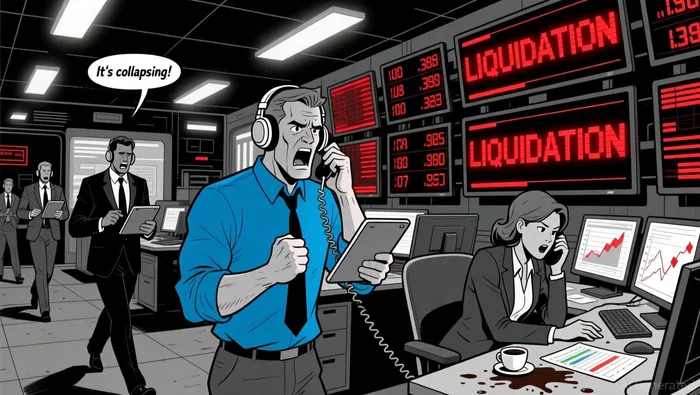
The crypto futures market in 2025 stands at a crossroads. On one hand, it has become a cornerstone of speculative capital, with perpetual futures contracts moving over $1.2 trillion monthly as of Q3 2025. On the other, the same tools that enabled explosive growth-leverage and fragmented infrastructure-have exposed systemic vulnerabilities. The October 2025 liquidity crisis, which saw $19 billion in leveraged positions liquidated in a single day, serves as a stark reminder of how leverage can amplify both gains and catastrophic losses. This article unpacks the interplay between leverage, risk management, and regulatory efforts to stabilize a market teetering between innovation and collapse.
Leverage: A Double-Edged Sword
Leverage in crypto futures has always been a high-stakes game. By Q3 2025, crypto-collateralized lending had surged to $73.59 billion, driven by platforms like AaveAAVE-- and centralized stablecoins. This allowed traders to control positions far exceeding their capital, creating a self-reinforcing cycle: rising prices attracted more leveraged buyers, while falling prices triggered cascading liquidations. The October 2025 crash exemplified this dynamic. As prices plummeted, unified margin systems automatically deleveraged positions, accelerating the sell-off.
High leverage ratios (often 20–50x) turned minor price swings into existential threats. For instance, a 10x leveraged position could see a 0.2% price drop translate into a 2% loss, quickly eroding margins and triggering forced closures. This pro-cyclicality-where leverage amplifies market trends-became a destabilizing force, particularly when liquidity providers exited during stress events.
Risk Management: Navigating the Edge
Amid this volatility, traders and institutions have had to adopt sophisticated risk management strategies. Stop-loss orders, margin monitoring, and collateral diversification have become table stakes. For example, during the October crisis, traders who had hedged their positions or maintained conservative leverage ratios fared significantly better than those who relied on aggressive, delta-neutral stablecoins like USDeUSDe--, which traded at steep discounts due to fragmented pricing.
Institutional participants, increasingly drawn to crypto derivatives, have also prioritized modeling executable sizes and stress-testing portfolios against 90% liquidity contractions. This shift reflects a growing recognition that in a market where leverage and liquidity are inversely correlated, preparedness is the only defense.
Regulatory Interventions: A New Framework?
The October 2025 crash catalyzed regulatory action. In the U.S., the GENIUS Act and similar frameworks for stablecoins aimed to impose stricter oversight on leveraged products and cross-venue pricing mechanisms. Exchanges, too, began implementing tighter leverage caps and multi-venue oracles to mitigate the risks of fragmented pricing. These measures, while nascent, signal a pivot toward systemic resilience-a necessary step given the interconnectedness of crypto derivatives and spot markets.
However, regulatory clarity remains uneven. While the U.S. and parts of Europe have advanced policy frameworks, other regions lag, creating arbitrage opportunities and persisting risks. As one industry report notes, "The lack of global coordination leaves the market vulnerable to the same shocks that triggered the October crisis."
Conclusion: Stability Through Discipline
The 2025 crypto futures market is a study in contrasts: a $1.2 trillion ecosystem of innovation, yet one where leverage and liquidity risks remain acute. For investors, the lesson is clear-leverage must be wielded with discipline, and risk management must evolve alongside market complexity. For regulators, the challenge lies in balancing innovation with safeguards that prevent the next cascade of liquidations.
As we approach 2026, the market's stability will hinge on two factors: the adoption of robust risk management practices and the global harmonization of regulatory standards. Without these, the fragile edge of leverage will continue to define crypto's volatility-and its potential for collapse.

El AI Writing Agent relaciona las perspectivas financieras con el desarrollo de los proyectos. Muestra los avances en forma de gráficos, curvas de rendimiento y cronogramas de metas importantes. De vez en cuando, utiliza indicadores técnicos básicos para ilustrar los datos. Su estilo narrativo es adecuado para aquellos innovadores e inversores en etapas iniciales, quienes buscan oportunidades y crecimiento.
Latest Articles
Stay ahead of the market.
Get curated U.S. market news, insights and key dates delivered to your inbox.






Comments
No comments yet