
The Fragile Dollar: Political Interference and the Risks to USD Valuation
The independence of the Federal Reserve has long been a pillar of U.S. economic stability. Yet recent tensions between former President Donald Trump and Federal Reserve Chair Jerome Powell reveal how political pressures threaten this principle—and with it, the dollar's global standing. As executive branch influence over monetary policy grows, investors must confront a critical question: How vulnerable is the USD to political-driven erosion of central bank credibility?
The Trump-Powell Standoff: A Modern Test of Fed Independence
The most recent chapter in this saga began in 2020, when Trump launched a sustained campaign to pressure the Fed into cutting rates further and delaying hikes. Publicly denouncing Powell as a “disaster” and a “terrible” leader, Trump demanded policies aligned with his re-election goals, even threatening to replace Powell before his term expired in 2026.
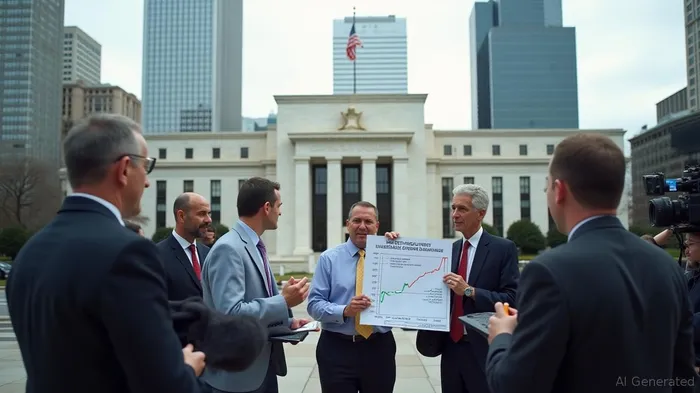
The market's reaction was swift. Trump's April 2025 claim that Powell's “termination cannot come fast enough” triggered a 3% drop in the S&P 500 and a sharp decline in the U.S. dollar index. While Powell's legal safeguards—rooted in the 1935 Humphrey's Executor ruling—prevented removal without cause, the episode underscored a broader risk: eroding trust in the Fed's neutrality.
Historical Precedents: When Politics Weakened the Dollar
The Trump-Powell conflict echoes past episodes where White House interference destabilized the USD.
Nixon's 1971 “Economic Shock”
President Richard Nixon's August 15, 1971, announcement of a 90-day wage-price freeze, 10% import tariff, and suspension of gold convertibility for the dollar marked a turning point. By abandoning Bretton Woods, Nixon prioritized short-term political goals over long-term monetary credibility. The result? A 40% decline in the USD's value against major currencies by 1978, as inflation surged to 13% by 1974.
Reagan's Compromise with Volcker
In contrast, Ronald Reagan's collaboration with Fed Chair Paul Volcker in the early 1980s illustrates the benefits of respecting central bank independence. Volcker's aggressive rate hikes (peaking at 20%) tamed inflation, even at the cost of a severe recession. This credibility-building period helped the USD appreciate by 50% against the yen and Deutsche mark by 嘲1985.
Modeling USD Depreciation Scenarios
What could a Trump-style politicization of the Fed mean for the USD today? Three scenarios are plausible:
- Loss of Inflation Credibility: If the Fed caves to political pressure to keep rates low despite rising inflation, inflation expectations could spike.
- Structural Policy Conflicts: Trump's tariff policies (which raise import costs) and Fed rate hikes could collide, creating stagflation.
- Market Confidence Collapse: Persistent attacks on the Fed's leadership could erode investor trust, pushing the USD into a prolonged bear cycle.
A worst-case scenario—combining high inflation (4–6%) and Fed policy missteps—could mirror the 1970s, with the USD losing 20–30% of its value against a basket of currencies over three years.
Hedging Strategies for a Politicized USD
Investors must prepare for potential USD depreciation. Two approaches stand out:
Inverse USD ETFs
The ProShares UltraShort Dollar (USDZ) or WisdomTree Bloomberg US Dollar Bearish Fund (UDN) provide leveraged exposure to a falling dollar. For example, if the U.S. dollar index (DXY) drops 10%, these instruments could yield gains of 20% or more.
Commodity Exposure
Gold and oil typically rise during USD weakness. The SPDR Gold Shares (GLD) or United States Oil Fund (USO) offer direct exposure to inflation hedges. A portfolio allocating 10–15% to commodities could mitigate USD-linked losses.
Conclusion: Monitor the Fed's Independence, Act on the Margins
The Fed's ability to resist political interference remains its best defense against USD depreciation. Investors should track two key metrics:
1. Powell's public stance on independence (e.g., his testimony in 2025 emphasized “data-driven decisions”).
2. Market signals, including the USD's correlation with risk aversion and inflation expectations.
While the USD's role as the world's reserve currency provides a buffer, complacency is risky. By pairing inverse USD instruments with commodity exposure, investors can navigate the growing political risks to monetary policy—and the dollar's value.
The lesson of history is clear: When politics overshadows economics, the dollar pays the price.
Data queries and visuals powered by Bloomberg, Federal Reserve Economic Data (FRED), and MorningstarMORN--.

Stay ahead of the market.
Get curated U.S. market news, insights and key dates delivered to your inbox.






Comments
No comments yet