
The Fragile Balance: Central Bank Independence and the Looming Threat to Financial Stability


 Aime Summary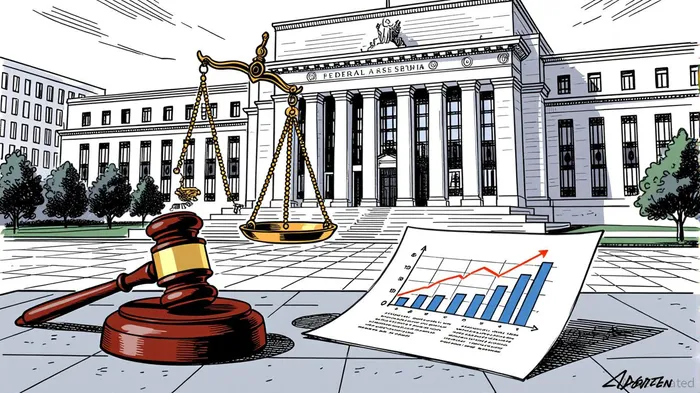
The Federal Reserve's independence has long been a cornerstone of U.S. economic policy, shielding monetary decisions from short-term political pressures. Yet, recent developments—most notably President 's aggressive rhetoric and 's public defense of the Fed—highlight a growing tension between institutional credibility and political interference. This clash carries profound implications for financial markets, where volatility, inflation risks, and asset allocation strategies are increasingly shaped by the erosion of central bank autonomy.
The Politicalization of Monetary Policy
President Trump's sustained attacks on the Fed, including threats to remove Governor and replace her with loyalists, have reignited debates about the central bank's independence. These actions echo historical precedents, such as Nixon-era pressures in the 1970s, which contributed to stagflation and eroded public trust in economic institutions. , CEO of Citadel and a Republican donor, has emerged as a rare voice of caution. In a co-authored op-ed with University of Chicago's , Griffin warned that politicizing the Fed could trigger higher inflation, destabilize investor confidence, and raise long-term borrowing costs. His argument hinges on a critical insight: once credibility is lost, it becomes prohibitively expensive to rebuild.
Market Reactions and Strategic Risks
The bond market has already priced in heightened uncertainty. Long-term yields have risen as investors factor in inflation risks tied to Trump's proposed tariffs and the Fed's potential inability to act independently. For example, , reflecting a “twist steepener” where short-term rates fell but long-term inflation expectations remained elevated. This divergence signals a paradox: while rate cuts might lower near-term borrowing costs, they could exacerbate inflationary pressures, forcing the Fed into a self-fulfilling cycle of higher rates later.
Equity markets have responded with sectoral rotations. Defensive plays—such as utilities, real estate, and small-cap stocks—have gained traction as investors hedge against policy instability. The Russell 2000, a proxy for small-cap equities, , driven by expectations of lower borrowing costs. Meanwhile, large-cap tech and healthcare stocks, which thrive in low-rate environments, have seen mixed performance as profit-taking pressures emerge.
Commodity markets, too, have been affected. . , with its inverse correlation to the U.S. , has also attracted institutional investors seeking protection against inflation. These trends underscore a broader shift toward inflation-linked assets, as the market anticipates a potential breakdown in the Fed's ability to manage price stability.
The Global Implications of Fiscal Dominance
The erosion of Fed independence also threatens the dollar's role as the global reserve currency. Central banks have diversified into gold and non-dollar assets, reducing the U.S. . This shift reflects growing concerns about U.S. fiscal sustainability, . If the Fed prioritizes political agendas over inflation control, the U.S. could follow the path of Turkey and Hungary, where political interference led to hyperinflation and currency collapses.
Investment Advice in a Shifting Landscape
For investors, the strategic risks of politicizing the Fed demand a recalibration of asset allocations:
- Overweight Inflation Hedges: Gold, , and (TIPS) should remain core holdings. The recent surge in gold prices and 's correlation with high-yield bonds highlight their role as diversifiers in a high-inflation environment.
- Defensive Equity Exposure: Utilities, healthcare, and real estate are better positioned to withstand policy volatility. These sectors offer stable cash flows and are less sensitive to interest rate fluctuations.
- Cautious Bond Allocation: Long-term bonds carry elevated risks due to inflation uncertainty. Investors should prioritize short-duration bonds or floating-rate notes to mitigate duration risk.
- Monitor Central Bank Credibility: The Fed's ability to maintain independence will shape market outcomes. A “Trump put”—where the administration retreats from aggressive policies if markets react negatively—could provide temporary relief, but long-term stability depends on institutional integrity.
Conclusion
The Federal Reserve's independence is not just a policy issue—it is a macroeconomic safeguard. Ken Griffin's defense of the Fed underscores the risks of allowing political agendas to override data-driven decision-making. As markets grapple with the implications of politicized monetary policy, investors must remain vigilant. Diversification, inflation hedging, and a focus on defensive assets will be critical in navigating a landscape where central bank credibility is increasingly under threat. The lessons of history are clear: when institutions lose their independence, the costs are borne by all.

Delivering real-time insights and analysis on emerging financial trends and market movements.
Latest Articles
Stay ahead of the market.
Get curated U.S. market news, insights and key dates delivered to your inbox.


AInvest
PRO
AInvest
PRO



Comments
No comments yet