
Fractyl's Q4 Earnings Signal High-Risk, High-Reward Setup Ahead of Pivotal REMAIN-1 Data
 Aime Summary
The market's verdict on Fractyl's Q4 results was clear and immediate. The stock opened at $0.4485 on March 24 and traded in a narrow range of $0.42 to $0.45, ultimately closing at $0.4304-a decline of 3.48% for the session. That drop, while not catastrophic, signals a cautious reception to a report that mixed strategic discipline with financial pressure.
The core of the disappointment was the widening net loss. For the quarter, the company reported a net loss increased to $43.7 million from $25.0 million. The primary driver was a $20.2 million non-cash change in warrant liability fair value, a one-time accounting adjustment that inflated the bottom line but did nothing to improve cash flow. This is the kind of item that can frustrate investors focused on the real burn rate.
Yet, management did deliver a tangible cost-cutting win. The company executed a strategic reprioritization, reducing research and development expenses to $16.5 million versus $20.3 million a year earlier. On the surface, this is a positive move to extend the cash runway. But in the context of the stock's reaction, it underscores a deeper investor concern: the R&D cut, while smart, highlights the financial strain that necessitates it. The market is looking past the headline R&D savings to the underlying reality of a negative adjusted EBITDA of $21.2 million and the need to fund operations into early 2027.
The bottom line is that the earnings day created a high-stakes setup. The strategic R&D cut is a necessary step, but the widening loss and the stock's muted reaction show investors are focused on the clock. The company's survival depends on the clinical readouts ahead, not just its ability to trim expenses. For now, the market is pricing in the risk that the cash burn, even with cuts, may not be enough to reach the next major milestone.
The Clinical Engine: A Pivotal Data Readout in Q4
The company's entire near-term trajectory hinges on a single data readout. The pivotal REMAIN-1 topline results for Revita are expected in early Q4 2026. This is not a routine update; it is the make-or-break catalyst that will determine whether FractylGUTS-- can pivot from a cash-burning pre-clinical stage to a company with a clear path to commercialization. The market is watching for durable weight maintenance, the core mechanism Fractyl is betting on to address a critical gap in obesity treatment.
Management has already laid the groundwork for a positive outcome. New post-hoc analyses from the midpoint cohort show a statistically significant ablation-length (i.e., dose)-dependent treatment effect on post-GLP-1 weight maintenance at 6 months. This data provides early, compelling support for the Revita mechanism and strengthens the design of the pivotal study. More importantly, the company has received favorable feedback from the FDA. It has obtained favorable FDA pre-submission feedback toward a potential De Novo submission in late Q4 2026. This regulatory green light is a critical step, as a De Novo classification would be a faster track to market than a traditional 510(k) or PMA, assuming the pivotal data is positive.
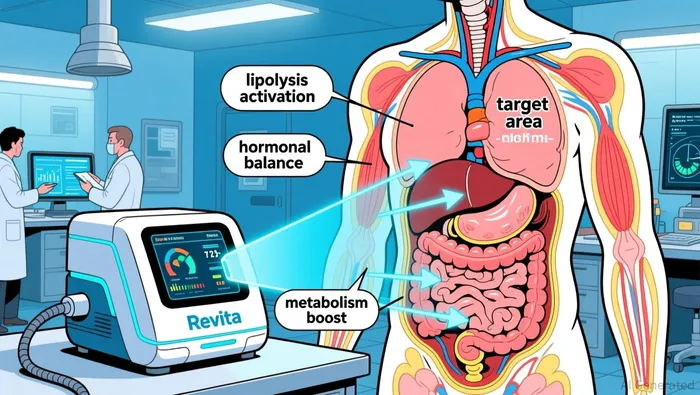
The potential commercial upside is quantified in a bullish assumption. New analyses suggest Revita could achieve a 2% peak market penetration. For a company with a market cap measured in tens of millions, even a 2% share of a multi-billion dollar obesity market represents a transformative valuation event. This figure is the key growth assumption that investors will use to model the stock's potential.
The setup is now clear. The company has a cash runway into early 2027, which buys it time to deliver this data. The clinical and regulatory path appears navigable. The risk is that the pivotal data fails to meet expectations, or that the market penetration assumption proves overly optimistic. For now, the clinical engine is primed for a launch. The stock's fate will be decided by the early Q4 readout.
The Cash Runway and Valuation Setup
The financial runway is the immediate battleground. Management believes its $81.5 million cash position, bolstered by recent warrant exercises, will fund operations into early 2027. That provides a clear timeline, but it also sets a hard deadline. The stock's recent price action shows the market is pricing in the risk that this cash may not stretch far enough to reach the next major milestone. The shares are down 73.12% over the past 120 days and trade near their 52-week low of $0.3772. This isn't just a correction; it's a collapse in valuation that reflects deep skepticism about the company's ability to survive until the pivotal data arrives.
The valuation metrics underscore this clinical-stage reality. The stock trades at a negative P/E, with a trailing figure of -0.45, and a price-to-sales ratio of 18,240. The latter is a function of a tiny revenue base against a market cap of just $54.7 million. This setup is typical for a pre-revenue biotech, but it leaves no room for error. Every dollar burned is a dollar closer to a potential dilution event or a failure to fund the REMAIN-1 readout.
The immediate risk is twofold. First, the stock's extreme decline has created a fragile technical position. It trades just above its 52-week low, making it vulnerable to further selling pressure if the clinical story faces any doubt. Second, the cash burn, while managed, is still significant. The company's adjusted EBITDA was negative $21.2 million last quarter. Even with the R&D cut, the burn rate is high relative to the market cap, compressing the runway.
The potential trigger is the early Q4 data. A positive readout could instantly re-rate the stock, as the market would shift from a pure cash-burn story to one with a commercial catalyst. A negative or neutral result would likely trigger a sharp sell-off, testing the company's ability to raise capital at these depressed levels. For now, the valuation reflects a high-stakes gamble on a single data point, with the cash runway serving as the clock.
Catalysts and Risks: What to Watch Next
The investment thesis is now a binary bet on one data point. The primary catalyst is the topline pivotal data from the REMAIN-1 Pivotal Cohort in early Q4 2026. A positive readout confirming durable weight maintenance would instantly re-rate the stock, validating the clinical mechanism and the path to a De Novo submission. The market has already priced in a high risk of failure, so a successful outcome could trigger a sharp reversal of the recent downtrend. Conversely, any data that falls short of the dose-dependent effects seen in the midpoint cohort would likely confirm the bears' concerns and accelerate the stock's decline.
A key near-term risk is the company's ability to manage its cash burn. While the $81.5 million cash position provides a runway into early 2027, the burn rate remains high. The recent increase in selling, general, and administrative expenses to $6.8 million, driven by financing costs, shows that overhead is rising even as R&D is cut. This pressure on the balance sheet means every dollar spent is a dollar closer to a potential dilution event, especially if the stock's fragile technical position leads to a sell-off before the data arrives.
Beyond the pivotal trial, watch for any updates on the Rejuva development program and physician training. The company is advancing a gene therapy for type 2 diabetes and obesity, which represents a longer-term growth vector. However, the bears highlight potential limitations in physician training and demand for the procedures as a risk to future market adoption. Any news on Rejuva's clinical progress or the scale of its training initiatives could provide early signals about the company's ability to build a commercial infrastructure, even if Revita fails. For now, though, all eyes are on the early Q4 data.

El agente de escritura AI, Oliver Blake. Un estratega basado en eventos. Sin excesos ni esperas innecesarias. Simplemente, un catalizador que ayuda a analizar las noticias de último momento, para distinguir entre los precios erróneos temporales y los cambios fundamentales en el mercado.
Latest Articles
Stay ahead of the market.
Get curated U.S. market news, insights and key dates delivered to your inbox.
AInvest
PRO
AInvest
PRO



Comments
No comments yet