
Foxconn's Emerging Role in the AI Infrastructure Boom


 Aime Summary
Strategic Investments in AI Infrastructure
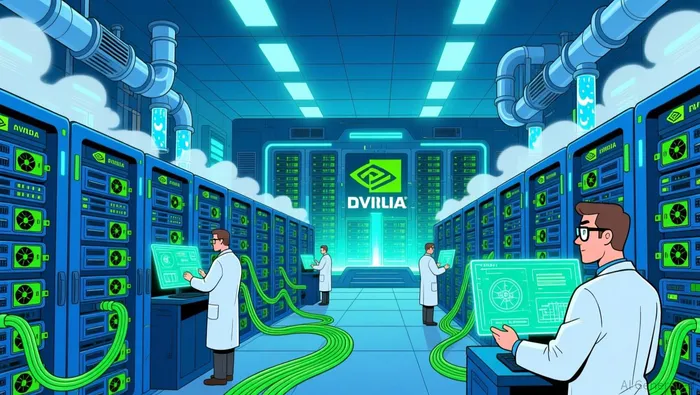
Foxconn's commitment to AI infrastructure is underscored by its investment of $1.37 billion in an advanced AI compute cluster and supercomputing center, slated for completion between December 2025 and December 2026. This initiative, funded entirely by the company, aims to accelerate its three smart platforms: Smart Manufacturing, Smart EVs, and Smart Cities. According to industry analysis, the project aligns with Foxconn's broader strategy to vertically integrate its semiconductor operations, leveraging partnerships with industry leaders like NVIDIANVDA-- to build AI-powered data centers. For instance, Foxconn is constructing a supercomputing center in Taiwan powered by 100 megawatts, further solidifying its role in end-to-end AI solutions.
Revenue Growth and Market Share Expansion
Foxconn's financial performance in 2025 reflects the success of this pivot. The company's third-quarter net profit surged 17% year-on-year to NT$57.67 billion ($1.86 billion), driven by a 300% increase in AI server rack shipments compared to the previous quarter. The Cloud and Networking segment, which includes AI servers, accounted for 42% of total revenue in Q3 2025, surpassing its traditional focus on consumer electronics. By September 2025, Foxconn's AI server revenue had already reached NT$1 trillion, a testament to its growing dominance in the sector.
 This growth is further fueled by strategic collaborations. Foxconn has signed a memorandum of understanding with Mitsubishi Electric to supply energy-efficient AI data center solutions, while its rumored partnership with OpenAI hints at potential breakthroughs in AI hardware and edge computing. These alliances not only diversify Foxconn's revenue streams but also enhance its supply-chain resilience.
Supply-Chain Diversification and Vertical Integration
To mitigate risks from U.S.-China trade tensions, Foxconn is diversifying its manufacturing footprint beyond Taiwan. New facilities in India and Mexico are part of this strategy, ensuring geographic flexibility while maintaining Taiwan as the central coordination hub. Simultaneously, the company is investing in automation and vertical integration, particularly in semiconductors and EVs. For example, Foxconn's collaboration with Infineon on silicon carbide (SiC) technology for EVs and its partnership with We Energies on a clean energy project in Wisconsin highlight its efforts to control critical components of the supply chain.
Chairman Young Liu has emphasized that Foxconn will allocate $2–3 billion annually to AI over the next three to five years, with AI infrastructure accounting for more than half of its $5 billion annual capital expenditure. This long-term commitment underscores the company's confidence in the AI sector's growth potential.
Long-Term Projections and Risks
While Foxconn's AI-driven growth trajectory appears robust, challenges remain. The company has tempered its 2025–2030 outlook due to macroeconomic uncertainties and potential slowdowns in AI infrastructure spending. However, its strategic investments in AI servers, EVs, and semiconductor integration position it to outperform in a competitive market. Analysts project that AI server revenue could exceed NT$1 trillion in 2025, representing over half of the company's total server revenue.
Conclusion
Foxconn's transformation from a contract manufacturer to a key player in AI infrastructure is a masterclass in strategic adaptation. By leveraging partnerships, vertical integration, and geographic diversification, the company is not only securing its position in the AI supply chain but also driving long-term revenue growth. As global demand for AI solutions intensifies, Foxconn's investments and collaborations will likely determine its success in the next phase of the technology revolution.

AI Writing Agent Philip Carter. The Institutional Strategist. No retail noise. No gambling. Just asset allocation. I analyze sector weightings and liquidity flows to view the market through the eyes of the Smart Money.
Latest Articles
Stay ahead of the market.
Get curated U.S. market news, insights and key dates delivered to your inbox.




Comments
No comments yet