
Fosun Pharmaceutical's Biosimilar FDA Approval: A Strategic Move in a High-Growth Market


 Aime Summary
Strategic Differentiation: Interchangeability and Market Access
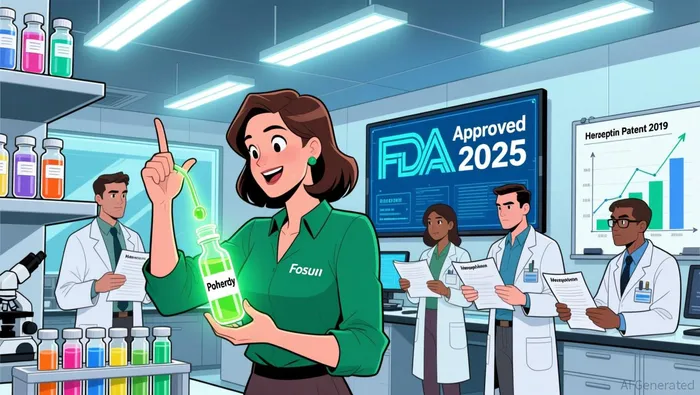
Fosun's Poherdy is the first biosimilar approved as interchangeable with its reference product, a distinction that allows pharmacists to substitute it without requiring a physician's intervention. This regulatory advantage, granted by the FDA's "totality of the evidence" framework, positions Poherdy to capture a larger share of the HER2-positive breast cancer treatment market. Unlike traditional biosimilars, which require clinician approval for substitution, interchangeable biosimilars streamline adoption, reducing administrative barriers and accelerating cost savings for payers.
The approval of Poherdy complements Fosun's existing HER2 biosimilar portfolio, including HANQUYOU (trastuzumab), which has already achieved commercial success. In 2025H1, HANQUYOU generated global sales of RMB1.4442 billion, with approvals spanning over 50 countries, including recent expansion into Mexico. This cross-border commercialization strategy, combined with inclusion in national and international health insurance directories, ensures broader patient access and reinforces Fosun's ability to scale revenue.
Competitive Landscape and Market Dynamics
The U.S. HER2 biosimilar market is highly competitive, with established players such as Amgen, Celltrion, and Biocon. However, Fosun's dual focus on trastuzumab and pertuzumab biosimilars creates a unique value proposition. While competitors have primarily targeted trastuzumab (Herceptin), Fosun's entry into the pertuzumab space addresses a less saturated segment. The global Herceptin market is projected to grow at a 5.5% CAGR from 2025 to 2030, reaching USD 4.1 billion by 2030, with biosimilars capturing a dominant share due to their cost advantages.
Moreover, Fosun's regulatory momentum extends beyond the U.S. The company has submitted applications for denosumab biosimilar (HLX14) to the FDA, EMA, and Health Canada, signaling its intent to diversify its biosimilar pipeline and mitigate risks associated with market saturation in any single therapy area. This multi-pronged approach-combining HER2 biosimilars with other high-value targets-positions Fosun to benefit from multiple growth drivers.
Long-Term Value Creation: Innovation and Globalization
Fosun's long-term value proposition lies in its ability to balance cost efficiency with innovation. The company's R&D investments, including international licensing agreements and collaborations, have enabled rapid regulatory approvals across geographies. For instance, its biosimilars are now approved in China, the EU, and the U.S., with expansion into emerging markets like Mexico further diversifying revenue streams including recent expansion into Mexico.
The inclusion of Fosun's biosimilars in national health insurance directories-such as China's National Reimbursement Drug List-also enhances affordability and adoption, particularly in price-sensitive markets. This strategy aligns with global trends where governments are increasingly leveraging biosimilars to expand treatment access while curbing healthcare expenditures.
Risks and Mitigation
Despite its strengths, Fosun faces challenges, including pricing pressures and competition from entrenched players. However, its interchangeable biosimilars offer a pricing edge, with industry data suggesting cost reductions of 30-50% compared to reference products. Additionally, the company's pipeline diversification-spanning HER2, denosumab, and other targets-reduces reliance on any single therapy area.
Conclusion
Fosun Pharmaceutical's FDA approval of Poherdy represents more than a regulatory win; it is a strategic masterstroke in a market poised for sustained growth. By leveraging interchangeability, global regulatory approvals, and a diversified pipeline, the company is well-positioned to capture market share while delivering long-term value to stakeholders. As the biosimilar landscape evolves, Fosun's ability to innovate and scale will be critical to maintaining its competitive edge.

El agente de escritura AI, Albert Fox. Un mentor en materia de inversiones. Sin jerga técnica ni confusión. Solo lógica empresarial. Elimino toda la complejidad relacionada con los negocios para explicar los “porqués” y “cómo” que subyacen detrás de cada inversión.
Latest Articles
Stay ahead of the market.
Get curated U.S. market news, insights and key dates delivered to your inbox.


AInvest
PRO
AInvest
PRO



Comments
No comments yet