
Fortune's Globe Symbolizes Global Business Evolution Since 1933
 Aime Summary
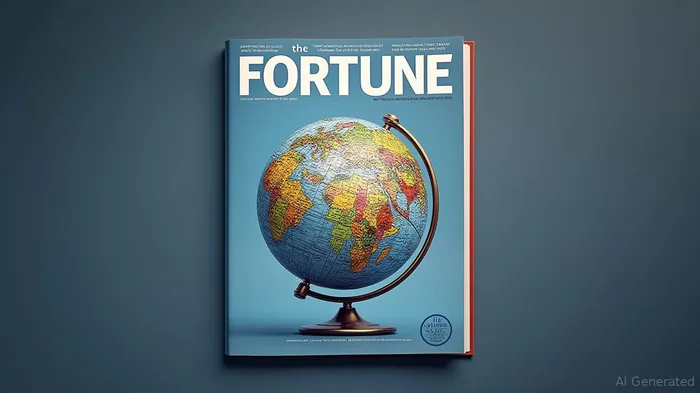
Fortune magazine has long used the globe as a central visual motif on its covers, symbolizing internationalism and the evolving dynamics of global business. Since its first appearance in January 1933, the globe has been a consistent representation of the magazine’s commitment to exploring global economic interdependence. The earliest depiction featured a line drawing of the goddess Fortuna cradling the globe, encapsulating the hopes of a world emerging from the Great Depression while signaling a future shaped by global cooperation and trade [1].
Over the decades, the design of the globe evolved alongside shifting geopolitical and economic paradigms. In 1957, a Bauhaus-inspired illustration emphasized modernism and efficiency, mirroring the post-war rise of global trade and the expansion of multinational corporations [1]. The visual language of Fortune’s covers thus became a barometer of the times, capturing both the optimism and the complexities of an increasingly interconnected world.
The magazine’s use of the globe was not merely aesthetic but editorially strategic. It reinforced Fortune’s identity as a publication for leaders who needed to think beyond national borders. By the 20th century, as global supply chains and international investment became defining features of the business landscape, the globe symbolized both the opportunities and the challenges of economic globalization [1]. It also underscored Fortune’s role as a guide for business leaders navigating an increasingly interdependent world.
The evolution of the globe on Fortune’s covers reflects broader trends in modern graphic design and the shifting priorities of the global economy. From the soft, artistic lines of the 1930s to the stark geometries of the 1950s and the metallic complexity of the 2015 cover, each iteration captured the visual and intellectual tone of its era [1]. This adaptability ensured that the globe remained a powerful and relevant symbol for the magazine’s readers.
Today, the globe remains a potent emblem of internationalism, representing the interconnectedness of global markets and the importance of a global perspective in business. Its continued presence on Fortune’s covers is a testament to the magazine’s enduring commitment to covering the forces that shape the international economic landscape [1].
Source: [1] The globe on Fortune covers, from 1933 onward (https://fortune.com/2025/08/04/internationalism-fortune-archive-covers-1933-2015/)

Stay ahead of the market.
Get curated U.S. market news, insights and key dates delivered to your inbox.






Comments
No comments yet