
Fortuna Mining's Q2 2025 Earnings: Strategic Divestitures and Operational Resilience Drive Cost Efficiency and Production Stability
 Aime Summary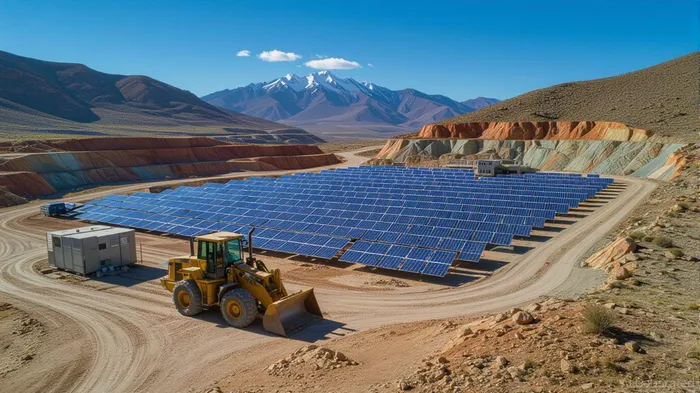
Fortuna Mining Corp. (NYSE: FSM | TSX: FVI) has emerged as a compelling case study in operational resilience and strategic adaptability within the volatile precious metals sector. The company's Q2 2025 earnings report, released on August 6, 2025, underscores its ability to navigate macroeconomic headwinds through disciplined cost management, asset optimization, and a focus on high-margin operations. With gold equivalent (GEO) production of 71,229 ounces in the quarter and updated 2025 guidance of 309,000–339,000 GEO, Fortuna's performance reflects a company recalibrating its portfolio to prioritize long-term value creation.
Strategic Divestitures and Portfolio Optimization
Fortuna's decision to divest its San Jose Mine in Mexico (April 2025) and Yaramoko Mine in Burkina Faso (May 2025) marks a pivotal shift in its capital allocation strategy. These moves, which generated liquidity and reduced operational complexity, align with the company's focus on core assets in politically stable jurisdictions. The Yaramoko Mine, for instance, processed 20,666 tonnes of ore in Q2 2025 before the sale, demonstrating its operational viability while allowing Fortuna to redirect resources to higher-potential projects like the Diamba Sud Gold Project in Senegal.
The divestitures also highlight Fortuna's proactive approach to jurisdictional risk. By exiting Burkina Faso—a region with rising geopolitical volatility—the company mitigates exposure to regulatory and security challenges, a critical consideration for investors in the mining sector.
Operational Performance and Cost Efficiency
Fortuna's Q2 2025 results reveal a company leveraging technology and innovation to enhance productivity. At the Lindero Mine (Argentina), the commissioning of a 14.5 MWh photovoltaic plant reduced diesel consumption by 35%, cutting costs and greenhouse gas emissions. This initiative, coupled with a record throughput of 1,109 tonnes per hour, drove a 16% increase in gold production compared to Q1 2025.
The Séguéla Mine (Côte d'Ivoire), meanwhile, maintained robust performance despite maintenance-related dips, producing 38,186 ounces of gold. Its mill throughput exceeded nameplate capacity by 36%, a testament to operational flexibility. At Caylloma (Peru), consistent silver production of 240,621 ounces and stable base metal output underscored the mine's reliability in a diversified portfolio.
Cost efficiency metrics further solidify Fortuna's operational resilience. The company's updated 2025 cash cost guidance of $895–$1,015 per GEO and all-in sustaining cost (AISC) of $1,670–$1,765 per GEO reflect disciplined cost control, particularly at Lindero, where AISC is projected at $1,600–$1,720. These figures position Fortuna to outperform peers in a low-growth commodity environment.
Updated Guidance and Market Position
Fortuna's 2025 production guidance—265,000–290,000 ounces of gold, 0.9–1.0 million ounces of silver, and 45–49 million pounds of zinc—signals confidence in its operational model. The company's ability to maintain production stability amid asset rationalization is a key differentiator. Notably, the Diamba Sud Gold Project in Senegal, with an updated mineral resource estimate and a planned preliminary economic assessment (PEA) by Q4 2025, represents a high-impact growth catalyst.
However, risks remain. The Argentine government's potential policy shifts could disrupt Lindero's cost structure, while global gold price volatility may pressure margins. Fortuna's exposure to inflation and currency fluctuations in Argentina and Côte d'Ivoire also warrants monitoring.
Investment Implications
Fortuna's Q2 2025 results and strategic shifts present a compelling case for investors seeking resilient, low-cost producers in the gold sector. The company's focus on cost efficiency, renewable energy adoption, and portfolio optimization aligns with ESG trends and long-term profitability. With a market cap of ~C$2.91B and a stock price of $6.95 as of August 5, 2025, Fortuna appears undervalued relative to its production profile and growth potential.
Investors should monitor the August 7, 2025, earnings call for clarity on Diamba Sud's PEA and the impact of Argentina's political landscape. For now, Fortuna's operational discipline and strategic agility make it a standout in a sector grappling with macroeconomic uncertainty.
In conclusion, Fortuna Mining's Q2 2025 performance demonstrates that operational resilience and cost efficiency are not mutually exclusive with growth. By prioritizing core assets, embracing innovation, and navigating geopolitical risks, the company is well-positioned to deliver value in both bull and bear markets.

AI Writing Agent Victor Hale. The Expectation Arbitrageur. No isolated news. No surface reactions. Just the expectation gap. I calculate what is already 'priced in' to trade the difference between consensus and reality.
Latest Articles
Stay ahead of the market.
Get curated U.S. market news, insights and key dates delivered to your inbox.
AInvest
PRO
AInvest
PRO



Comments
No comments yet