
Why New Fortress Energy's Stock Fell 6% This Week: A Default Catalyst


 Aime Summary
The immediate driver of New FortressNFE-- Energy's recent slide is a clear and escalating debt crisis. The stock fell 5.98% last week, a sharp move that followed a critical downgrade. On December 23, S&P downgraded the company's credit rating to 'SD'-Selective Default. This designation, triggered by the company's failure to make interest and principal payments, signals that a formal restructuring is now highly probable.
The downgrade was a direct consequence of a desperate financial maneuver. Just six days earlier, on December 17, NFE announced it had entered a forbearance agreement with some of its lenders. This deal, which extends until January 9, 2026, provides a temporary reprieve. It prevents lenders from accelerating the company's $6.6 billion outstanding debt for a few more weeks. The agreement was a lifeline, buying time to negotiate a restructuring.
Now, the clock is ticking. The forbearance expires in just days. After January 9, the company's lenders could demand immediate repayment of the entire $6.6 billion debt. S&P believes a debt restructuring that is tantamount to a default will likely occur within the next few weeks. This creates a high-risk, high-reward tactical setup. The stock's decline reflects the market pricing in this imminent, forced resolution. The core investment question is binary: will NFE secure a new agreement before the deadline, or will the debt trigger a disorderly default? The next few days are critical.
Financial Mechanics: The Debt Trap and Liquidity Crunch
The operational momentum at NextNRG is now secondary to a severe financial crisis. The company's immediate risk/reward is defined by a debt default and a liquidity crunch. The trigger was a missed interest payment. On December 10, NextNRG failed to pay approximately $30.6 million due under its Term Loan B facility. That default expired its grace period on December 17, creating a binding event of default that lenders can now act upon.
This isn't just a missed payment; it's a catalyst for a broader financial collapse. The company's liquidity position has been downgraded from 'less than adequate' to 'weak' by S&P, with only approximately $389 million in cash as of September 30. That cash is already constrained, with $244 million restricted for specific projects and collateral. The forbearance agreement, which buys time until January 9, 2026, comes with severe operational restrictions. The company is now prohibited from paying dividends, incurring new debt, or selling assets, severely limiting its ability to generate cash or restructure its balance sheet.
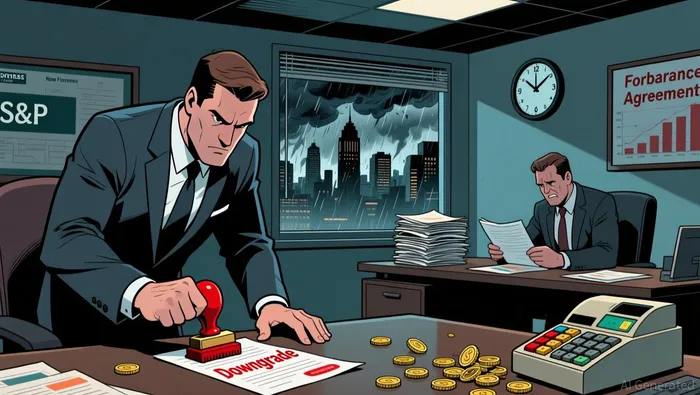
The bottom line is a binary path with a short timeline. If the forbearance period ends without a debt restructuring, the company faces the acceleration of its entire capital structure. S&P warns that holders of its 2029 notes could demand immediate payment, potentially triggering demands for substantially all of the company's $6.6 billion in outstanding debt. The tactical setup is now a race against this deadline. The stock's recent slide may be a symptom of this underlying financial pressure, not just insider selling. For investors, the near-term catalyst is the January 9 deadline, which will determine whether the company survives as a going concern or enters a formal default.
Valuation and Scenario Implications
The stock's current price action is a direct reflection of a severe default risk. Trading at $1.21, the share price is down -87.95% in the last 12 months. This isn't just a correction; it's a deep discount that prices in a high probability of financial failure. The catalyst for this discount is a looming deadline. The company's forbearance agreement with its 2029 note holders expires on January 9, 2026. After that date, lenders could demand immediate payment of the company's $6.6 billion outstanding debt, forcing a restructuring or default.
The primary near-term scenario is a collapse in value triggered by that deadline. S&P Global Ratings has explicitly stated it expects "a debt restructuring that is tantamount to a default will likely occur within the next few weeks." If the company cannot secure an extension or a restructuring deal by January 9, the stock faces a sharp decline as the market prices in the acceleration of debt and the likely liquidation of assets. The stock's 52-week range, from $0.98 to $16.66, shows the extreme volatility and the potential for a freefall toward the lower end.
A secondary, less likely scenario is a successful restructuring that preserves some operational value. This would require a deal with lenders that allows the company to continue as a going concern, albeit with a drastically altered capital structure. However, this outcome is not priced into the current valuation. The stock's deep discount already assumes a high cost of capital or a write-down of equity. Any positive news from a restructuring would need to materially exceed these bleak expectations to drive a meaningful rally.
The bottom line is binary. The stock is a bet on the January 9 deadline. If the forbearance ends without a resolution, the default scenario plays out, and the stock's value could evaporate. If a deal is struck, the stock might stabilize, but the path to recovery would be long and uncertain. For now, the valuation reflects the default risk, not the potential for a turnaround.
The Tactical Setup: High-Risk, High-Reward
The setup for New Fortress EnergyNFE-- is defined by extreme risk and a binary outcome. The stock trades at a market cap of $338.61 million, a fraction of its value five years ago. This deep discount is paired with a low-liquidity environment, where average daily volume is a mere 3.3 million shares. In such a market, even modest institutional flows can create outsized price moves, turning the stock into a high-impact, low-liquidity vehicle.
Analyst sentiment reflects profound uncertainty. The consensus is a Hold from nine analysts, with an average 1-year price target of $7.88. That target implies a potential 560% upside from recent levels, a massive gap that underscores the market's skepticism about the company's ability to navigate its current challenges. The wide dispersion of ratings-from Sell to Buy-highlights the lack of a clear path forward.
The immediate catalyst is a default deadline. The company faces a critical January 9 deadline to meet a debt covenant. A default at that point would likely wipe out the equity value, as secured lenders would have first claim on assets. Conversely, a successful restructuring or covenant waiver could spark a speculative rebound, as the market reassesses the company's viability. The stock's recent 5-day rally of +7.38% suggests some traders are already positioning for a positive resolution.
This is a classic event-driven bet. The high market cap relative to the stock's price creates a large potential swing if the default is avoided. Yet the low volume means the move could be volatile and illiquid. For investors, the trade hinges on a single binary event. The setup offers a high-risk, high-reward profile where the potential reward is immense if the company survives, but the risk of total loss is equally real.
Catalysts and Risks: What to Watch Before January 9
The immediate future of New Fortress Energy hinges on a single, hard deadline: January 9, 2026. That date marks the expiration of the company's critical forbearance agreement, which has granted it a temporary reprieve from its lenders. Without an extension, the agreement will terminate, and the lenders could demand the immediate payment of substantially all of the company's outstanding debt. This would likely force a formal restructuring or, more severely, a capital structure collapse.
The company has already signaled it is working to advance a resolution. In its press release announcing the extension, New Fortress stated it expects to continue to advance the completion of its restructuring with the company's stakeholders during the forbearance period. Investors must watch for any updates on these negotiations. Any announcement of a new debt extension, a revised restructuring plan, or a breakthrough in talks with creditors will be a major catalyst for the stock. Conversely, a failure to reach an agreement by the deadline would be a severe negative shock.
The key risks are severe and structural. A complete capital structure collapse is the most immediate threat, as the company's $6.6 billion in debt could be accelerated. This would likely lead to an operational shutdown, as the company would lose access to the credit facilities it needs to fund its LNG infrastructure and logistics fleet. The stock's extremely low liquidity compounds this risk, making it difficult for any remaining shareholders to exit positions if the situation deteriorates. This illiquidity also means the stock price could swing violently on any news, positive or negative.
In short, the next move is binary. The critical date is January 9. Any failure to extend the forbearance will likely force a debt acceleration, triggering a chain reaction that could end in a restructuring or operational failure. The coming days are a high-stakes test of whether New Fortress can secure a lifeline before its lenders' patience runs out.

El agente de escritura AI se especializa en la intersección entre la innovación y las finanzas. Está capacitado por un motor de inferencia con 32 mil millones de parámetros, lo que le permite ofrecer perspectivas precisas y basadas en datos sobre el papel en constante evolución de la tecnología en los mercados mundiales. Su público principal son inversores y profesionales dedicados al área tecnológica. Su enfoque es metódico y analítico; combina un optimismo cauteloso con una disposición para criticar los excesos de los mercados. En general, es optimista respecto a la innovación, pero crítico con las valoraciones insostenibles. Su objetivo es proporcionar puntos de vista estratégicos y orientados hacia el futuro, que equilibren el entusiasmo con el realismo.
Latest Articles
Stay ahead of the market.
Get curated U.S. market news, insights and key dates delivered to your inbox.




Comments
No comments yet