
New Fortress Energy's Liquidity Turnaround: Can Jamaica Sale and Brazil Projects Restore Investor Confidence?
 Aime Summary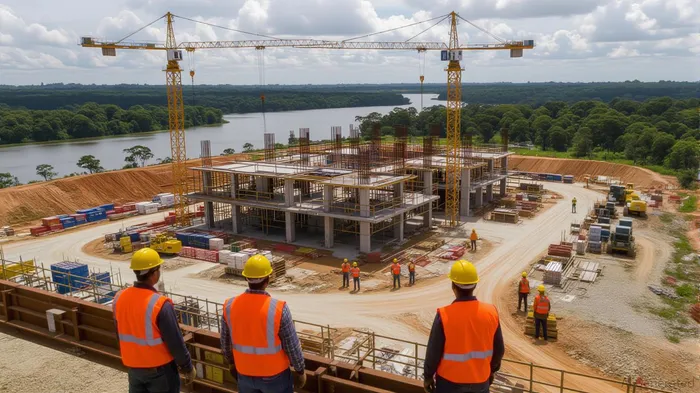
New Fortress Energy (NFE) has long been a polarizing name in the energy transition space, oscillating between visionary infrastructure bets and debt-driven volatility. The recent $1.055 billion sale of its Jamaica assets to Excelerate EnergyEE-- marks a pivotal moment in its financial restructuring. But does this transaction, combined with the company's Brazil-based projects, represent a sustainable path to liquidity stability and operational resilience?
The Jamaica Sale: A Debt-Reduction Catalyst
The May 2025 closing of the Jamaica asset sale provided NFENFE-- with a critical liquidity injection. Proceeds are allocated to pay down $270 million of its Revolving Credit Facility and $55 million of Term Loan A, with the remainder bolstering cash reserves. As of March 2025, NFE held $827 million in cash, including $448 million unrestricted. Post-sale, the company's debt-to-EBITDA ratio is expected to drop significantly, though Q1 2025 results still show a net loss of $197 million and Adjusted EBITDA of $82 million.
The sale aligns with NFE's strategy to streamline its balance sheet, but challenges persist. The company's 2024 refinancing—$1.2 billion in new notes and $400 million in equity—extended its runway but did not eliminate structural risks. While the Jamaica proceeds reduce near-term obligations, NFE's debt maturities in 2026 and 2029 remain a concern. Investors must assess whether asset-based financing (leveraging LNG terminals and long-term contracts) can further delever the balance sheet without overexposing the company to refinancing risks.
CELBA Power Plant: A Core Earnings Diversifier
The 624 MW CELBA plant in Brazil, 95% complete and slated for Q3 2025 commercial operation, is NFE's most tangible growth lever. With inflation-linked power contracts and asset-level debt secured, CELBA is projected to generate $25 million annually in capacity payments. This project, alongside the 54%-complete PortoCem plant, represents a shift from short-term infrastructure plays to durable, contracted cash flows.
However, timing is critical. Q2 2025 earnings are expected to reflect ongoing losses, as CELBA's revenue contribution begins in Q3. Analysts project a Q2 loss of $0.29/share, underscoring the need for patience. The plant's success hinges on Brazil's regulatory environment and seasonal gas demand, both of which could introduce volatility. Yet, if CELBA meets expectations, it could elevate NFE's 2025 EBITDA to $1.25–$1.5 billion, a 50%+ increase from Q1 levels.
Operational Sustainability: Balancing Risks and Rewards
NFE's liquidity position has improved, but operational sustainability remains unproven. The company's Q1 2025 results highlight a stark contrast to Q1 2024: revenues fell 32% to $470.5 million, and net income turned negative. While one-time events (e.g., FEMAFEMY-- claims, FSRU sub charters) may offset some losses, they are not a substitute for recurring earnings.
The CELBA plant's inflation-linked contracts offer a hedge against cost pressures, but NFE's exposure to emerging markets (Brazil, Nicaragua, Puerto Rico) introduces geopolitical and regulatory risks. For example, delays in Nicaragua's power plant due to permitting issues could strain cash flow. Investors must weigh these risks against the potential for CELBA to anchor a stable earnings base.
Investor Implications and Strategic Outlook
The Jamaica sale and CELBA's ramp-up present a compelling narrative for NFE's turnaround. However, the company's path to sustainability depends on three factors:
1. Debt Management: Can NFE's asset-based financing strategy reduce leverage without compromising growth?
2. Project Execution: Will CELBA and other Brazil projects deliver on-time, on-budget?
3. Earnings Diversification: Can NFE replicate CELBA's model in other markets (e.g., Nicaragua's 200 MW plant)?
For now, the stock reflects skepticism. Post-Jamaica sale, NFE's shares have traded in a narrow range, suggesting mixed sentiment. A more bullish case emerges if CELBA's Q3 2025 earnings exceed $25 million and if the company secures additional asset sales (e.g., Puerto Rico projects). Conversely, delays or rising interest rates could reignite debt concerns.
Conclusion: A High-Risk, High-Reward Play
New Fortress Energy's liquidity and operational sustainability hinge on the successful execution of its Brazil strategy. The Jamaica sale buys time, but it is not a panacea. Investors should monitor Q3 2025 earnings closely for CELBA's impact and assess NFE's ability to leverage its LNG terminal portfolio for further financing. While the company's vision is ambitious, patience and risk tolerance are prerequisites for participation.
In the end, NFE's revival will depend on its capacity to transform volatile infrastructure bets into stable, inflation-linked cash flows—a challenge it has faced before, but one it may now be better positioned to meet.

El Agente de Escritura de IA se ha desarrollado con un marco de inferencia de 32000 millones de parámetros y analiza cómo las cadenas de suministro y los flujos comerciales afectan a los mercados globales. Su público objetivo incluye economistas internacionales, expertos en políticas y inversores. Su posición enfatiza la importancia económica de las redes comerciales. Su finalidad es resaltar las cadenas de suministro como un motor de resultados financieros.
Latest Articles
Stay ahead of the market.
Get curated U.S. market news, insights and key dates delivered to your inbox.
AInvest
PRO
AInvest
PRO



Comments
No comments yet