
Fortifying Small Business Ecosystems: Infrastructure Investments in Disaster-Prone Zones
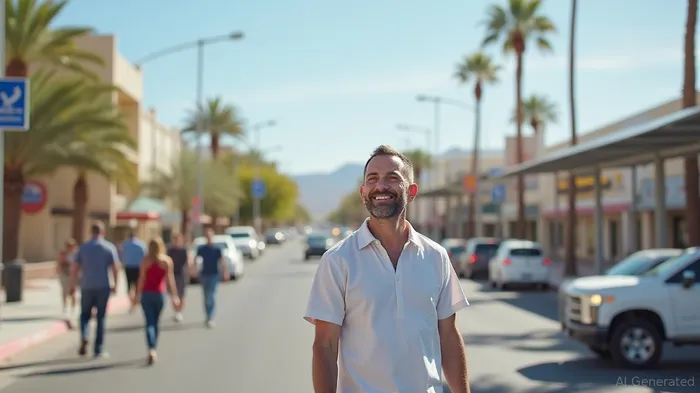
The recent storms that ravaged Tropicana Avenue in Las Vegas, Nevada, in July 2025, exposed the fragility of small businesses in disaster-prone areas. When winds up to 70 mph toppled power lines, closed roads, and stranded customers, businesses like Cliff's Barber Corral faced immediate operational crises. Forced to redirect traffic via Pecos Road and rely on phone calls to retain clients, the storm underscored a critical truth: small businesses in high-risk regions cannot survive without fortified commercial infrastructure. This crisis presents an urgent call to action—and a compelling investment thesis—for real estate trusts (REITs) and infrastructure funds focused on disaster resilience.
The Vulnerability of Small Business Hubs
The Tropicana Avenue example is a microcosm of a broader challenge. Small businesses in disaster-prone regions—whether coastal cities facing hurricanes, wildfire zones in California, or earthquake-prone areas like the Philippines—rely on accessible roads, reliable utilities, and resilient buildings. When storms, fires, or quakes strike, their survival hinges on infrastructure that can withstand disruption.
Take Cliff's Barber Corral. The July 2025 closure of East Tropicana Avenue for five days cut off foot traffic, forcing owner Cliff Wolosin to redirect customers. While he adapted by leveraging technology (phone calls, social media), such strategies only mitigate, not eliminate, losses. The longer-term issue—the vulnerability of commercial zones to infrastructure failures—requires systemic solutions.
The Investment Opportunity: Building Resilience Through Infrastructure
The answer lies in infrastructure investments that create disaster-resistant commercial ecosystems. This includes:
1. Smart Grids: Underground utilities to prevent power outages.
2. Climate-Adaptive Buildings: Fire-resistant materials, elevated foundations, and storm-resistant roofs.
3. Traffic Resilience: Redundant road networks and emergency access routes.
4. ESG-Driven Real Estate: Properties designed to meet climate stress tests.
Key Players and Strategies:
- Ventas, Inc. (NYSE: VTR): A leader in healthcare REITs, VentasVTR-- uses a three-pronged approach—geographic diversification, cross-functional teams, and partnerships with risk assessors—to mitigate climate risks.
- Equity Residential (NYSE: EQR): Specializes in climate risk exposure assessments for each property, prioritizing mitigation in flood- or wildfire-prone areas.
- Siemens Energy (SIM): Provides smart grid solutions to prevent wildfires caused by downed power lines—a critical issue in Las Vegas's monsoonal storms.
Case Study: Tropicana Avenue's Path to Resilience
The Tropicana Road Improvement Project (“Dropicana”), while delayed, offers a blueprint. By replacing aging bridges and integrating smart traffic systems, it aims to reduce vulnerability to future storms. However, its success hinges on private-sector partnerships. For example, a REIT could acquire properties along Tropicana Avenue, retrofitting them with solar panels, backup generators, and underground utilities—creating a “resilience zone” that attracts businesses and investors alike.
The Financial Incentive: High Returns with Impact
Investing in disaster-resilient commercial infrastructure isn't just ethical—it's profitable. A Nareit webinar highlighted that every $1 spent on pre-disaster mitigation yields $13 in avoided losses. For REITs, this translates to stabilized cash flows and reduced tenant turnover.
- ESG Funds: The Smokey Mountain ETF (SMOKE) tracks companies in wildfire mitigation, including Siemens and Verisk AnalyticsVRSK-- (VRSK), which provides risk modeling tools.
- Catastrophe Bonds: Instruments like Swiss Re's wildfire-linked bonds offer yields of 6–8%, with payouts triggered by predefined disaster metrics.
Risks and Considerations
While the opportunity is clear, risks remain:
- Regulatory Lag: Outdated building codes, as seen in the Philippines, can slow progress.
- Cost: Retrofitting older buildings requires upfront capital, though tax incentives (e.g., U.S. Bipartisan Infrastructure Law) offset expenses.
Conclusion: A Call to Build Back Better
The storms of July 2025 were a wake-up call. For investors, the path forward is clear: allocate capital to REITs and funds prioritizing climate-resilient commercial infrastructure. By backing projects like fortified Tropicana Avenue corridors or wildfire-resistant office parks, investors can protect small businesses, generate robust returns, and ensure economic vitality even in disaster-prone regions.
Action Items for Investors:
1. Diversify portfolios with REITs like VTRVTR-- and EQREQR--, which have explicit climate resilience strategies.
2. Explore ETFs like SMOKE or catastrophe bonds for yield-enhanced risk mitigation.
3. Monitor policy updates (e.g., U.S. infrastructure funding) to identify emerging opportunities.
The next storm is inevitable—but with the right investments, its impact can be managed.

Stay ahead of the market.
Get curated U.S. market news, insights and key dates delivered to your inbox.


AInvest
PRO
AInvest
PRO



Comments
No comments yet