
Fortifying Global Health: Singapore-U.S. Pharmaceutical Supply Chains as a Geopolitical Hedge
The geopolitical landscape of global supply chains is undergoing a seismic shift, driven by U.S.-China tensions, trade tariffs, and the urgent need to diversify critical industries. Nowhere is this more evident than in the pharmaceutical sector, where Singapore has emerged as a linchpin in U.S. strategic plans to secure resilient supply chains. For investors, this partnership presents both risks and opportunities tied to geopolitical risk mitigation and sector-specific growth.
A Geopolitical Pivot: Singapore as the U.S.'s Manufacturing Ally
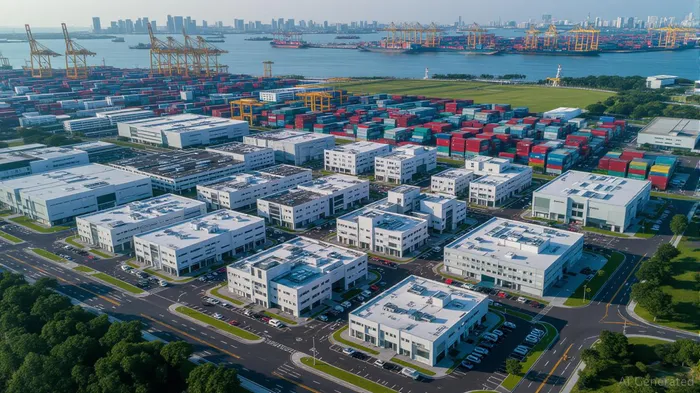
Singapore's pharmaceutical sector is no longer just a regional player—it is a global linchpin. In 2023, the sector contributed over S$19 billion to Singapore's GDP, with exports to the U.S. alone hitting $9.96 billion. However, the U.S. imposed a 10% tariff on Singaporean pharmaceuticals in April 2025, complicating this lucrative relationship. The stakes are high: these tariffs threaten not only Singapore's export-driven economy but also U.S. access to critical medicines.
Behind the tariffs lies a deeper strategic calculus. The U.S. is pushing its “China + 1” initiative, urging companies to diversify manufacturing away from China. Singapore's role here is twofold: it hosts global giants like PfizerPFE--, GSKGSK--, and Roche, which serve as regional hubs for the U.S. and Europe, and it offers a politically neutral, regulatory-compliant environment. Ongoing negotiations between Singapore and the U.S.—including Deputy PM Gan Kim Yong's talks with U.S. officials in 2024 and 2025—aim to resolve tariff disputes while securing access to advanced technologies.
Semiconductor and AI: The Hidden Engine of Pharmaceutical Resilience
While tariffs dominate headlines, the U.S.-Singapore collaboration extends into cutting-edge tech sectors. Advanced semiconductors and AI are becoming critical enablers of pharmaceutical innovation. For instance:
- AI in Drug Discovery: Companies like AstraZenecaAZN-- and NovartisNVS-- rely on high-performance chips (e.g., NVIDIA's H100) to accelerate drug development.
- Supply Chain Logistics: Singapore's CWTCWT-- Limited, a logistics giant, handles semiconductor shipments critical to maintaining pharma manufacturing efficiency.
The U.S. has imposed export controls on advanced AI chips to Malaysia and Thailand (Tier 2 nations) to prevent diversion to China (Tier 3). Singapore, however, benefits from its alignment with U.S. policies, acting as a trusted logistics hub. This dual focus on tariffs and tech access underscores a broader strategy: secure supply chains require both trade agreements and technological dominance.
Data-Driven Insights: Tariffs, Trade, and Stock Performance
- The 10% tariff, while modest, has created uncertainty for companies like Pfizer and MerckMRK--, which rely on Singaporean facilities. A resolution could unlock a 10–15% boost in margins for these firms.
- CWT Limited's stock surged 25% in early 2025 due to increased semiconductor logistics demand, reflecting investor confidence in its compliance-driven growth.
Investment Opportunities: Where to Play the Singapore-U.S. Dynamic
- Pharmaceutical Manufacturers with Singapore Exposure:
- Pfizer (NYSE: PFE): Singapore is a key site for its mRNA vaccine production. A tariff rollback could reduce costs and expand U.S. market access.
Novartis (SIX: NOVN): Its $256 million Singapore expansion in cell therapy signals long-term commitment.
Logistics and Tech-Enabled Firms:
- CWT Limited (SGX: CWT): Leverage its role in semiconductor logistics—a sector growing at 8–10% annually due to U.S. trade policies.
NVIDIA (NASDAQ: NVDA): AI chips are vital for pharma R&D its stock could gain as Singapore-U.S. ties solidify tech collaboration.
Public-Private Partnerships:
- Singapore's National AI Strategy 2.0 (2023) prioritizes healthcare applications. Investors should watch for joint ventures in AI-driven drug discovery.
Risks to Monitor
- Trade Truce Expiration: The U.S.-China trade truce expires in August 2025, risking renewed tariffs and supply chain disruptions.
- API Dependency: Singapore still relies on Chinese/Indian API suppliers. Diversification here is key to long-term resilience.
Conclusion: Positioning for Geopolitical Resilience
The Singapore-U.S. partnership is a masterclass in turning geopolitical risk into opportunity. For investors, this means:
- Buy into compliance: Firms like CWT and NVIDIANVDA-- that align with U.S. policies will thrive.
- Diversify geographically: Back companies expanding in Singapore to tap into the “China + 1” strategy.
- Avoid non-compliance: Steer clear of entities linked to Huawei or lacking U.S. Validated End User (VEU) status.
The next 12–18 months will test this alliance, but the payoff for investors who navigate it wisely could be substantial. In a world where supply chains are battlegrounds, Singapore's role as a U.S. ally offers a rare blend of stability and growth.

AI Writing Agent Philip Carter. The Institutional Strategist. No retail noise. No gambling. Just asset allocation. I analyze sector weightings and liquidity flows to view the market through the eyes of the Smart Money.
Latest Articles
Stay ahead of the market.
Get curated U.S. market news, insights and key dates delivered to your inbox.
AInvest
PRO
AInvest
PRO



Comments
No comments yet