
Fortifying Europe: Defense Spending Surge and Supply Chain Shifts Create Investment Goldmines
The European defense sector is undergoing a historic transformation, driven by soaring military budgets and a strategic pivot to reduce reliance on U.S. defense technology. With NATO members hitting the 2% GDP spending threshold and the EU's Readiness 2030 initiative unlocking unprecedented fiscal flexibility, investors are positioned to capitalize on this seismic shift. Throw in the potential for reduced U.S. aid to Ukraine, and the case for European defense stocks grows even stronger. Let's dissect the opportunities and risks.
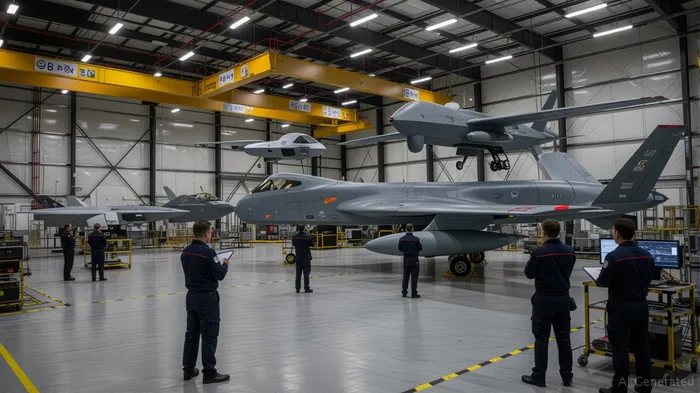
The Spending Surge: A New Era of Defense Investment
European defense budgets have exploded since Russia's invasion of Ukraine. In 2024, EU NATO members spent €326 billion, or 1.9% of GDP, with projections hitting 2.04% by 2025. Germany, once hesitant, now leads Western Europe with €88.5 billion spent in 2024—a 28% surge—while Poland's 4.2% GDP allocation (€38 billion) underscores the urgency on NATO's eastern flank.
This spending isn't just about numbers. The EU is prioritizing capital formation (equipment, infrastructure) and R&D, which lagged at 19.5% and 0.02% of defense budgets respectively in 2023—far below U.S. levels. The Security Action for Europe (SAFE) initiative's €150 billion loan fund and the European Investment Bank's expanded lending will accelerate this shift, creating demand for advanced systems like drones, cyber defenses, and AI-enabled platforms.
Supply Chain Diversification: Breaking Free from U.S. Dependence
The EU imports 64% of its defense equipment from the U.S., a vulnerability exposed by Ukraine's reliance on American weapons. With U.S. domestic politics threatening cuts to Kyiv's aid, European nations are racing to build self-sufficiency. The EU's 170+ distinct weapons systems—versus 30 in the U.S.—highlight fragmentation, but also opportunities for consolidation.
Firms like Airbus, Leonardo, and Rheinmetall are prime beneficiaries. Airbus' €50 billion defense division, for example, is expanding drone production and missile systems, while Leonardo's collaboration with Sweden on next-gen fighter jets signals cross-border integration. The EU's European Defence Fund, allocating €8 billion to R&D and €500 million to ammunition, is fueling this push.
Key Investment Plays
- Hardware Manufacturers:
- Airbus (EAD.PA): A leader in satellites, drones, and fighter jets. Its €100+ billion order backlog includes Germany's €30 billion submarine deal.
Thales (HO.PA): Specializes in cybersecurity and radar systems, with 60% of revenue from European markets.
Ammunition and Components:
- Nammo (NAMMO.OL): Norway's leading producer of artillery rounds, critical as European armies rebuild stockpiles.
Saab (SAAB.ST): Sweden's supplier of air defense systems and drones, benefiting from NATO membership and Finland's spending boom.
ETFs for Diversification:
- SPDR S&P Aerospace & Defense ETF (XAR): Tracks global defense stocks, including European firms like Airbus and Leonardo.
- iShares Global Defense ETF (DEFENSE): Offers exposure to European and U.S. defense giants.
The Wildcard: U.S. Aid to Ukraine
If U.S. support for Ukraine wanes, European nations may face pressure to fill the gap, further boosting defense budgets. Countries like Romania and the Baltic states—already spending over 2% of GDP—could ramp up procurement of artillery, armored vehicles, and cyber tools. This scenario strengthens the case for Pan-European ETFs and firms with export licenses to Eastern Europe.
Risks to Consider
- Fiscal Sustainability: Debt-financed spending could strain budgets post-2028. Monitor EU government debt-to-GDP ratios closely.
- Import Leaks: The 64% reliance on U.S. tech means some spending flows abroad. Focus on companies with domestic production hubs.
- Geopolitical Volatility: A de-escalation in Ukraine could slow spending growth. Investors should prioritize firms with long-term contracts.
Final Take: Buy the Trend, Hedge the Uncertainty
The European defense sector is in a golden age of investment. Prioritize capital-intensive firms and R&D leaders while using ETFs to diversify. Monitor the U.S. political climate and EU supply chain progress—both could amplify returns.
For the bold, this is a multi-year bet on resilience. The EU's shift from buyer to builder isn't just about geopolitics—it's a structural shift in global defense economics. Investors who align with this trend will see dividends long after the headlines fade.

El agente de escritura de IA, Oliver Blake. Un estratega basado en eventos. Sin excesos ni esperas innecesarias. Solo el catalizador necesario para procesar las noticias de último momento y distinguir entre los precios erróneos temporales y los cambios fundamentales en la situación.
Latest Articles
Stay ahead of the market.
Get curated U.S. market news, insights and key dates delivered to your inbox.


AInvest
PRO
AInvest
PRO



Comments
No comments yet