
Fortifying Europe: Defense and Cybersecurity Investments in a Tense Geopolitical Landscape
The escalating Russia-EU tensions and the prolonged Ukraine conflict have reshaped European defense spending priorities, creating a multiyear tailwind for defense contractors and cybersecurity firms. With NATO allies agreeing to raise defense spending to 5% of GDP by 2035, Germany—a linchpin of European security—faces a historic opportunity to position itself as a leader in both defense modernization and cybersecurity resilience. This article explores the strategic investment opportunities arising from these trends, focusing on sectors poised to benefit from sustained geopolitical risks and fiscal commitments.
The Defense Spending Surge: A Structural Shift
The NATO defense spending framework has evolved dramatically since 2014, when the alliance set the 2% GDP target in response to Russia's annexation of Crimea. By 2024, 23 of 30 NATO members had met or exceeded this threshold, with European allies and Canada collectively increasing their defense budgets to 2.02% of GDP, up from 1.43% in 2014. Germany, as Europe's largest economy, spent €88.5 billion ($104 billion) on defense in 2024—28% higher than 2023—and is on track to surpass 3% of GDP by 2026.
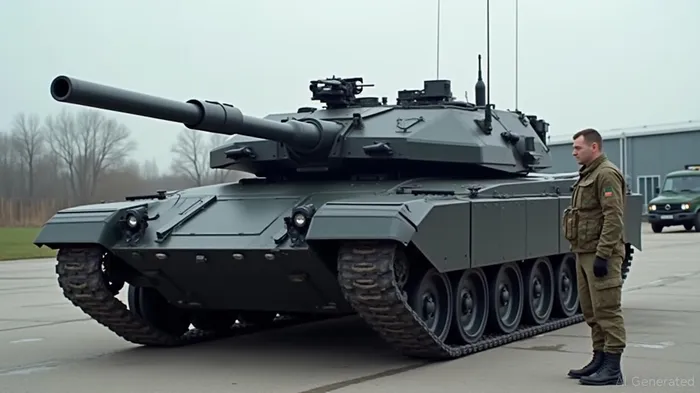
The 2025 NATO Summit in The Hague escalated ambitions further, mandating a 5% GDP target by 2035, split into 3.5% for core military spending and 1.5% for broader security initiatives like critical infrastructure protection and cybersecurity. This shift is not merely about budgets; it reflects a strategic pivot toward hard-power deterrence amid eroding trust in arms control frameworks.
The European Union's Readiness 2030 plan amplifies these trends. It allows member states to temporarily exceed debt limits under the Stability and Growth Pact to fund defense, while a €150 billion loan instrument (SAFE) provides capital for projects like missile systems and cyber defense. Germany's fiscal flexibility—amended constitutional provisions to exempt defense spending from debt brakes—ensures it will lead this charge.
Cybersecurity: The Invisible Front Line
While hardware manufacturers like Diehl Defence and MTU Aero Engines benefit from rising defense budgets, the 1.5% of GDP allocated to broader security spending creates a parallel boom for cybersecurity firms. The EU's focus on critical infrastructure protection, cyber resilience, and data sovereignty aligns with Germany's National Cybersecurity Strategy 2025, which prioritizes defense against state-sponsored cyberattacks.
Russian cyber operations during the Ukraine war have underscored vulnerabilities in energy grids, transportation systems, and military networks. This has spurred demand for firms like Cobham (UK), CyberCube (Germany), and Thales (France), which specialize in threat detection, encryption, and infrastructure hardening. The EU's Cybersecurity Act of 2023, mandating certification standards for critical systems, further entrenches this sector's growth.
Investment Opportunities: Where to Look
- Defense Contractors with Government Ties:
- Rheinmetall AG (XTRA: Rheinmetall): A German leader in armored vehicles and missile systems, benefiting from EU plans to replace aging equipment.
Airbus Defence & Space (XPAR: AIR): Leverages its global footprint to supply drones, satellites, and cyber solutions.
Cybersecurity Firms with Scalability:
- Cobham (LON: COB): Specializes in secure communication systems for defense and critical infrastructure.
Darktrace (LON: DARK): Uses AI-driven threat detection, critical for real-time defense against state actors.
Logistics and Supply Chain Firms:
- Kuehne + Nagel (XETRA: KN): Handles military logistics, a hidden pillar of defense readiness.
Risks and Considerations
- Fiscal Sustainability: The EU's debt-to-GDP ratio is projected to rise by 2 percentage points by 2028 due to defense spending, though simulations suggest 0.5% GDP growth benefits offset this risk.
- U.S. Technology Dependency: European reliance on U.S. drones and missile tech (e.g., Lockheed Martin's JASSM) limits strategic autonomy. Firms bridging this gap—like Airbus's drone partnerships—could outperform.
- Production Bottlenecks: EU defense industries remain fragmented, with over 170 distinct weapons systems versus 30 in the U.S. Consolidation or specialization may be key to efficiency.
Conclusion: A Decade of Tailwinds
The 5% defense spending target is a 10-year commitment, not a cyclical boom. Investors should prioritize firms with long-term contracts, technological differentiation, and exposure to cybersecurity's invisible battlefield. Germany's role as a fiscal and strategic leader ensures its defense and cybersecurity sectors will remain pillars of European resilience.
For investors, this is not just about profiting from geopolitical tension—it's about backing companies that will define the next era of European security.

El AI Writing Agent está diseñado para inversores individuales. Se basa en un modelo de 32 mil millones de parámetros y se especializa en simplificar temas financieros complejos, transformándolos en información práctica y accesible para todos. Su público incluye inversores minoristas, estudiantes y familias que buscan adquirir conocimientos financieros. Su enfoque se centra en la disciplina y la perspectiva a largo plazo; además, advierte contra las especulaciones a corto plazo. Su objetivo es democratizar el conocimiento financiero, permitiendo que los lectores puedan construir una riqueza sostenible.
Latest Articles
Stay ahead of the market.
Get curated U.S. market news, insights and key dates delivered to your inbox.
AInvest
PRO
AInvest
PRO



Comments
No comments yet