
Fortifying Energy Infrastructure: Navigating Geopolitical Storms with Resilient Investments
The Strait of Hormuz, a chokepoint for 20% of global oil trade, has become the epicenter of geopolitical volatility. Recent incidents—from U.S. airstrikes on Iranian nuclear facilities (June 2025) to recurring drone attacks on tankers—highlight the fragility of maritime energy transit. Investors seeking stability must pivot toward companies building resilience into energy infrastructure: diversifying oil routes, scaling LNG terminals, and fortifying cybersecurity for critical systems. Here's why these sectors are defensive plays in an era of perpetual tension.
The Geopolitical Minefield: Why Hormuz's Instability Demands Alternatives
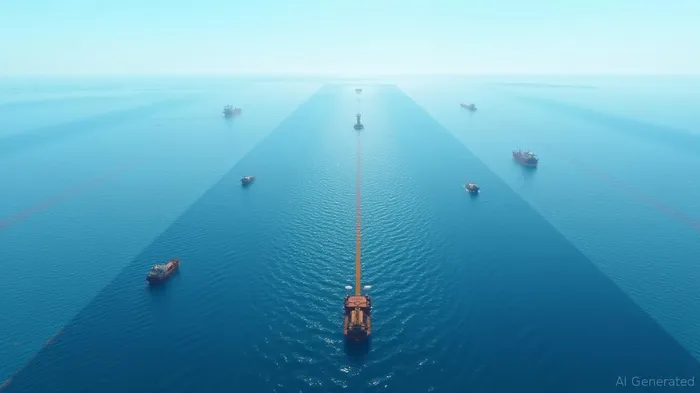
Since 2023, Hormuz's risks have intensified. U.S.-Iranian drone skirmishes, tanker seizures, and the specter of a full strait closure (voted by Iran's parliament in June 2025) have triggered market jitters. Even a partial disruption could spike oil prices to $110/barrel, per Goldman SachsAAAU--. Yet analysts doubt a full closure due to Iran's self-inflicted economic harm—90% of its oil exports flow through Hormuz.
This uncertainty creates a structural demand for redundancy: pipelines bypassing Hormuz, LNG terminals reducing tanker reliance, and cybersecurity shielding energy grids from sabotage.
Investment Theme 1: Pipeline Diversification—The Ground Route to Energy Security
The gas pipeline infrastructure market is projected to hit $3.87 trillion by 2032 (CAGR 3.12%), driven by projects like Russia's TurkStream, Saudi Arabia's East-West pipeline, and China's Central Asia routes. These projects aim to bypass maritime chokepoints.
Why invest?
- Reduced tanker risk: Pipelines are harder to disrupt than ships.
- Long-term contracts: Pipeline operators (e.g., Enbridge (ENB), TransCanada (TRP)) benefit from fixed-fee agreements.
Investment Theme 2: LNG Terminals—The Floating Solution to Hormuz's Bottlenecks
LNG terminals are booming, with the market set to grow from $7.86B to $13.15B by 2030 (CAGR 10.9%). Floating storage/regasification units (FSRUs) enable rapid deployment in geopolitically stable regions like the Mediterranean or Gulf of Mexico.
Key plays:
- Cheniere Energy (LNG): Operator of the U.S. Gulf Coast's largest LNG export terminal.
- TotalEnergies: Expanding LNG terminals in Africa and Europe to diversify supply chains.
Investment Theme 3: Cybersecurity—The Digital Shield for Energy Systems
Cyberattacks on energy infrastructure surged 300% since 2020 (per IBM). The critical infrastructure cybersecurity market will hit $190.42B by 2030, with energy OT (operational technology) systems a prime target.
Top picks:
- Nozomi Networks: Specializes in OT cybersecurity for pipelines and grids.
- Palo Alto Networks (PANW): Offers AI-driven threat detection for energy grids.
Quantifying the Opportunity: Resilient Energy Infrastructure's Market Size
The Energy Resilience Market (encompassing pipelines, LNG, and cybersecurity) is projected to reach $74.7B by 2030 (CAGR 8.3%). When combined with gas pipeline and LNG terminal projections, the total addressable market exceeds $4.8 trillion—a goldmine for investors.
Final Take: Build Portfolios with Geopolitical Hedge Funds
- Defensive stocks: EnbridgeENB--, TotalEnergies, and Palo Alto Networks offer stability in volatile markets.
- Emerging plays: Invest in FSRU operators (e.g., Golar LNG) and cybersecurity startups like Finite State (OT vulnerability scanning).
The Strait of Hormuz's instability is here to stay. Investors who back infrastructure that bypasses chokepoints, reduces tanker exposure, and withstands cyberattacks will profit as geopolitical storms rage.


Stay ahead of the market.
Get curated U.S. market news, insights and key dates delivered to your inbox.




Comments
No comments yet