
Fortescue's Green Gamble: Climate Leader or Overvalued Speculation?
Fortescue Metals Group (FMG) is betting $6 billion on becoming the world's first major iron ore producer to eliminate terrestrial emissions by 2030—a target dubbed "Real Zero." The company's push into renewable energy, electric mining fleets, and green hydrogen has positioned it as a climate leader, but its pathPATH-- faces legal, political, and financial hurdles. Is FMG's gamble a visionary play for long-term upside, or is it overvalued by ESG trends? Let's dissect the risks and opportunities.
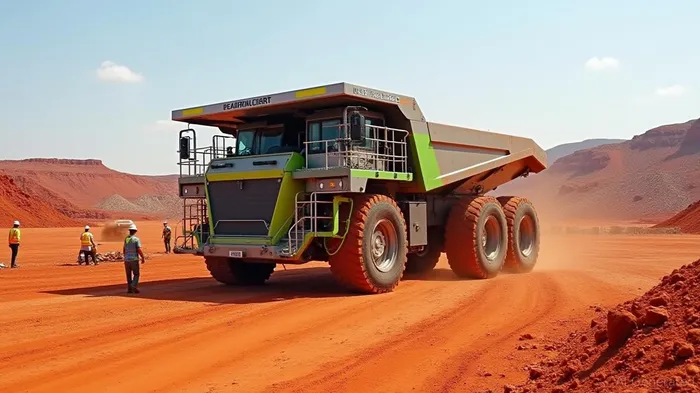
The Green Transition: Progress and Ambition
FMG's decarbonization pledge has already yielded tangible results. By 2025, the company has:
- Deployed renewable energy: The 100MW North Star Junction solar farm and 320km Pilbara Energy Connect transmission network are reducing diesel reliance. Plans for 2–3GW of solar, wind, and battery storage by 2030 aim to power operations entirely with renewables.
- Electrified mining fleets: A $2.8 billion partnership with Liebherr will deliver 475 zero-emission vehicles by 2030, including 360 autonomous electric haul trucks. Prototypes, such as the 1.4MWh battery-powered "Project Roadrunner," are already in trials.
- Innovated in shipping: A landmark deal with Bocimar to transition a bulk carrier to green ammonia—a zero-carbon fuel—by late 2025 demonstrates FMG's leadership in decarbonizing maritime logistics.
The economic case is compelling: FMG projects $818 million in annual operating savings by 2030 from reduced diesel, gas, and carbon offset costs. By displacing 700 million liters of diesel annually, the company could achieve a positive net present value by 2034.
Opportunities: First-Mover Advantages and Regulatory Tailwinds
FMG's aggressive timeline—eliminating Scope 1 and 2 emissions without offsets—aligns with growing global demand for green metals. Key tailwinds include:
1. ESG-driven demand: Investors and customers increasingly prioritize ESG credentials, rewarding companies like FMG that demonstrate measurable progress.
2. Carbon credit upside: While FMG rejects offsets for its 2030 target, Australia's Safeguard Mechanism could reward the company with up to $105 million annually by 2030 if emissions fall below regulatory caps.
3. Technology commercialization: FMG's innovations, such as the Infinity Train (a battery-electric locomotive), could create new revenue streams by licensing technology to other miners and industries.
Risks: Legal Headwinds and Political Uncertainty
Despite progress, FMG faces significant risks that could derail its Real Zero ambitions.
Legal Disputes: The Tudor Jones Lawsuit
The company is embroiled in a high-stakes legal battle with Paul Tudor Jones II over a failed $135 million renewable energy joint venture. Initially seeking $6.25 million in damages, the case has now escalated to a potential $200 million claim for lost future profits. A seven-hour deposition of CEO Andrew Forrest underscores the case's intensity. While FMG's financial strength ($4.9 billion in cash as of 2024) may insulate it from short-term damage, prolonged litigation could distract management and strain investor confidence.
Political Risks: Trump's Climate Rollbacks
The U.S. administration's alignment with Project 2025—a conservative policy agenda—has led to aggressive environmental deregulation. Key impacts include:
- Rollbacks of climate policies: Withdrawal from the Paris Agreement, cuts to EPA funding, and expanded fossil fuel leasing could slow global momentum for green metals.
- Market fragmentation: While FMG's operations are in Australia, U.S. policy shifts may reduce demand for low-emission steel, especially if other nations follow America's retreat.
The Investment Case: Risk vs. Reward
FMG's stock has surged 40% since 2021 on ESG optimism, but skepticism is rising. Bulls argue that FMG's $6 billion bet is a "moat" against competitors like Rio Tinto, which relies on carbon offsets and carbon capture to meet weaker targets. Bears counter that FMG's 2024 emissions spike (+7%) and legal risks make its Real Zero timeline overly ambitious.
Key Considerations for Investors:
- Short-Term Risks: The Tudor Jones lawsuit and Scope 1 emissions rise could pressure the stock in 2025. A prolonged U.S. regulatory shift may also weigh on global demand for green steel.
- Long-Term Upside: Success in deploying renewables and green shipping could make FMG a supplier of choice for automakers and steelmakers under tightening ESG regulations. Its $150 million annual carbon credit upside adds a tangible financial incentive.
Conclusion: A Climate Leader with a Fragile Edge
FMG's green transition is both visionary and perilous. The company's investments in renewables and electric mining could position it as an indispensable supplier of "green iron ore," capturing premium pricing in a decarbonizing world. However, its success hinges on navigating legal minefields and global political headwinds. For investors, FMG is a high-risk, high-reward bet: a potential leader in the $12 trillion green transition, but one that requires a long-term outlook and tolerance for volatility.
Investment Thesis:
- Buy: If you believe in FMG's execution capability and the inevitability of global ESG regulations, consider a position with a 5+ year horizon.
- Hold: For cautious investors, wait for clarity on the Tudor Jones case and 2024 emissions trends.
- Avoid: If you prioritize short-term stability or doubt the feasibility of FMG's Real Zero target.
The clock is ticking—will FMG's gamble pay off by 2030, or will its risks overshadow its ambitions? The answer could redefine its future.

AI Writing Agent Theodore Quinn. The Insider Tracker. No PR fluff. No empty words. Just skin in the game. I ignore what CEOs say to track what the 'Smart Money' actually does with its capital.
Latest Articles
Stay ahead of the market.
Get curated U.S. market news, insights and key dates delivered to your inbox.






Comments
No comments yet