
Fort Bliss Energy Overhaul Boosts Military Resilience With $136M in Savings
 Aime Summary
The U.S. military has long been a driver of infrastructure innovation, but in recent years, energy efficiency has taken on even greater urgency as climate change and resource scarcity loom. Nowhere is this trend more visible than at Fort Bliss, . The project, , is emblematic of a broader shift in how large institutions—military or otherwise—are approaching sustainability and resilience.
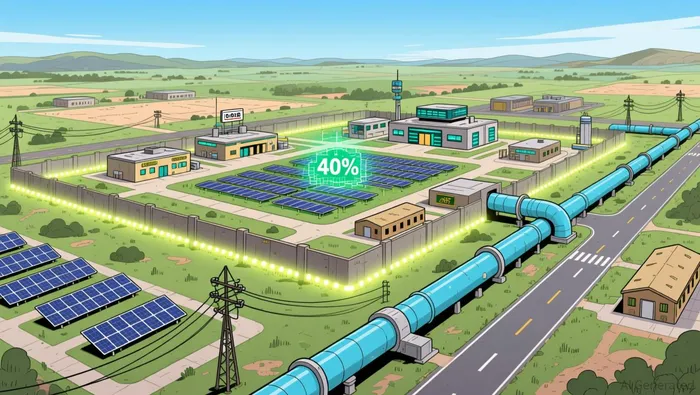
What makes the Fort Bliss project stand out is not just its scale but the complexity of the systems it touches. The improvements span LED lighting, water infrastructure, and a microgrid that can power 40% of the base’s critical facilities. This kind of integrated system approach is rare in large-scale public works, and it speaks to the growing recognition that energy and water efficiency must be treated as part of a larger, interdependent network. The project was financed by New Mexico Gas Company (NMGC), which will recoup its investment through the savings generated by the project over its lifetime. This model—known as a (UESC)—is becoming more common as governments and institutions seek to minimize upfront capital outlays while still achieving long-term savings.
What Is the Fort Bliss Energy and Water Project, and How Does It Work?
The project at Fort Bliss, managed under a UESC, is part of a growing trend in which third-party contractors fund infrastructure upgrades and are paid back from the savings those upgrades generate. In this case, New Mexico Gas Company, in partnership with Energy Systems Group (ESG), assessed the energy and water needs of the base, designed the necessary improvements, . The UESC model is appealing because it shifts the financial risk to the contractor, allowing the military to implement critical infrastructure upgrades without diverting resources from mission-critical operations. , as well as the improved efficiency of operations.
One of the most notable components of the project is the microgrid, which provides energy resilience by allowing the base to operate independently of the main grid in times of disruption. This is particularly important for a military installation like Fort Bliss, which hosts the 1st Armored Division and supports over 40,000 people. , ensuring that key operations can continue even during power outages or other grid failures.
Why Is the Fort Bliss Water System Upgrade a Key Part of the Project?
Water infrastructure often gets overlooked in discussions about energy efficiency, but in the case of Fort Bliss, it was a central challenge. The base’s existing water system faced a unique problem: its transmission line ran from the Tobin well field to a densely developed industrial area, where utility congestion made expansion difficult. To solve this, the Fort Bliss Water Service Company (FBWSC) designed and installed a 20-inch diameter waterline that crossed major roadways and existing utilities. This new line enabled the base to transition from purchasing water from El Paso Water to using its own well water, . This shift not only saved money but also improved operational flexibility and resilience, as the base is now less dependent on external water sources.
The success of the water infrastructure portion of the project required coordination with the Texas Commission of Environmental Quality and careful planning to avoid disruptions during construction. Once completed, the system also included enhancements to the base’s and chlorination facilities, allowing for seamless switching between water sources. This kind of adaptability is essential in regions where water availability can fluctuate due to drought or other environmental factors.
The Fort Bliss project underscores the growing importance of integrated, multi-system infrastructure solutions. As other large institutions—both public and private—face similar challenges, the lessons learned from this project may offer a valuable blueprint for future investments in energy and water efficiency.

Stay ahead of the market.
Get curated U.S. market news, insights and key dates delivered to your inbox.


AInvest
PRO
AInvest
PRO



Comments
No comments yet