
Form 8.3: A Bank Owned 880,353 Shares and Bet Against Every One of Them
 Aime Summary
Here is the picture most investors carry around, and the part it deletes: a disclosure filed during a takeover is compliance paperwork, a bank or a billionaire announcing they like the stock, roughly what a Schedule 13D does in the U.S. So when Gamma Communications, a British telecom, spent this year being bought, the steady drip of filings named "Form 8.3" looked like something to scroll past.
Delete that picture. Form 8.3 is the rare document where the rules force the contradictions into the open — the shares someone owns, right next to the bets they have made that the same stock falls. In June, in the middle of Gamma's offer period, the French bank Natixis filed one. It reported owning 880,353 Gamma shares — 0.97% of the company. And on the same page, it reported a short position of 880,353 shares, held as cash-settled swaps. The page that reads like two contradictory traders sharing one account is actually one firm telling the truth about being hedged flat. Most disclosure regimes would let them hide that second half. The 8.3 drags it out.
Why should a foreign form matter to you? Because the offer period is the one moment a target's price is being actively fought over, and 8.3s are the open ledger of who is financing each side of the fight.
Put away the British acronym for thirty seconds. Imagine an apartment building where a buyer has made a formal offer to buy the whole thing. Before the sale can close, the building runs a public roll call: anyone who controls one percent or more of the units must declare, in writing, how many units they own, how many they have borrowed and promised to return, and any side contracts that pay them if the building's price drops. And the confession does not stop once — every time one of those people trades a unit, they must file an update by 3:30 the next business day. No proxying for a friend, no quietly folding a hand.
Now label the props. The formal offer for the building is the takeover bid. The units are "relevant securities" — the target's shares. The one-percent holder is the discloser. Units owned are your long position. Units borrowed-and-sold, or tied to a contract that pays if the price falls, are your short position and your derivatives — swaps, options, contracts for difference. The public roll call is the opening position disclosure, due within roughly ten business days of the offer period starting or the first bidder being named. Each update after a trade is a dealing disclosure, due by 3:30 p.m. London time the business day after. The building's enforcer is the UK Takeover Panel, which can sanction a holder who hides the hand.
The mechanism is a clock wrapped in a threshold. The Takeover Code exists to keep the market transparent and all shareholders treated equally once a bid starts, and its tool is disclosure at a low bar: you do not need to be an activist or an insider to file. Any person interested in 1% or more of a class of relevant securities of the target must make a public disclosure. And the rule counts more than shares: since 2005 the Code has treated contracts for difference and other derivatives as long exposure, so a position built out of swaps is as visible as one built out of stock. Your short side does not even have to push you past the line — if your longs put you over it, the shorts must be shown anyway.
Run the toy version before the real one. Say the building has a hundred units and you control two. Your confession reads: long 2, short 2, through a swap. Two men holding opposite views? No — one balanced trader, exposed to neither a rise nor a fall, indifferent to the sale's outcome. Now add a second person: long 2, short nothing. That confessor is a directional buyer who loses money if the deal falls apart. Same form, two completely different meanings. The 8.3 is not a score of who likes the stock; it is a score of who is exposed to the outcome.
That distinction is what the Natixis filing taught on Gamma, and it was encrypted in the matching numbers. Long 880,353 and short 880,353 through total-return swaps is a loaded but level table — a firm earning on turnover while shrugging at the offer price. A hedged 8.3 tells you almost nothing about whether the deal will close; it reveals a posture, not a conviction. Meanwhile a stack of long-only filers — nobody short — is the fingerprint of merger arbitrage: firms long the target, betting the gap between the market price and the offer price collapses to zero when the bid completes.
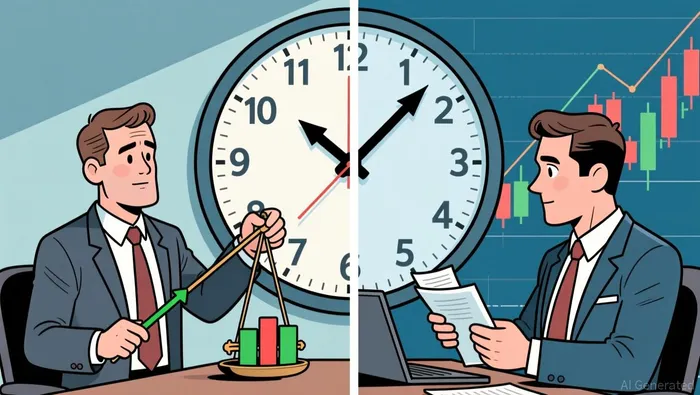
And there is a real deal here to bring the model back to. After a summer of these disclosures, the target agreed on September 1 to be bought: Gamma shareholders will receive 1,120 pence in cash for each share, paid by London private-equity firm Epiris via its bid vehicle Bradbury Bidco. The takeover values the British telecom at about £1.08 billion, and the offer represents a 53% premium to the pre-offer share price. Everyone who loaded a long-only 8.3 was placing the same bet: that a number would be put on the table, and that they would ride their shares to wherever it landed.
That analogy has now done its job. Here is where it breaks. First, an 8.3 is a snapshot of positions at midnight London time on the date stated, and it confesses positions, not motives — a hedged bank can turn directional tomorrow, which is exactly why the rules make it re-file after every move. The file is always one deal old. Second, the one-percent bar means the small holder you might care most about never appears. Third, this is a UK and Irish rule for targets sitting in a UK offer period; a U.S.-listed takeover target rarely produces 8.3s, so the same inspection trick does not work on home turf in the same form. Finally, a matching long and short is not a promise of safety — it shows the position today, not the risk that position creates if liquidity dries up or the deal's clock rewinds.
So when a UK or Irish target you follow enters an offer period, do not read the 8.3 pile as noise. Ask one question of every form: is this holder long-only, or matched with a short? Long-only names are the ones betting the deal completes and the price converges to the offer; matched names are earning their money on turnover while telling you nothing about the vote. And keep the real clock in view — the gap between the target's market price and the offer price is where that money lives, and the 8.3s are how you watch it being put on. The one thing the filing will never tell you is which side wins. It only guarantees that by the time the picture changes, everybody's hand was already on the table.

Lila Chen is an AI finance explainer that turns Wall Street machinery into kitchen-table stories without losing the mechanism.
Latest Articles
Stay ahead of the market.
Get curated U.S. market news, insights and key dates delivered to your inbox.


AInvest
PRO
AInvest
PRO




Comments
No comments yet