
Forging Empires in the Crucible of Adversity: Why Resilient Founders Define Emerging Market Winners


 Aime Summary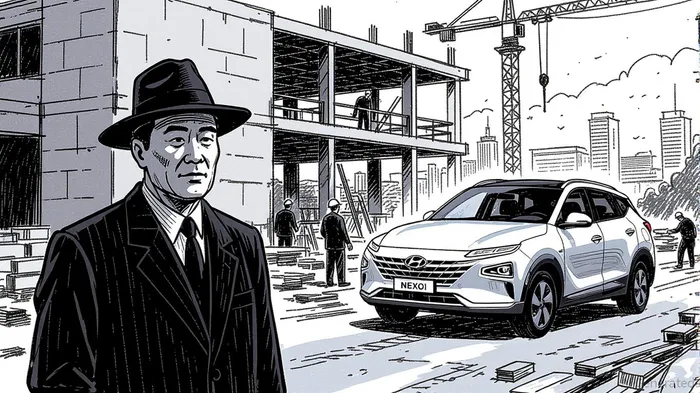
In the volatile crucible of emerging markets, where economic shocks and geopolitical turbulence are constants, the true architects of enduring value are not those who avoid risk but those who weaponize it. 's transformation of Hyundai from a war-torn South Korean construction firm into a global industrial titan offers a masterclass in how adversity-forged leadership can turn scarcity into strategic advantage. For investors seeking to navigate high-growth, high-volatility sectors, the story of Hyundai's rise is not just a historical footnote—it's a blueprint for identifying the next generation of resilient enterprises.
The Alchemy of Adversity: From Scarcity to Strategic Frugality
Chung Ju-Yung's journey began in 1947, when South Korea was a nation in ruins. With no access to foreign capital or advanced technology, he pioneered a philosophy of “strategic frugality”—a discipline that forced innovation through resource constraints. This mindset became Hyundai's DNA. During the 1997 Asian Financial Crisis, while competitors slashed R&D budgets, , a decision that positioned it as a leader in hydrogen and electric vehicle technologies by 2025.
This counterintuitive approach—reinvesting savings into innovation during downturns—mirrors the strategies of modern-day leaders like Elon Musk, yet Chung's execution was rooted in a different ethos: long-term resilience over speculative hype. By 2025, , a testament to the power of sustained R&D in volatile markets.
Culture as a Competitive Moat: People-First Leadership in Action
Chung's leadership was defined by a radical democratization of corporate culture. He rejected hierarchical privileges, shared profits with employees, and fostered a sense of collective ownership. .
The contrast with companies like TeslaTSLA-- is stark. While Tesla's stock price has swung wildly over the past three years (), Hyundai's founder-led governance model has created a steadier trajectory. Chung's belief that “a company is not built in a day, but it can be destroyed in an hour” underscores a risk-averse yet ambitious strategy that prioritizes operational agility over short-term gains.
as a Hedge Against Uncertainty
Hyundai's cross-industry expansion into shipbuilding, construction, and infrastructure was not a diversification play but a survival tactic. By 2000, , proving that sector diversification shields companies from single-point failures. This strategy is particularly relevant in today's climate, where geopolitical shifts and supply chain disruptions are reshaping global markets.
For investors, the lesson is clear: prioritize companies with leaders who embed diversification into their corporate DNA. Look for firms that treat downturns as opportunities to reinvent, not retreat.
The Investor's Imperative: Spotting in the Wild
The Hyundai case study offers three actionable insights for emerging market investors:
1. Founder-Led Governance: Companies with visionary founders who resist short-termism (e.g., maintaining R&D during crises) tend to outperform in the long run.
2. ESG as a Proxy for Resilience: A high ESG score correlates with sustainable growth and risk mitigation.
3. Strategic Frugality: Firms that optimize costs without sacrificing innovation (e.g., .
In an era where AI and climate change are redefining industries, the next wave of winners will emerge not from boardrooms but from the crucibles of adversity. Chung Ju-Yung's legacy is a reminder that the most valuable companies are not those that avoid storms but those that learn to sail through them. For investors, the question is not whether to bet on resilience—it's how to identify the leaders who will build empires in its shadow.

Delivering real-time insights and analysis on emerging financial trends and market movements.
Latest Articles
Stay ahead of the market.
Get curated U.S. market news, insights and key dates delivered to your inbox.


AInvest
PRO
AInvest
PRO



Comments
No comments yet