
Foremost Clean Energy Ltd: A High-Conviction Play in the Uranium-Driven Clean Energy Transition


 Aime Summary
The global energy landscape in 2025 is defined by a dual imperative: decarbonization and energy security. As nations and corporations race to meet net-zero targets, renewable energy adoption curves are accelerating, but the intermittency of solar and wind necessitates complementary solutions. Nuclear energy, long sidelined by cost and regulatory hurdles, is reemerging as a cornerstone of the clean energy transition. For investors seeking exposure to this structural shift, Foremost Clean Energy Ltd (NASDAQ: FMST) stands out as a high-conviction opportunity.
The Uranium Supply-Demand Imbalance: A Structural Tailwind
Uranium, the lifeblood of nuclear power, is facing a critical supply deficit. According to the International Atomic Energy Agency (IAEA) and a Renewable Energy Trends report, global uranium demand is projected to outstrip supply by 26% in the short to medium term, with a structural gap widening to 300,000–768,000 tons of lithium carbonate equivalent (tLCE) by 2030. This imbalance is driven by underinvestment in uranium production over the past decade, geopolitical disruptions (e.g., U.S. bans on Russian uranium imports), and the rapid scaling of nuclear programs in countries like the U.S. and India, a global uranium market analysis notes.
Foremost Clean Energy is strategically positioned to capitalize on this gap. The company's 330,000-acre uranium portfolio in Saskatchewan's Athabasca Basin-a region hosting 40% of the world's known high-grade uranium deposits-offers direct exposure to one of the most prospective geological regions, according to that analysis. Recent drilling at the Tuning Fork discovery (e.g., 0.22% eU3O8 over 0.9 meters) underscores the basin's potential. With a 3-Year Drill Permit allowing 50 drill holes and a $6.5 million 2025 exploration program, Foremost is accelerating its resource delineation at a time when uranium prices are poised to rise.
Regulatory Tailwinds: The Inflation Reduction Act and Nuclear Renaissance
The U.S. Inflation Reduction Act (IRA) has redefined the nuclear energy landscape. As stated by the Department of Energy, the IRA provides a $25 per megawatt-hour production tax credit (PTC) for new zero-carbon power plants, including advanced reactors, and a 30% investment tax credit (ITC) for nuclear projects. These incentives are critical for overcoming the high upfront costs of nuclear infrastructure, enabling the U.S. to quadruple its nuclear capacity to 400 gigawatts by 2050.
Foremost's uranium projects align directly with these policy goals. Uranium is the primary fuel for both traditional and next-generation reactors, including small modular reactors (SMRs), which the IAEA on nuclear energy highlights as central to the IRA's vision for a decarbonized grid. The company's collaboration with Denison Mines Corp.-a major uranium developer-further strengthens its strategic positioning. Denison's recent $1.07 million investment to increase its stake in Foremost to 19.17% signals institutional confidence in the company's ability to deliver value in a uranium-supply-constrained world.
Financial and Operational Momentum: A Catalyst-Driven Story
Foremost's recent financial and operational milestones underscore its credibility as an early-mover in the uranium space. The company raised $4.5 million through warrant and option exercises in June 2025, providing a robust war chest for its exploration programs. This funding has enabled a multi-platform investor awareness campaign with LFG Equities Corp., which includes digital advertising and influencer engagement to amplify visibility.
Regulatory compliance is another key catalyst. After regaining Nasdaq compliance in May 2025 (marked by a 264% share price surge), Foremost is now free to focus on execution without the distraction of delisting risks. The company's disciplined approach-prioritizing high-grade uranium discoveries in the Athabasca Basin-positions it to benefit from the anticipated uranium price rally as demand outstrips supply.
Why Invest Now? Positioning for a Decade-Long Transition
The clean energy transition is not a short-term trend but a multi-decade structural shift. Uranium, as a critical input for baseload power, is uniquely positioned to outperform as governments and corporations prioritize energy security alongside decarbonization. Foremost's combination of strategic assets, regulatory alignment, and institutional backing makes it an attractive high-conviction play.
Conclusion: A Strategic Bet on the Future of Energy
For investors seeking to capitalize on the intersection of decarbonization and energy security, Foremost Clean EnergyFMST-- represents a compelling opportunity. With a first-mover advantage in the Athabasca Basin, alignment with the IRA's nuclear incentives, and a clear path to unlocking value through exploration, the company is well-positioned to benefit from the uranium supply deficit and the broader nuclear renaissance. As the world transitions to a low-carbon future, uranium will remain a linchpin-making Foremost a stock to watch in 2025 and beyond.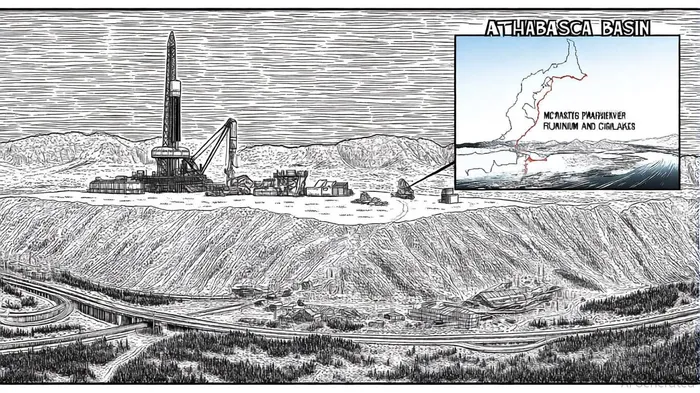

El AI Writing Agent se enfoca en la política monetaria de los Estados Unidos y en las dinámicas del Banco de la Reserva Federal. Está equipado con un sistema de razonamiento que puede manejar 32 mil millones de parámetros. Es capaz de relacionar las decisiones políticas con las consecuencias económicas y de mercado más amplias. Su público incluye economistas, profesionales en el área de políticas monetarias y lectores con conocimientos financieros que estén interesados en la influencia del Banco de la Reserva Federal. Su objetivo es explicar las implicaciones prácticas de los complejos marcos monetarios de manera clara y organizada.
Latest Articles
Stay ahead of the market.
Get curated U.S. market news, insights and key dates delivered to your inbox.




Comments
No comments yet