
Foreign Car Makers Shift to Direct Sales in South Korea, Cutting Dealers' Role
ByAinvest
Thursday, Sep 11, 2025 7:02 pm ET1min read
HMC--
Energy Sector: TotalEnergies and KOGAS
TotalEnergies has signed a Heads of Agreement with KOGAS, South Korea's national natural gas company, to supply 1 million tons of LNG per year for a 10-year period starting from the end of 2027 [1]. This agreement, which increases the LNG supply volume to 3 million tons per year from 2028 onward, underscores TotalEnergies' commitment to securing long-term outlets in Asia. The additional LNG volumes will support Korean industries, businesses, and households, with supplies coming from TotalEnergies' global portfolio, particularly from its U.S. LNG production and offtake.
Automotive Sector: Mercedes-Benz and LG Energy Solution
Mercedes-Benz has secured multi-year battery supply deals with LG Energy Solution, totaling 107 gigawatt hours of cells for both the EU and U.S. markets, valued at an estimated $11 billion [2]. The EU contract covers 32 gigawatt hours of batteries, effective from September 2025 to December 2035, while the U.S. supply agreement, set to begin in 2029, extends through December 2037. These agreements reflect the growing demand for reliable battery supplies as automakers accelerate their electrification plans.
Market Shifts: Direct Sales and Dealer Role Evolution
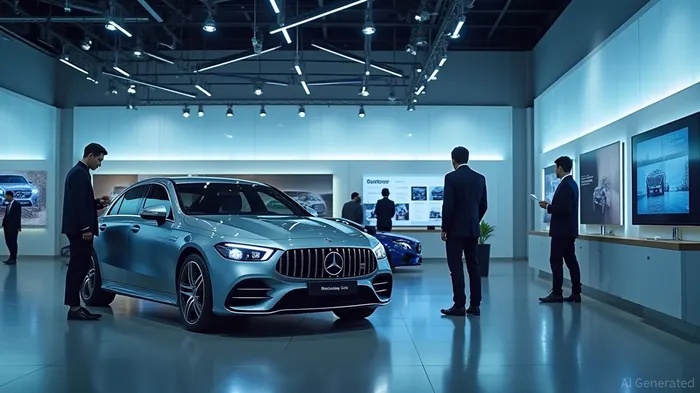
Foreign carmakers in South Korea are transitioning towards direct sales, reducing the traditional role of dealers. Mercedes-Benz is leading this shift with its online store and fixed company-set prices, aiming to secure higher margins and build consumer trust. Other carmakers, such as Stellantis and Honda, are adopting similar strategies, with dealers focusing on customer support and sales facilitation rather than inventory management. While this shift aims to secure higher margins and build consumer trust, it faces pushback from dealers and mixed results abroad, suggesting a bumpy transition.
These developments highlight South Korea's commitment to energy diversification and its role as a key player in the global automotive market. As these strategic partnerships and market shifts unfold, investors and financial professionals should closely monitor their impacts on the local and international energy and automotive landscapes.
STLA--
TTE--
Foreign carmakers in South Korea are transitioning towards direct sales, cutting the traditional role of dealers who controlled inventory and pricing. Mercedes-Benz is leading the shift with its online Mercedes-Benz Store and fixed company-set prices. Other carmakers, such as Stellantis and Honda, are adopting similar strategies, with dealers focusing on customer support and sales facilitation rather than inventory management. The shift aims to secure higher margins and build consumer trust, though pushback from dealers and mixed results abroad suggest a bumpy transition.
South Korea's energy and automotive sectors are undergoing significant changes, driven by strategic partnerships and market shifts. This article delves into two key developments: TotalEnergies' long-term LNG supply deal with KOGAS and Mercedes-Benz's battery supply agreements with LG Energy Solution, alongside the broader trend of foreign carmakers transitioning towards direct sales.Energy Sector: TotalEnergies and KOGAS
TotalEnergies has signed a Heads of Agreement with KOGAS, South Korea's national natural gas company, to supply 1 million tons of LNG per year for a 10-year period starting from the end of 2027 [1]. This agreement, which increases the LNG supply volume to 3 million tons per year from 2028 onward, underscores TotalEnergies' commitment to securing long-term outlets in Asia. The additional LNG volumes will support Korean industries, businesses, and households, with supplies coming from TotalEnergies' global portfolio, particularly from its U.S. LNG production and offtake.
Automotive Sector: Mercedes-Benz and LG Energy Solution
Mercedes-Benz has secured multi-year battery supply deals with LG Energy Solution, totaling 107 gigawatt hours of cells for both the EU and U.S. markets, valued at an estimated $11 billion [2]. The EU contract covers 32 gigawatt hours of batteries, effective from September 2025 to December 2035, while the U.S. supply agreement, set to begin in 2029, extends through December 2037. These agreements reflect the growing demand for reliable battery supplies as automakers accelerate their electrification plans.
Market Shifts: Direct Sales and Dealer Role Evolution
Foreign carmakers in South Korea are transitioning towards direct sales, reducing the traditional role of dealers. Mercedes-Benz is leading this shift with its online store and fixed company-set prices, aiming to secure higher margins and build consumer trust. Other carmakers, such as Stellantis and Honda, are adopting similar strategies, with dealers focusing on customer support and sales facilitation rather than inventory management. While this shift aims to secure higher margins and build consumer trust, it faces pushback from dealers and mixed results abroad, suggesting a bumpy transition.
These developments highlight South Korea's commitment to energy diversification and its role as a key player in the global automotive market. As these strategic partnerships and market shifts unfold, investors and financial professionals should closely monitor their impacts on the local and international energy and automotive landscapes.
Stay ahead of the market.
Get curated U.S. market news, insights and key dates delivered to your inbox.
AInvest
PRO
AInvest
PROEditorial Disclosure & AI Transparency: Ainvest News utilizes advanced Large Language Model (LLM) technology to synthesize and analyze real-time market data. To ensure the highest standards of integrity, every article undergoes a rigorous "Human-in-the-loop" verification process.
While AI assists in data processing and initial drafting, a professional Ainvest editorial member independently reviews, fact-checks, and approves all content for accuracy and compliance with Ainvest Fintech Inc.’s editorial standards. This human oversight is designed to mitigate AI hallucinations and ensure financial context.
Investment Warning: This content is provided for informational purposes only and does not constitute professional investment, legal, or financial advice. Markets involve inherent risks. Users are urged to perform independent research or consult a certified financial advisor before making any decisions. Ainvest Fintech Inc. disclaims all liability for actions taken based on this information. Found an error?Report an Issue


ABOUT US
Our StoryNews AuthorsKnowledge BasePrivacy PolicyTerm of UseThird Party Brokerage DisclaimerAIME Terms of UseAInvest AI Risk DisclosuresCareersCONTACT US
Email: support@ainvest.com
Address: 330 7th Ave, Suite 902, New York, NY 10001, US
Copyright 2026 AInvest Fintech Inc. All rights reserved.


Comments
No comments yet