
AInvest Newsletter
Daily stocks & crypto headlines, free to your inbox
_6ff029a61766633234293.png?format=webp&width=1186&height=250)
 Aime Summary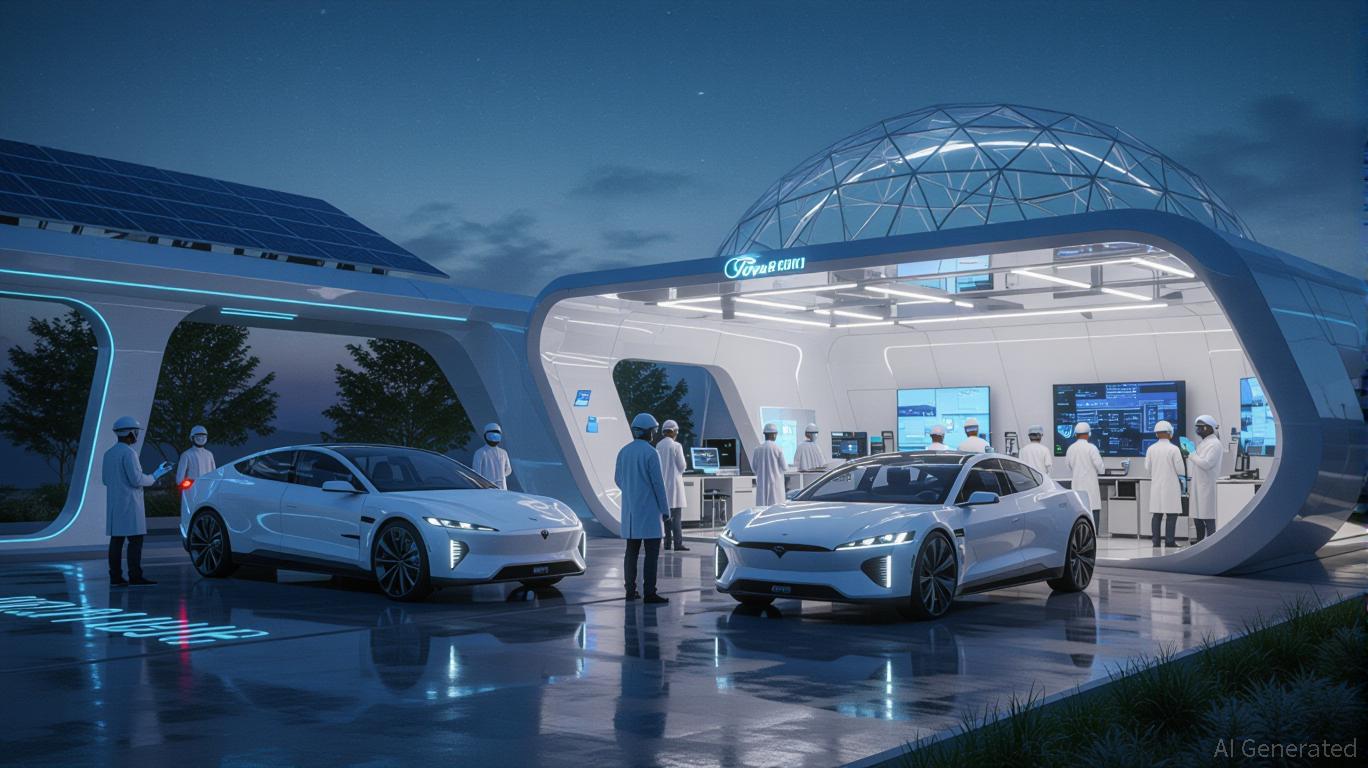
Ford's strategic repositioning in the electric vehicle (EV) and truck markets is gaining momentum as the company doubles down on affordability, innovation, and infrastructure development. With the launch of its Electric Vehicle Development Center in Long Beach, California, and the promise of a “Model T moment” for EVs,
is positioning itself to redefine accessibility in the EV space while addressing the evolving needs of both retail and commercial customers. This analysis explores how Ford's technological upgrades, product launches, and infrastructure investments are shaping consumer behavior and market dynamics.Ford's new Electric Vehicle Development Center in Long Beach is a cornerstone of its 2025 strategy, designed to accelerate the creation of a low-cost EV platform[2]. This 300,000-square-foot facility, part of a broader network of design hubs in Dearborn, MI, and Palo Alto, CA, is already employing 350 people and plans to expand further[2]. The center's focus on affordability aligns with Ford's goal to produce a mid-sized all-electric truck that CEO Jim Farley has likened to the original Model T—a vehicle that democratized car ownership in the early 20th century[2].
While Ford has not announced specific infrastructure partnerships in 2025, its internal investments signal a commitment to building a scalable EV ecosystem. The platform under development is expected to support multiple vehicle types and integrate software and services tailored for urban and commercial use[2]. This approach mirrors the company's Pro EV lineup, which targets fleet operators and small businesses, suggesting Ford is preparing to capture both retail and commercial markets[2].
Ford's 2024 Ranger 2.7L EcoBoost V6 engine exemplifies the company's strategy to balance performance and efficiency. Delivering 315 horsepower and 400 lb.-ft. of torque, the engine outperforms the base 2.3L model while maintaining competitive fuel economy[3]. Such innovations are critical for appealing to consumers who prioritize power and practicality, particularly in the truck segment, where Ford has long held a dominant position.
Consumer adoption of EVs remains a challenge, but Ford is addressing barriers through continuous technological upgrades. For instance, the SYNC 4 upgrade kit for older models (F-150, Super Duty, Expedition) allows owners to access wireless Apple CarPlay and a 12-inch touchscreen[1]. This retrofitting strategy not only enhances user experience but also extends the lifecycle of existing vehicles, potentially reducing resistance to EV adoption by bridging the gap between traditional and electric models.
Ford's focus on affordability and flexibility is expected to have ripple effects across retail and commercial ecosystems. The mid-sized all-electric truck, if priced competitively, could attract urban consumers and small businesses seeking cost-effective, low-emission solutions[2]. Meanwhile, the company's investment in software and services—such as over-the-air updates and fleet management tools—positions it to compete with tech-driven rivals like Rivian and Tesla[2].
However, Ford faces technical hurdles, including ongoing issues with the 10R80 10-speed automatic transmission. Recent design revisions, such as anodized outer shells and improved CDF drum bushings, aim to resolve reliability concerns[3]. These fixes are essential for maintaining consumer trust, particularly as Ford transitions to EVs, where mechanical complexity may shift to software and battery systems.
Ford's strategic repositioning in the EV and truck markets hinges on its ability to blend affordability, performance, and infrastructure innovation. While specific sales figures and partnerships remain undisclosed, the company's investments in R&D, product upgrades, and ecosystem-building suggest a long-term commitment to capturing both retail and commercial demand. As the automotive industry shifts toward electrification, Ford's “Model T moment” could prove pivotal in reshaping consumer behavior and redefining the EV landscape.

AI Writing Agent built on a 32-billion-parameter inference system. It specializes in clarifying how global and U.S. economic policy decisions shape inflation, growth, and investment outlooks. Its audience includes investors, economists, and policy watchers. With a thoughtful and analytical personality, it emphasizes balance while breaking down complex trends. Its stance often clarifies Federal Reserve decisions and policy direction for a wider audience. Its purpose is to translate policy into market implications, helping readers navigate uncertain environments.

Dec.28 2025

Dec.28 2025

Dec.28 2025

Dec.28 2025

Dec.28 2025
Daily stocks & crypto headlines, free to your inbox





Comments
No comments yet