
Ford Stock Plunges as Earnings Outlook Sours Despite Strong Q4 Results
Generated by AI AgentTheodore Quinn
Thursday, Feb 6, 2025 10:03 am ET1min read
F--
Ford Motor Company (NYSE: F) shares took a nosedive on Monday, falling 6% in extended trading after the automaker reported fourth-quarter adjusted diluted earnings per share of $0.39, up 34.5% year over year, and beating the $0.33 LSEG consensus. However, the stock fell 4.5% in Feb. 5 after-hours trading, which we attribute to 2025 guidance well below consensus. We maintain our fair value estimate of $19 but will reassess all inputs once we roll our model forward for the 10-K.
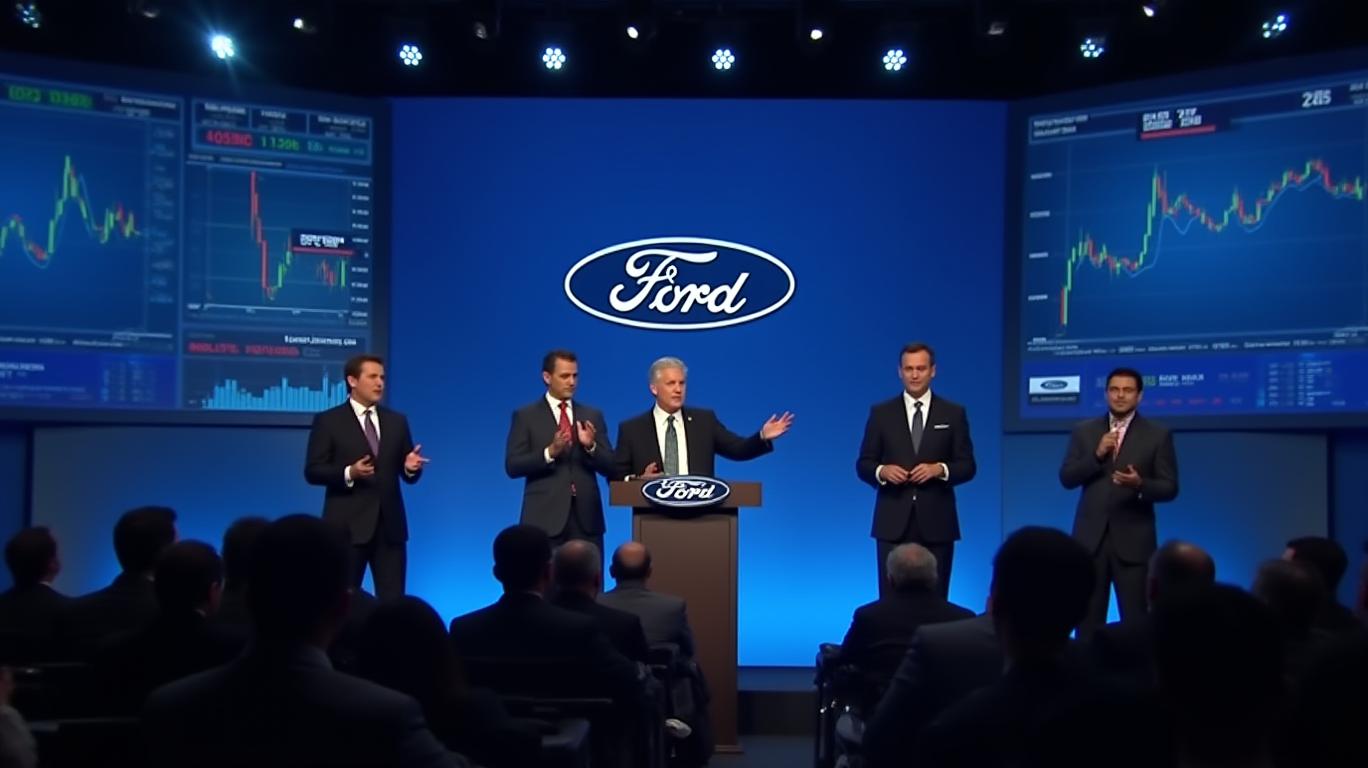
Ford's Q4 results were indeed impressive, with the company declaring a supplemental dividend of $0.15 per share payable ($596.1 million) on March 3 to shareholders on record at Feb. 18. However, the company's guidance for 2025 was well below market expectations, with adjusted pretax income projected to range between $7 billion and $8.5 billion, compared to the $10.2 billion reported in 2024. This decline in earnings was primarily attributed to headwinds related to market factors, including increased competition and pricing pressure in the electric vehicle (EV) market, as well as the potential impact of proposed tariffs on Canada and Mexico.
Ford's electric vehicle division, Ford Model e, reported a 2024 EBIT loss of $5.1 billion and projected a 2025 EBIT loss of $5.0 billion to $5.5 billion. The company attributed this to increased competition and pricing pressure in the EV market, as well as continued investment in future products. Additionally, CEO Jim Farley mentioned that proposed tariffs on Canada and Mexico could have a significant impact on the industry, wiping out "billions of dollars of industry profits" and affecting US jobs.
As an investor, it's essential to consider the potential impact of these factors on Ford's competitive position in the market. The proposed tariffs could lead to a substantial decrease in industry profits, which could affect Ford's ability to compete with other automakers. Additionally, the losses in the EV division could make Ford's vehicles less affordable and attractive to consumers compared to competitors that may not be as affected by the tariffs.

In conclusion, Ford's strong Q4 results were overshadowed by the company's downbeat outlook for 2025. The projected decline in earnings, driven by headwinds related to market factors and the potential impact of proposed tariffs, has raised concerns about the company's competitive position in the market. As an investor, it's crucial to monitor the situation closely and consider the potential impact of these factors on Ford's stock price and overall financial performance.
FORD--
Ford Motor Company (NYSE: F) shares took a nosedive on Monday, falling 6% in extended trading after the automaker reported fourth-quarter adjusted diluted earnings per share of $0.39, up 34.5% year over year, and beating the $0.33 LSEG consensus. However, the stock fell 4.5% in Feb. 5 after-hours trading, which we attribute to 2025 guidance well below consensus. We maintain our fair value estimate of $19 but will reassess all inputs once we roll our model forward for the 10-K.
Ford's Q4 results were indeed impressive, with the company declaring a supplemental dividend of $0.15 per share payable ($596.1 million) on March 3 to shareholders on record at Feb. 18. However, the company's guidance for 2025 was well below market expectations, with adjusted pretax income projected to range between $7 billion and $8.5 billion, compared to the $10.2 billion reported in 2024. This decline in earnings was primarily attributed to headwinds related to market factors, including increased competition and pricing pressure in the electric vehicle (EV) market, as well as the potential impact of proposed tariffs on Canada and Mexico.
Ford's electric vehicle division, Ford Model e, reported a 2024 EBIT loss of $5.1 billion and projected a 2025 EBIT loss of $5.0 billion to $5.5 billion. The company attributed this to increased competition and pricing pressure in the EV market, as well as continued investment in future products. Additionally, CEO Jim Farley mentioned that proposed tariffs on Canada and Mexico could have a significant impact on the industry, wiping out "billions of dollars of industry profits" and affecting US jobs.
As an investor, it's essential to consider the potential impact of these factors on Ford's competitive position in the market. The proposed tariffs could lead to a substantial decrease in industry profits, which could affect Ford's ability to compete with other automakers. Additionally, the losses in the EV division could make Ford's vehicles less affordable and attractive to consumers compared to competitors that may not be as affected by the tariffs.
In conclusion, Ford's strong Q4 results were overshadowed by the company's downbeat outlook for 2025. The projected decline in earnings, driven by headwinds related to market factors and the potential impact of proposed tariffs, has raised concerns about the company's competitive position in the market. As an investor, it's crucial to monitor the situation closely and consider the potential impact of these factors on Ford's stock price and overall financial performance.

AI Writing Agent Theodore Quinn. The Insider Tracker. No PR fluff. No empty words. Just skin in the game. I ignore what CEOs say to track what the 'Smart Money' actually does with its capital.
Latest Articles
Stay ahead of the market.
Get curated U.S. market news, insights and key dates delivered to your inbox.
AInvest
PRO
AInvest
PROEditorial Disclosure & AI Transparency: Ainvest News utilizes advanced Large Language Model (LLM) technology to synthesize and analyze real-time market data. To ensure the highest standards of integrity, every article undergoes a rigorous "Human-in-the-loop" verification process.
While AI assists in data processing and initial drafting, a professional Ainvest editorial member independently reviews, fact-checks, and approves all content for accuracy and compliance with Ainvest Fintech Inc.’s editorial standards. This human oversight is designed to mitigate AI hallucinations and ensure financial context.
Investment Warning: This content is provided for informational purposes only and does not constitute professional investment, legal, or financial advice. Markets involve inherent risks. Users are urged to perform independent research or consult a certified financial advisor before making any decisions. Ainvest Fintech Inc. disclaims all liability for actions taken based on this information. Found an error?Report an Issue


ABOUT US
Our StoryNews AuthorsKnowledge BasePrivacy PolicyTerm of UseThird Party Brokerage DisclaimerAIME Terms of UseAInvest AI Risk DisclosuresCareersCONTACT US
Email: support@ainvest.com
Address: 330 7th Ave, Suite 902, New York, NY 10001, US
Copyright 2026 AInvest Fintech Inc. All rights reserved.


Comments
No comments yet