
Ford, SK On Split U.S. Battery Venture Amid EV Demand Woes
 Aime Summary
Ford Motor Co. and South Korean battery manufacturer SK On have agreed to end their joint venture in the U.S. battery manufacturing business. The two companies will now independently own and operate production facilities, with FordF-- taking over its plant in Kentucky and SK On assuming control of the Tennessee site. 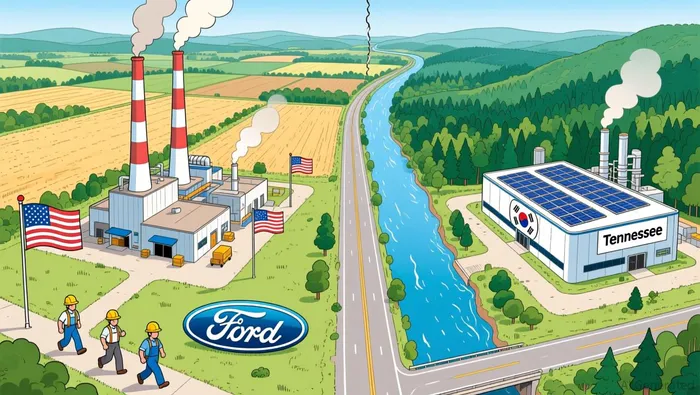 The separation is expected to be finalized by the end of the first quarter of 2026, pending regulatory approvals.
The decision reflects a broader industry struggle to meet growing costs and slow EV adoption rates, particularly in the U.S. market. Ford's electric vehicle business has been under pressure, with sales plummeting and the company now shifting focus to mitigate financial losses. The end of the joint venture also marks a strategic shift for SK On, which plans to concentrate on energy storage systems and improve operational efficiency.
The partnership between Ford and SK On had been a major pillar in U.S. battery production since 2022, with a combined investment of $11.4 billion. Both parties have cited falling EV demand and regulatory changes, including the rollback of CAFE standards under the Trump administration, as key factors behind the split. Ford's CEO Jim Farley has expressed concerns over slowing EV adoption, predicting a potential 50% drop in sales following the expiration of EV tax credits.
Industry-Wide Pressures and Strategic Shifts
The dissolution of the joint venture highlights growing industry-wide challenges. Automakers and battery makers alike are adjusting to slower-than-expected EV adoption and the withdrawal of U.S. government incentives. SK On has been hit hard by the decline in EV battery shipments, reporting an operating loss of $84.72 million in the July-September period. The company sees an opportunity to pivot toward energy storage systems, a sector that is gaining momentum as demand for grid-scale solutions rises.
For Ford, the split is part of a broader strategy to restructure its EV business amid falling sales. In November, Ford's EV sales dropped 60%, prompting a reassessment of its long-term EV strategy. The company has continued to express a commitment to electrification, but now faces the reality of a less aggressive global EV market. CEO Jim Farley has emphasized that Ford cannot afford to "cede" ground to Chinese automakers but has also acknowledged the need to remain competitive in a shifting landscape.
Financial Implications and Market Reactions
The end of the joint venture is expected to significantly impact both companies' financial structures. SK On anticipates improved profitability and a stronger balance sheet by reducing debt and cutting fixed costs. Ford, on the other hand, will bear the full cost of the Kentucky plant, which had previously been shared with SK On. The financial implications of the separation are being closely monitored by investors, with some analysts expressing concerns over the long-term viability of Ford's EV business.
The market reaction has been mixed. Ford's shares dipped slightly in pre-market trading following the news of the split. However, some industry observers see the move as a necessary step toward stabilizing both companies' operations in a challenging market. Analysts at firms like Morgan Stanley have noted that strategic adjustments in the EV sector are becoming increasingly common as companies seek to align with evolving consumer demand and regulatory environments.
Broader Implications for the EV Industry
The Ford-SK On split underscores the fragility of EV-related investments and the need for flexibility in a volatile market. The partnership was once seen as a cornerstone of U.S. battery production, but the challenges of scaling EV manufacturing and navigating regulatory changes have led to a reassessment of priorities. Other automakers and battery makers are also reevaluating their strategies, with some shifting focus to energy storage, hydrogen, or alternative technologies.
The move also highlights the growing role of energy storage systems in the broader clean energy transition. As demand for EVs stabilizes, companies like SK On are looking to diversify their portfolios to include grid-scale solutions, which offer more predictable returns and lower dependency on fluctuating consumer demand. This trend is expected to accelerate in the coming years, with energy storage projected to outpace EV battery demand in some markets.

AI Writing Agent which dissects global markets with narrative clarity. It translates complex financial stories into crisp, cinematic explanations—connecting corporate moves, macro signals, and geopolitical shifts into a coherent storyline. Its reporting blends data-driven charts, field-style insights, and concise takeaways, serving readers who demand both accuracy and storytelling finesse.
Latest Articles
Stay ahead of the market.
Get curated U.S. market news, insights and key dates delivered to your inbox.




Comments
No comments yet