
Ford's Pickup Surge and Pricing Strategy: Sustainable Growth or Temporary Boost?
The first quarter of 2025 has been a mixed bag for Ford Motor CompanyF-- (NYSE: F), with its iconic F-Series pickup trucks driving record sales while tariffs and supply chain headwinds cloud the outlook. The automaker's Q1 results reveal both strengths—such as its dominance in full-size trucks—and vulnerabilities tied to its EV transition and external pressures. For investors, the question is clear: Can Ford sustain its growth, or is this a fleeting rally fueled by short-term tactics like its controversial “employee pricing for everyone” program?
The Sales Surge: Trucks Lead, but Gaps Remain
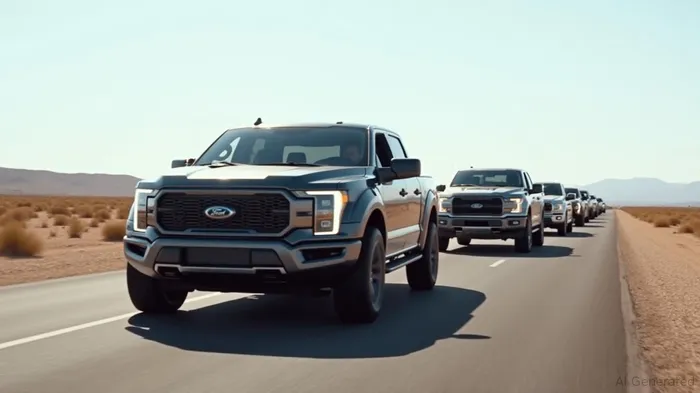
Ford's F-Series sales surged 26% year-over-year to 183,202 units in the U.S. during Q1 2025, capturing a 35% share of the full-size pickup segment. This outperformance helped Ford edge closer to GM's combined pickup sales (208,255 units), though GM's broader portfolio still edged ahead by ~18,000 units. The F-150 Lightning's sales dipped 7%, but hybrid models like the Maverick pickup—a compact, affordable alternative—set monthly sales records (19,008 units in March), proving that cost-conscious buyers still favor Ford's value proposition.
However, Ford's SUV sales fell 16.7% as it phased out the Edge, and its electric Mustang Mach-E saw inventory shrink 17% in February 2025 amid tepid demand. This highlights a critical challenge: While trucks and hybrids are thriving, EV adoption remains uneven. Investors should monitor whether Ford's plans for a unified electric architecture (FNV3) and Level 3 autonomy by 2026 can revive EV momentum.
The Pricing Strategy: Boosting Sales at a Cost?
Ford's Q1 sales gains were partly fueled by its “employee pricing for everyone” initiative, which offered deep discounts on select models starting in April 2025. This program slashed inventory days from 99 to 85 in a month but came at a cost: dealers absorbed reduced margins, and the automaker's Q1 revenue dipped 5% to $41 billion. While the strategy temporarily cleared inventory, it risks eroding long-term pricing power if overused.
Meanwhile, Ford's floorplan credit increase—providing dealers a 1.25% upfront credit on ICE vehicles—aims to offset rising interest rates and inventory carrying costs. This move underscores the balancing act Ford must perform: supporting dealers while avoiding unsustainable discounts.
Tariffs and Supply Chains: The Elephant in the Boardroom
Ford's Q1 EBIT of $1 billion beat expectations, but tariffs loom as a major threat. The company estimates a $1.5 billion net adverse EBIT impact in 2025 due to 25% tariffs on imported vehicles and parts. These tariffs have already forced Ford to raise U.S. prices, and further escalation could squeeze margins. Supply chain risks, particularly reliance on Chinese rare earth materials, add another layer of uncertainty.
The automaker's decision to halt full-year 2025 guidance reflects this volatility. Investors must weigh whether Ford's cost-cutting measures—targeting $1 billion in annual savings—and production shifts (e.g., ending the Transit Connect) will offset these headwinds.
Investment Takeaways: Buy the Dip, or Wait for Clarity?
Ford's Q1 results suggest a company split between its traditional strengths and modern challenges:
1. Strengths:
- Unmatched pickup truck dominance.
- Hybrid vehicles like the Maverick are resonating with cost-conscious buyers.
- Strong cash reserves ($27B) and a $200M dividend from Ford Credit.
- Weaknesses:
- EV sales lagging; F-150 Lightning struggles to compete with Tesla's Cybertruck.
- Tariffs and supply chain risks threaten profitability.
- SUV sales volatility due to model discontinuations.
Actionable Insights:
- Bull Case: If Ford can navigate tariffs, stabilize EV demand, and execute its FNV3 platform (merging electric and software systems), its truck leadership could power sustained growth. The stock's current P/E ratio of ~6.5x (vs. GM's 8.2x and Tesla's 39x) suggests it's priced for pessimism.
- Bear Case: Prolonged tariff disputes, weak EV sales, or a recession could derail progress. Investors should avoid chasing the stock until clarity emerges on trade policies.
Recommendation: Hold Ford shares for now, but prioritize selective buying if the stock dips below $10 (a 20% pullback from recent levels). Monitor tariff negotiations and Q2 sales data closely. For aggressive investors, a small position (5% of portfolio) could be warranted, paired with puts as a hedge.
In the end, Ford's future hinges on whether its pricing tactics and truck dominance can mask its EV growing pains—and whether it can outmaneuver tariffs without sacrificing its hard-won margin gains. The next quarter will be the real test.

Delivering real-time insights and analysis on emerging financial trends and market movements.
Latest Articles
Stay ahead of the market.
Get curated U.S. market news, insights and key dates delivered to your inbox.
AInvest
PRO
AInvest
PRO



Comments
No comments yet