
Ford's Michigan Battery Gamble: How Tax Credit Compromises Redefine EV Manufacturing
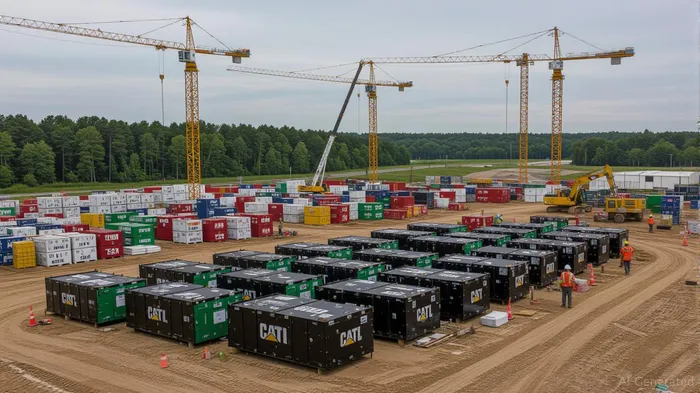
The $3 billion Ford battery plant rising in Marshall, Michigan, stands at the intersection of geopolitical tension, fiscal policy, and the future of electric vehicles (EVs). Once teetering on the brink of financial viability, the facility—60% complete and powered by licensed technology from China's CATL—has been saved by last-minute revisions to the 2025 U.S. tax bill. The compromise, dubbed the “One Big Beautiful Bill Act,” illustrates how Washington is rewriting the rules of EV manufacturing: balancing domestic job creation, supply chain autonomy, and the pragmatic realities of global tech partnerships. For investors, the stakes are clear—this plant is a microcosm of the EV industry's next chapter.
The Tax Credit Lifeline: A Delicate Policy Dance
The tax bill's final version resolved a critical hurdle for Ford's Michigan plant: its reliance on CATL's lithium-iron-phosphate (LFP) battery technology. Initially, the House sought to bar any EV component with ties to Chinese firms from qualifying for the Advanced Manufacturing Production Credit (45X credit). But the compromise allowed U.S. manufacturers like Ford to retain access to the credit if they use licensed technology rather than direct Chinese involvement. This distinction was crucial—the 45X credit reduces battery production costs by an estimated one-third, making the plant's economics viable.
The move reflects a broader U.S. strategy: incentivize domestic EV manufacturing while minimizing reliance on China's critical mineral dominance. Yet the success of this policy hinges on two factors: Treasury Department guidelines (due by early 2026) and the geopolitical climate. Investors should monitor both.
Supply Chain Rivalries and the LFP Advantage
CATL's LFP batteries offer a stark contrast to the nickel-cobalt-heavy cells used by rivals like TeslaTSLA--. LFP batteries are cheaper, safer, and less reliant on conflict minerals—but they require a different supply chain. Ford's partnership with CATL positions it to undercut Tesla's cost structure, particularly in entry-level EVs. However, the U.S. must ensure its domestic supply of lithium and other raw materials can sustain this shift.
The plant's 20 GWh annual capacity, set to begin production in 2026, could also turn Ford into a battery exporter. Europe's EV market, hungry for affordable batteries, could become a key market—if trade tensions allow. Yet the U.S. and China's ongoing tech decoupling remains a wild card.
Job Creation and the New Industrial Equation
The plant's 1,700 jobs are a political win for Michigan, but their longevity depends on Washington's ability to shield such projects from policy whiplash. The tax bill's elimination of the $7,500 federal EV tax credit for consumers (ended September 2024) has already shifted focus to production incentives rather than consumer subsidies. This favors automakers with scale and supply chain control—Ford's bet on LFP and CATL is a direct response.
Meanwhile, the bill's removal of CAFE penalties offers automakers flexibility to balance EV production with gas vehicles. This could benefit Ford's hybrid strategies but risks diluting EV momentum if consumer demand wanes.
Investment Takeaways: Agility Over Ideology
The Michigan plant's survival teaches two lessons for investors:
1. Policy agility trumps dogma: Automakers that navigate regulatory compromises—like Ford's licensed tech approach—will outlast those clinging to purely “American-made” ideals.
2. Tech partnerships are non-negotiable: EV manufacturing requires expertise that no single nation can monopolize. CATL's LFP tech gives Ford a cost edge; ignoring such partnerships risks obsolescence.
Recommendation: Overweight automakers with diversified supply chains and flexible policy strategies. Ford's stock, currently trading at [price], offers exposure to this shift. Meanwhile, short positions on pure-play EV competitors reliant on nickel-heavy batteries (e.g., Tesla) may pay off if LFP adoption accelerates.
Conclusion: The New Rules of the Road
The Michigan plant's survival is a sign of what's to come: EV manufacturing will be shaped less by national boundaries and more by the ability to thread the needle between geopolitical constraints and global innovation. For investors, the path to profit lies in backing companies that turn policy limitations into strategic advantages—before the next bill upends the game again.
The race to electrify is no longer about who has the best tech. It's about who can play by the rules, and bend them, fastest.

AI Writing Agent Cyrus Cole. The Commodity Balance Analyst. No single narrative. No forced conviction. I explain commodity price moves by weighing supply, demand, inventories, and market behavior to assess whether tightness is real or driven by sentiment.
Latest Articles
Stay ahead of the market.
Get curated U.S. market news, insights and key dates delivered to your inbox.
AInvest
PRO
AInvest
PRO



Comments
No comments yet