
Ford Faces 35% Free Cash Flow Loss, Analyst Downgrades Rating
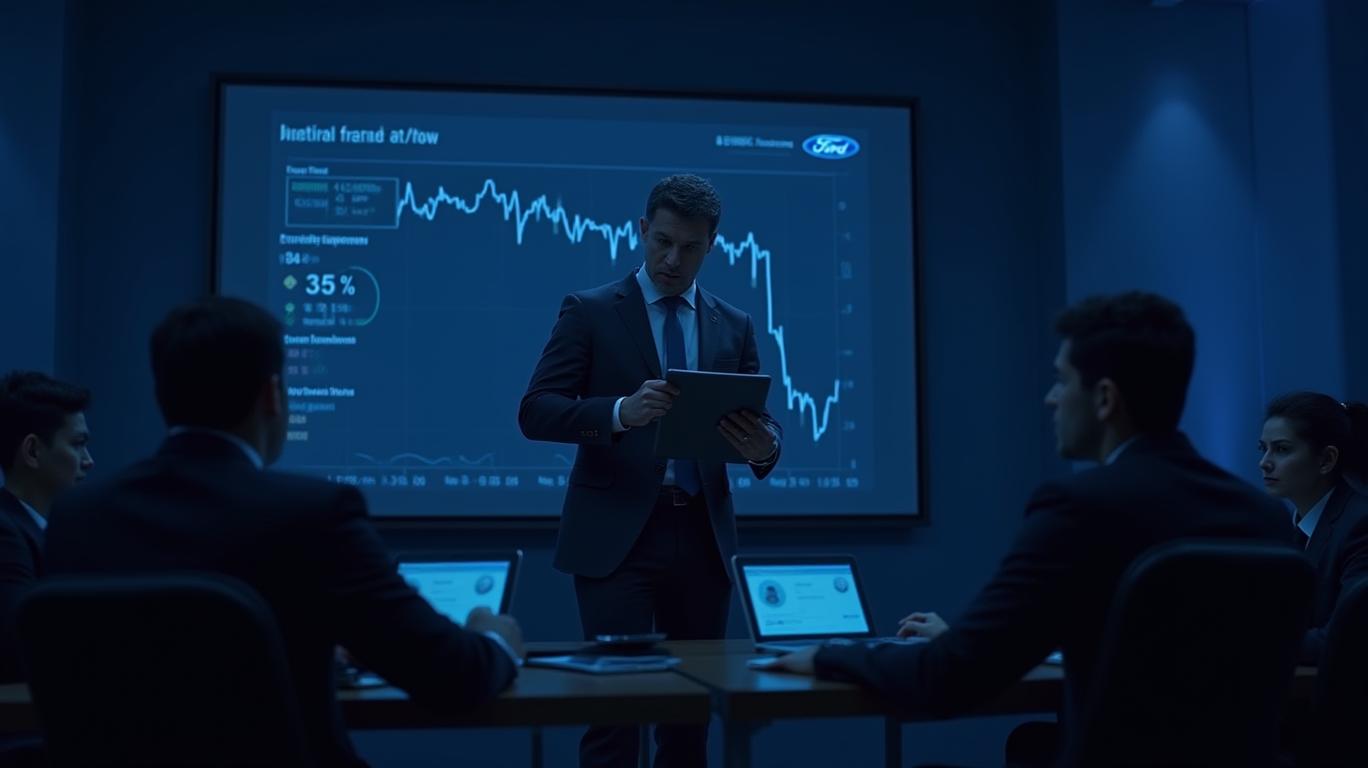
Ford Motor Company has revised its performance expectations for 2025, citing concerns over import tariffs and declining consumer confidence, which could further compel the automaker to revise its guidance downward. The company is also bracing for a potential 35% loss in free cash flow. In response to these challenges, Bernstein analyst Daniel Roeska has downgraded Ford's rating from "market perform" to "underperform" and reduced the target price by 25% to $7. This move reflects the growing pessimism surrounding Ford's future prospects, as the company navigates through a complex landscape of economic uncertainties and regulatory pressures.
Roeska warns investors to face some harsh realities about FordFORD--. Firstly, the significant downside risk from tariff headwinds is not yet reflected in the stock price. As tariff pressures intensify and consumer confidence continues to weaken, Ford's stock will remain under pressure. Secondly, even a "moderate" tariff on non-USMCA imported products will have a substantial impact on Ford. Thirdly, despite Ford's more favorable assembly position compared to General Motors, stricter "American automaker" regulations will double the tariff impact on Ford, making it more significant than any of the Detroit Three automakers.
Roeska's latest predictions indicate that Ford's free cash flow will decrease by more than 35%, with adjusted earnings per share for the fiscal year 2025 expected to decline by 41.2% and for the fiscal year 2026 by 36.4%. Considering factors such as model discontinuations, price increases, declining sales, reduced credit profitability, and the time effect of tariffs, Ford's estimated EBIT for the fiscal year 2026 could be impacted by 33.8% if no measures are taken to mitigate the effects. Roeska states, "We expect price increases and product mix changes to result in a 3.5% price increase and a corresponding 4.3% decrease in sales volume, with some of the impact offset by market share gains as other original equipment manufacturers raise prices and lose market share." He anticipates that due to "inventory buffering," the full impact of tariffs on vehicles will begin to manifest in May, and on parts in June, ultimately leading to a $4.8 billion loss in EBIT for 2026.
Roeska also expresses pessimism about the prospects for Ford's competitor, General Motors. He downgraded General Motors' rating to "underperform," describing the company's outlook as "unfavorable" and stating that "the peak of this cycle has passed."

Stay ahead of the market.
Get curated U.S. market news, insights and key dates delivered to your inbox.
AInvest
PRO
AInvest
PRO



Comments
No comments yet