
Ford Electric Vehicles Revolutionize Manufacturing with $2 Billion Louisville Plant Investment
 Aime Summary
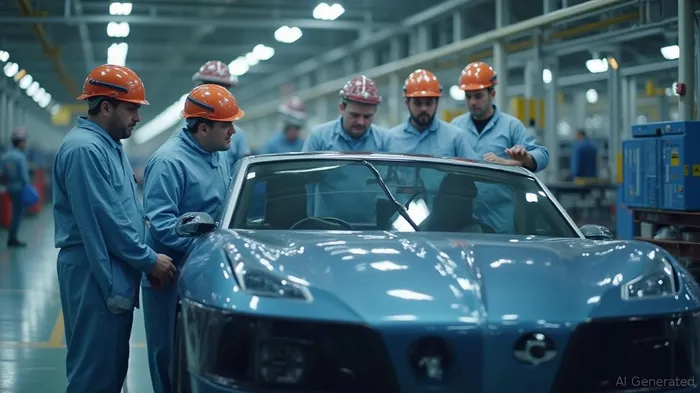
Ford is embarking on what it defines as its most radical transformation in vehicle manufacturing since the Model T with a new approach tailored for electric vehicles (EVs). The company has made a significant investment, allocating $2 billion towards the Louisville Assembly Plant to introduce the FordF-- Universal EV Production System. This system features a novel "assembly tree" structure designed to optimize the production of EVs by splitting vehicle assembly into three key sections – front, middle, and rear – before these are fused into a complete vehicle. This modular method is projected to increase production efficiency, reduce assembly time by 40%, and necessitate fewer workstations compared to traditional linear production lines.
The innovative production system underpins the Ford Universal EV Platform, which introduces a versatile 400-volt architecture supporting the creation of various vehicle models, from compact cars to SUVs. A critical innovation involves the use of cheaper, safer lithium-iron phosphate (LFP) batteries, which are integrated as a structural vehicle floor, contributing to a 30% cost reduction compared to traditional lithium batteries. The first vehicle stemming from this platform is set to be a midsize four-door electric pickup, anticipated for release in 2027, with a competitive starting price of $30,000. Ford aims for it to rival the Mustang EcoBoost in speed while offering more interior space than the ToyotaTM-- RAV4.
Doug Field, a key executive at Ford with experience from Apple’s car program and leading the development of the TeslaTSLA-- Model 3, oversees this project. He emphasizes the shift to a "cell-to-body" battery integration, where the battery cells form the vehicle's structural foundation. This method eliminates the conventional separate framework for batteries, posing engineering challenges in assembly and structural integrity during production. Ford engineers had to surmount these hurdles to ensure robustness in attributes such as crash safety and corrosion resistance.
Furthermore, Ford is reducing the complexity of its vehicle designs by decreasing the number of parts by 20% and incorporating fewer fasteners, achieving efficiencies in manufacturing and reducing emissions output. This strategic shift also integrates zonal architecture for better system control within the vehicle, mirroring advancements seen in other leading EV brands.
Ford announced additional investments, pledging $5 billion towards the advancement of its EV infrastructure, with significant funds allocated to opening a new battery plant in Michigan. This initiative is expected to secure approximately 4,000 jobs across both facilities, reshaping the workforce required as traditional gas-powered vehicle production phases out.
Despite currently incurring financial losses within its EV segment, which totaled $2.2 billion in the first half of the fiscal year, Ford is undeterred, projecting future cost mitigation through advanced manufacturing processes and innovative approaches to vehicle design. The company's push aligns with broader industry trends and regulatory pressures to embrace sustainable practices and electric mobility.
In summary, Ford's strategic endeavors in EV manufacturing highlight an ambitious reimagining of vehicle production processes and platforms aimed at achieving cost-effective, innovative electric vehicles tailored to compete globally. The company's efforts emphasize a commitment to transform the traditional automotive manufacturing landscape, setting a precedent for future vehicle production.

Stay ahead of the market.
Get curated U.S. market news, insights and key dates delivered to your inbox.
AInvest
PRO
AInvest
PRO



Comments
No comments yet