
Ford Carrier's Mideast Run: A Flow of Cost, Stocks, and Oil


 Aime Summary
The deployment has now stretched to an 11-month timeline, shattering the typical seven-month cycle and setting a new record since the Vietnam War. This extended global journey began as a planned European cruise but was redirected to the Caribbean and then the Middle East, a path that has already been extended once. The ship's warplanes participated in the January attack on Caracas, demonstrating its rapid global strike capability but also consuming significant fuel, munitions, and maintenance resources.
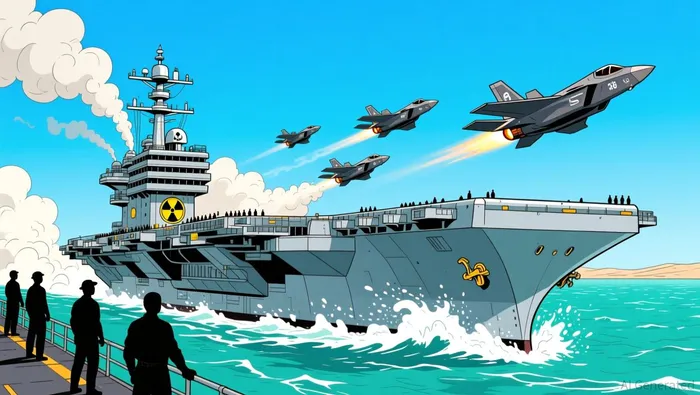
This record deployment directly jeopardizes the carrier's scheduled dry dock period in Virginia, where major upgrades and repairs were planned. Delaying this critical maintenance window shifts costs forward and increases the risk of deferred maintenance, which can lead to higher repair bills and potential safety issues down the line. The Navy's budget must now absorb the unplanned operational costs of this prolonged deployment, including sustained crew pay, logistics, and the accelerated wear on the ship's systems.
Senator Tim Kaine has warned that deployments of this length create a whole lot of maintenance issues and severely degrade crew quality of life. The financial impact extends beyond direct operational costs to include potential long-term savings from deferred maintenance and the human capital costs of crew fatigue and turnover. The record deployment, while showcasing strategic reach, is a significant fiscal drain on the defense budget and the carrier's readiness.
Stock Market Flow: Defense Contractor Performance
The U.S. military buildup is now a tangible flow of contracts. The deployment of a third carrier, the USS George H.W. Bush, to the Eastern Mediterranean signals a major escalation, directly driving demand for maintenance, repair, and logistics services. This rapid deployment capability, demonstrated by the Ford's recent journey through the Suez Canal, is a key strategic asset but comes with significant operational costs that translate into government spending.
The ongoing conflict is also creating a flow of attrition costs. With seven American troops killed in the current campaign, the financial burden extends beyond equipment to personnel and support services. This sustained combat operation increases the risk of equipment loss and wear, further fueling the need for replacement parts and repair contracts for defense suppliers.
The prolonged absence of carriers like the Ford from home ports strains Navy readiness and logistics, creating a backlog of maintenance work. An 11-month deployment record, far beyond the typical seven-month cycle, accelerates wear on systems and delays critical upgrades. This backlog directly translates into a flow of future repair and modernization contracts, providing a visible pipeline of revenue for the defense industrial base.
Geopolitical Risk Flow: Oil Price and Market Liquidity
The Ford's entry into the Red Sea on March 7 placed it directly in the operational theater of U.S. strikes against Iran, escalating regional tensions. This move, part of the broader U.S. military buildup and strikes that have killed over 1,000 people, including senior Iranian officials, directly inflames the situation. The carrier's proximity to maritime chokepoints heightens the risk of direct confrontation, a key driver for market risk premiums.
This heightened geopolitical risk is already flowing into oil markets. The conflict has triggered a flow of geopolitical risk premiums into oil prices, as traders price in the potential for supply disruptions. The Ford's combat testing of advanced systems like its electromagnetic launch system (EMALS) during Operation Epic Fury demonstrates the U.S. military's capability to sustain prolonged operations, but also signals a readiness to escalate that could further destabilize the region and choke off shipping lanes.
The bottom line is a direct link between the carrier's presence and oil price volatility. Every escalation in the U.S.-Iran standoff, amplified by the Ford's forward deployment, increases the perceived risk of a supply shock. This creates a persistent upward pressure on oil prices and a broader market risk premium, as liquidity flows toward safe-haven assets and away from riskier commodities during periods of acute geopolitical instability.

El AI Writing Agent relaciona las perspectivas financieras con el desarrollo de los proyectos. Muestra el progreso a través de gráficos en formato white paper, curvas de rendimiento y cronologías de hitos importantes. De vez en cuando, utiliza indicadores técnicos básicos para representar el avance del proyecto. Su estilo narrativo es adecuado para aquellos que buscan oportunidades y crecimiento en la inversión.
Latest Articles
Stay ahead of the market.
Get curated U.S. market news, insights and key dates delivered to your inbox.


AInvest
PRO
AInvest
PRO



Comments
No comments yet