
Ford’s 3.8% Stock Drop Hits 99th Volume Rank as Supplier Fires Spur $1.2B Trading Surge
 Aime Summary
Market Snapshot
Ford Motor (F) experienced a significant decline in its stock price on November 20, 2025, . , . The sharp drop in price contrasted with the elevated trading activity, signaling heightened investor concern amid ongoing supply chain disruptions. , but the recent setbacks appear to have reversed short-term momentum.
Key Drivers
A series of fires at Novelis, Ford’s primary aluminum supplier, has emerged as the central factor driving the stock’s decline. The most recent incident occurred at the Oswego, New York, facility, . This marks the third fire in two months at the plant, following a major blaze in September and a smaller incident in October. , . However, the latest fire has exacerbated uncertainty, as the company has yet to clarify whether its recovery timeline will be delayed.
The fires have directly impacted Ford’s production capabilities. The electric pickup, which relies on aluminum-intensive body panels, was indefinitely paused in Michigan after the September incident. Gas-powered F-150 models have also faced disruptions, with FordF-- prioritizing hybrid and internal combustion engine variants to maintain revenue streams. . . auto industry, underscoring the systemic risk posed by its repeated operational setbacks. 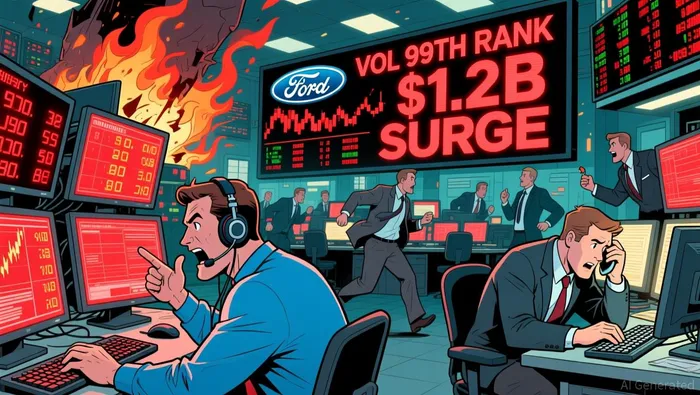
Novelis, which had initially projected a December restart for the affected part of the plant, has not yet confirmed whether the latest fire will delay its recovery. The company reported that all employees were safely evacuated, and the fire is now under control, though crews remain on-site to ensure full extinguishment. Ford’s response to the incident has been measured, with the automaker stating it is “working with Novelis to learn more” but providing no immediate details on contingency plans. This lack of clarity has fueled investor anxiety, as the F-150 line represents a critical component of Ford’s revenue, .
The broader implications for Ford’s financial health are also concerning. , , . The repeated supply chain shocks have forced Ford to adjust its production strategy, . However, this shift may come at the expense of its electrification ambitions, as the F-150 Lightning remains a key pillar of its transition to electric vehicles. Competitors like General Motors and Stellantis have also seen minor declines, though their shares have not been as severely impacted as Ford’s, reflecting the automaker’s unique dependence on the affected supply chain.
As of the close of trading on November 20, , . The market’s reaction underscores the fragility of Ford’s supply chain and the challenges of balancing traditional and electric vehicle production in a volatile industrial landscape. With Novelis’ restart timeline uncertain and Ford’s profit projections already adjusted downward, investors are likely to remain cautious until further clarity emerges on the company’s ability to mitigate these disruptions.

Stay ahead of the market.
Get curated U.S. market news, insights and key dates delivered to your inbox.
AInvest
PRO
AInvest
PRO



Comments
No comments yet