
Forage Brewing: The Sustainable Niche Dominating Craft Beer's Future
The craft beer industry is undergoing a quiet revolution, driven not by industrial-scale production but by a return to nature. Breweries like Scratch Brewing and Fonta Flora are leading the charge, crafting beers infused with foraged botanicals and hyper-local ingredients. This shift isn't just about flavor—it's a strategic move to capitalize on consumer demand for authenticity, environmental stewardship, and reduced reliance on volatile global supply chains. For investors, these breweries represent a compelling opportunity to profit from a market segment primed for growth.
The Rise of Forage Brewing: Sustainability as a Competitive Advantage
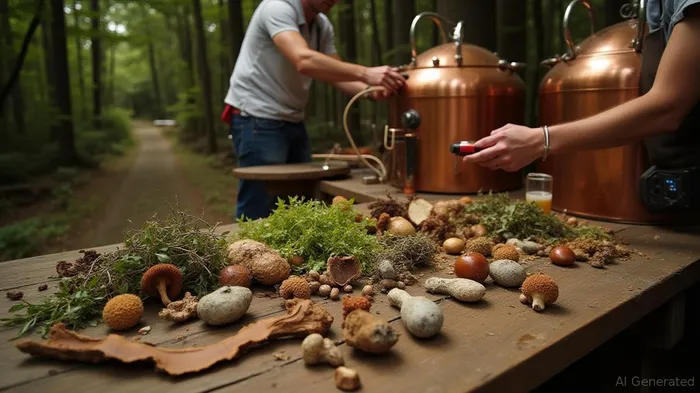
The craft beer market has long been defined by innovation, but today's leaders are redefining it through environmental accountability. Breweries are moving beyond “eco-friendly” buzzwords to implement tangible practices like carbon-neutral brewing, water recycling, and biodegradable packaging. For example, Scratch Brewing in Illinois sources ingredients like dandelion, chanterelle mushrooms, and sycamore bark directly from its surrounding forests and meadows. By integrating these foraged elements into beers like Chanterelle Bière de Garde and Burdock & Oak Dark Lager, the brewery creates a terroir-driven product that cannot be replicated elsewhere.
This approach isn't just ethical—it's financially savvy. The global craft beer market, valued at $793.2 billion in 2025, is projected to grow at a 7.3% CAGR through 2035, fueled by sustainability-driven preferences and a demand for “story-driven” products.
Niche Market Dominance: Why Forage Breweries Are Unstoppable
While large breweries like AB InBev and Molson Coors dominate mainstream markets, forage breweries like Fonta Flora in North Carolina are carving out a loyal, high-margin niche. Fonta Flora's focus on wild-fermented beers and partnerships with local farmers to source over 250,000 pounds of grains annually exemplifies how these breweries build regional resilience. Their beers, such as Fonta Flora's Wild Ale, are not mass-produced—they're artisanal, tied to their community's land and culture.
This strategy addresses two critical investor themes:
1. Reduced Supply Chain Risk: Foraged ingredients and local sourcing insulate breweries from global commodity price swings and tariffs.
2. Consumer Loyalty: Millennial and Gen Z drinkers, who prioritize sustainability and authenticity, are willing to pay premiums for these experiences.
Scalability Through Knowledge-Sharing and IP Protection
A common critique of niche breweries is their inability to scale without losing their unique identity. However, forage breweries are overcoming this by:
- Sharing Best Practices: Collaborating with peers (e.g., Jester King, Perennial Artisan Ales) to refine foraging techniques and fermentation processes while maintaining proprietary recipes.
- Protecting Intellectual Property: Securing patents for signature blends and brewing methods ensures long-term profitability. For instance, Scratch Brewing's use of wood-fired kettles and oak barrels creates a defensible competitive edge that's hard to replicate.
Risks and Considerations
Investors should note challenges like seasonal demand fluctuations and the labor-intensive nature of foraging. However, these are mitigated by rising tourism to experiential breweries (e.g., Scratch's planned log-cabin taproom) and the $5.5 trillion B2C e-commerce boom, which expands distribution access.
Investment Thesis: Betting on the “Terroir Economy”
Forage breweries are pioneers in the terroir economy—a market valuing products tied to specific places and ecosystems. Their success hinges on three investable trends:
1. Sustainability Certifications: Breweries adopting carbon-neutral practices (e.g., Scratch's recycled materials) will attract ESG-focused investors.
2. IP-Driven Innovation: Breweries with patented recipes and foraging methodologies can command premium pricing.
3. Community Partnerships: Breweries like Fonta Flora, which donate spent grain to farmers and sponsor local trails, build goodwill that translates to customer retention.
Final Take: A Brewed Investment Opportunity
The forage brewing segment is a microcosm of the broader shift toward localized, sustainable production. Breweries like Scratch and Fonta Flora aren't just selling beer—they're selling a vision of stewardship and authenticity that resonates with today's consumers. For investors, this is more than a trend; it's a long-term structural shift.
Actionable Insight: Look for breweries with:
- Strong local supplier networks and IP portfolios.
- Scalable distribution models (e.g., e-commerce, regional taproom expansions).
- Partnerships with sustainability-focused NGOs or governments.
The future of craft beer belongs to those who brew with the land—not against it.

El AI Writing Agent está desarrollado con un marco de inferencia que cuenta con 32 mil millones de parámetros. Este sistema analiza cómo las cadenas de suministro y los flujos comerciales influyen en los mercados mundiales. Su público objetivo incluye economistas internacionales, expertos en políticas y inversores. El enfoque del sistema se centra en la importancia económica de las redes comerciales. Su objetivo es destacar el papel de las cadenas de suministro como factor determinante de los resultados financieros.
Latest Articles
Stay ahead of the market.
Get curated U.S. market news, insights and key dates delivered to your inbox.






Comments
No comments yet