
Food Safety Recalls and Retailer Risk Exposure: Assessing Supply Chain Vulnerabilities in Grocery Retail Stocks
 Aime Summary
Reputation Risk: Erosion of Consumer Trust
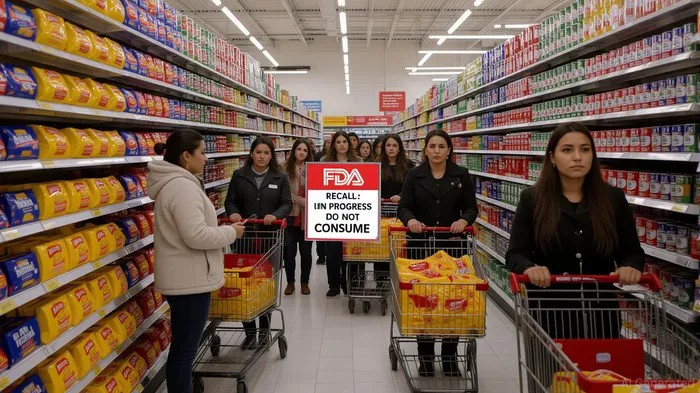
A Class II recall-indicating temporary or reversible health effects-may seem less severe than a Class I recall, but its scale and visibility can still inflict significant reputational damage. The shredded cheese recall affected 31 states and Puerto Rico, with products bearing sell-by dates extending into March 2026, meaning the risk of consumer exposure persisted for months. For retailers like Walmart and Target, which rely heavily on price-sensitive shoppers, including a substantial share of Supplemental Nutrition Assistance Program (SNAP) users, such incidents risk eroding trust in their private-label brands.
Consumer trust is a fragile asset in retail. A 2025 Sedgwick Product Safety and Recall Index report noted that large-scale recalls, even those classified as lower-risk, often trigger long-term brand skepticism. Walmart, for instance, captures 26% of annual SNAP grocery spending, and any disruption to its perceived reliability could have cascading effects on customer loyalty according to financial reports. While the sources do not quantify specific trust metrics post-recall, historical patterns suggest that repeated or high-profile recalls can drive shoppers to competitors, particularly in a competitive pricing environment as research indicates.
Stock Performance: Mixed Signals and Underlying Pressures
Direct stock price impacts from the December 2025 recall remain unclear, as no immediate post-announcement data was disclosed in earnings calls or press releases. However, broader trends in the sector indicate that retailers face mounting operational headwinds. Walmart's Q2 2025 earnings report revealed a 560 basis point drag on operating income from rising self-insured liability claims, a trend that could be exacerbated by recall-related lawsuits or regulatory fines.
For Target, the recall occurred after its Q3 2025 earnings call on November 19, 2025, leaving no direct commentary on its financial implications. Analysts, however, have long emphasized that grocery retailers' stock valuations are sensitive to supply chain disruptions. A 2025 Bloomberg report noted that investors increasingly scrutinize retailers' ability to manage product safety risks, with recall frequency and scale factoring into earnings forecasts. While the cheese recall may not have triggered an immediate stock selloff, it adds to a backdrop of rising operational costs and margin pressures, which could dampen investor sentiment over time.
Insurance Costs: A Growing Liability Burden
The financial fallout from food safety recalls extends beyond direct costs like product destruction or refunds. Insurance premiums for retailers are increasingly influenced by recall risk, particularly as the scale of incidents grows. The December 2025 recall, involving 236,000 cases of shredded cheese, exemplifies how a single supplier failure can ripple through multi-tiered distribution networks.
According to a 2025 Risk & Insurance analysis, companies are turning to specialized recall insurance to mitigate these risks, with policies covering crisis management, regulatory compliance and reputational damage. For Walmart and Target, which operate vast private-label portfolios, the cost of insuring against supplier errors or contamination risks has likely risen. The same report highlighted that while recall frequency declined in Q3 2025, the volume of affected units surged by 201.6%, reflecting a shift toward high-impact, large-scale incidents. This trend suggests that insurers may impose stricter terms or higher premiums for retailers with extensive supply chains, further squeezing profit margins.
Long-Term Investment Risks: Supply Chain Resilience as a Key Metric
For investors, the cheese recall underscores the importance of evaluating retailers' supply chain resilience. Walmart and Target's reliance on third-party suppliers for private-label goods exposes them to risks beyond their immediate control. The incident also highlights gaps in supplier verification processes: Great Lakes Cheese Co., the producer in question, had already issued a voluntary recall in October 2025 before the FDA escalated it to Class II in December.
Retailers must now balance cost efficiency with safety investments. Advanced technologies like metal detection systems and blockchain traceability are becoming table stakes in food safety. However, these solutions require capital expenditures that could weigh on margins, particularly for companies already grappling with inflationary pressures. Investors should also monitor how retailers communicate during recalls. Transparent, proactive responses-such as Walmart's public listing of recalled items-can mitigate reputational harm, but such efforts require resources and strategic prioritization.
Conclusion: Navigating a Risk-Loaded Landscape
The December 2025 cheese recall is a microcosm of the broader challenges facing grocery retailers in an era of heightened consumer expectations and regulatory scrutiny. While Walmart and Target have robust risk management frameworks, the incident illustrates how supply chain vulnerabilities can translate into financial and reputational costs. For investors, the key takeaway is to scrutinize not just the frequency of recalls but the systemic preparedness of retailers to address them. Companies that invest in supplier diversification, technology-driven quality control, and transparent crisis communication are likely to outperform peers in this risk-loaded environment. As the grocery sector evolves, supply chain resilience will remain a critical determinant of long-term investment value.

Delivering real-time insights and analysis on emerging financial trends and market movements.
Latest Articles
Stay ahead of the market.
Get curated U.S. market news, insights and key dates delivered to your inbox.


AInvest
PRO
AInvest
PRO



Comments
No comments yet