
Food Safety Recalls and Retail Supply Chain Exposure: What Investors Should Watch


 Aime Summary
Supply Chain Vulnerabilities and Private-Label Risks
The recall highlights how retailers' dependence on private-label partnerships exposes them to supplier-specific risks. Great Lakes Cheese Co. attributed the contamination to raw material issues, a detail that points to gaps in upstream quality control. For retailers like WalmartWMT-- (Great Value), Aldi (Happy Farms), and TargetTGT-- (Good & Gather), the contamination of their own-brand products directly threatens consumer trust. According to the FDA, the recall was classified as , meaning the products could cause temporary or reversible health effects, such as internal abrasions. While less severe than Class I recalls, the scale-spanning 31 states and Puerto Rico-still poses reputational and operational challenges. 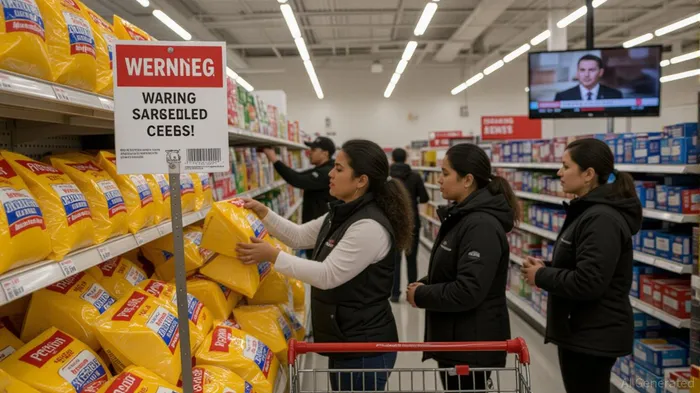
Investors should scrutinize how retailers manage supplier due diligence. The fact that the contamination originated in raw materials suggests a failure in supplier audits or real-time monitoring systems. A Bloomberg report notes , emphasizing the systemic nature of this risk. Retailers must now demonstrate whether they have robust traceability systems to prevent future incidents.
Corporate Governance and Crisis Response
The immediate response from affected retailers has been swift but limited in scope. Walmart and Target removed the products from shelves and issued public alerts, while Aldi provided refunds according to corporate statements. However, no board-level statements or policy updates have been disclosed, according to Reuters. This lack of transparency raises concerns about governance preparedness. For instance, does the board have contingency plans for supplier failures? Are there contractual clauses requiring manufacturers to cover recall costs?
Investors should also assess whether companies are investing in supply chain reforms. The absence of announced policy changes post-recall-such as stricter supplier certifications or blockchain-based tracking-suggests a reactive rather than proactive approach. In contrast, best-in-class governance would involve public commitments to enhance supplier oversight, as seen in the aftermath of the 2023 peanut butter according to SP Global research.
Investor Sentiment and Stock Market Implications
While no direct evidence of sales declines has emerged, public sentiment has turned negative. Social media platforms show growing frustration over "recall fatigue," with consumers questioning the safety of packaged foods. This sentiment could pressure stock prices in the short term, particularly for companies with weaker brand equity. Historical data from S&P Global indicates , though recovery depends on the company's crisis management.
For Walmart, Aldi, and Target, the challenge lies in mitigating long-term brand erosion. Unlike national brands, private-label products are deeply tied to retailer identity. A 2024 Nielsen study found . If trust in these brands wanes, competitors with stronger supply chain reputations-such as Costco or Kroger-could gain market share.
What Investors Should Watch
- Supply Chain Reforms: Monitor announcements about supplier audits, technology investments (e.g., AI-driven quality checks), or partnerships with third-party verification firms.
- Brand Resilience: Track customer retention metrics and social media sentiment to gauge the recall's impact on loyalty.
- Regulatory Scrutiny: The FDA's reclassification of the recall to Class II may signal increased oversight, raising compliance costs for retailers.
- Financial Exposure: Assess whether companies have insurance to cover recall-related losses and whether suppliers are contractually liable for damages according to New York state orders.
The Great Lakes Cheese Co. incident is a wake-up call for investors. While the immediate health risks are moderate, the broader implications for supply chain integrity and brand value are profound. Retailers that fail to address these vulnerabilities risk not only regulatory penalties but also a loss of consumer confidence in an era where food safety is a top priority according to Southern Living reporting.

Delivering real-time insights and analysis on emerging financial trends and market movements.
Latest Articles
Stay ahead of the market.
Get curated U.S. market news, insights and key dates delivered to your inbox.
AInvest
PRO
AInvest
PRO



Comments
No comments yet