
Food Safety Recalls and Consumer Packaged Goods (CPG) Sector Volatility: Assessing Investment Risks and Opportunities in the Wake of the 2025 Shredded Cheese Recall


 Aime Summary
The Dual Crises: Listeria and Metal Contamination
The Ambriola Company initiated a recall of its Pecorino Romano cheese products in November 2025 after routine testing detected , a pathogen linked to severe infections in vulnerable populations. The recall expanded to include four additional brands-Locatelli, Member's Mark, Ambriola, and Pinna-highlighting the systemic risks of supply chain contamination. Separately, Great Lakes Cheese Co. recalled over 1.5 million bags of shredded cheese due to potential metal fragments, a hazard posing physical injury risks. Both incidents underscore the fragility of food safety protocols in large-scale CPG operations.
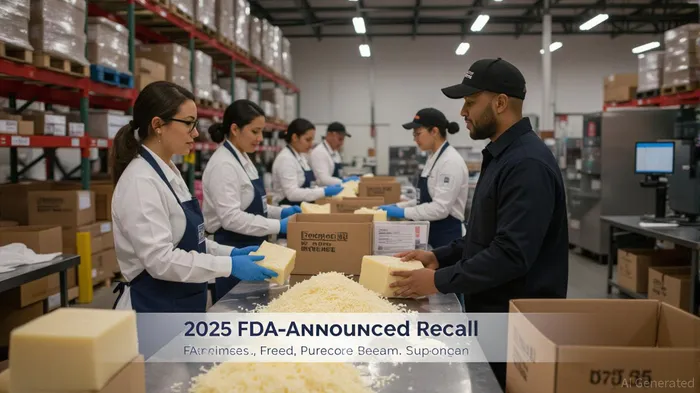 The FDA classified Ambriola's recall as a "Class I" (posing a risk of serious adverse health consequences) and Great Lakes' as a "Class II" (temporary or reversible health effects), reflecting differing regulatory priorities. While no illnesses have been reported to date, the reputational damage to these brands-and their retail partners, including Walmart, Target, and Aldi-has been significant.
Regulatory Response and Sector-Wide Implications
The FDA's handling of these recalls highlights its dual role as both a crisis manager and a long-term regulator. Despite the severity of the Ambriola incident, no new policy changes or industry-wide standards were announced post-2025. This absence of regulatory evolution suggests that CPG companies must self-police through enhanced internal controls rather than relying on external mandates. For investors, this points to a sector where proactive safety measures-rather than compliance with static regulations-will define competitive advantage.
However, the lack of policy updates also raises concerns about systemic gaps. The Great Lakes recall, for instance, traced contamination to supplier raw materials, indicating vulnerabilities in third-party oversight. Companies that fail to audit their supply chains rigorously may face recurring risks, while those investing in supplier transparency could gain a market edge.
Financial and Market Impact: A Tale of Two Companies
While the provided sources do not specify stock price movements or quarterly earnings for Ambriola and Great Lakes Cheese Co., the operational and reputational costs of these recalls are substantial. Ambriola suspended production and distribution at its West Caldwell, New Jersey facility, incurring direct losses from halted operations and recall logistics. Great Lakes Cheese Co. faced similar disruptions, with its October 2025 recall reclassified as a Class II risk by the FDA in December.
For CPG stocks, such incidents often trigger short-term volatility. Historical precedents show that food safety recalls can lead to immediate declines in consumer trust and sales, though recovery depends on swift remediation. Ambriola's emphasis on "halting production to review sanitation procedures" and Great Lakes' prompt refunds may mitigate long-term damage. However, investors should monitor these companies' Q4 2025 financial reports for signs of revenue erosion or increased liability reserves.
Brand Resilience and Consumer Behavior
The ability of CPG brands to rebuild trust post-recall hinges on transparency and accountability. Ambriola's expanded recall to include multiple brands demonstrates a commitment to erring on the side of caution, a strategy that could preserve customer loyalty. Conversely, Great Lakes' reliance on supplier audits to address contamination risks may be seen as reactive rather than preventive.
Consumer behavior also plays a role. The fact that no illnesses were reported in either recall could limit long-term reputational harm, particularly if companies communicate effectively. Yet, in an era of heightened health awareness, even perceived risks can drive shifts in purchasing habits. Retailers like Aldi and Walmart, which carry both Ambriola and Great Lakes products, may face secondary scrutiny, complicating their relationships with suppliers.
Investment Risks and Opportunities
For CPG investors, the 2025 recalls highlight two key risks:
1. Operational Vulnerability: Companies with fragmented supply chains or limited quality control are more exposed to contamination risks.
2. Reputational Damage: Even without reported illnesses, recalls can erode brand equity, particularly in premium segments where trust is paramount.
Conversely, opportunities exist for firms that leverage these crises to strengthen their market position. Companies investing in advanced food safety technologies-such as blockchain for supply chain traceability or AI-driven contamination detection-could differentiate themselves. Additionally, CPG players with diversified product lines may offset losses in one category with growth in others, reducing overall portfolio risk.
Conclusion
The 2025 shredded cheese recalls serve as a stark reminder of the CPG sector's susceptibility to food safety incidents. While Ambriola and Great Lakes Cheese Co. have taken steps to address immediate risks, the absence of regulatory updates and the complexity of modern supply chains mean that volatility will persist. For investors, the path forward lies in identifying companies that prioritize proactive safety measures, transparent communication, and resilient supply chain strategies. In an industry where trust is a currency, the ability to navigate crises without compromising quality will define long-term success.

Delivering real-time insights and analysis on emerging financial trends and market movements.
Latest Articles
Stay ahead of the market.
Get curated U.S. market news, insights and key dates delivered to your inbox.


AInvest
PRO
AInvest
PRO



Comments
No comments yet