
Food Safety Crises and Retailer Resilience: Assessing the Impact of the 2025 Shredded Cheese Recall on Consumer Trust and Supply Chain Investments


 Aime Summary
Consumer Trust and Brand Reputation: A Fragile Equilibrium
The recall of products sold under private-label brands such as Happy Farms (Aldi), Great Value (Walmart), and Good & Gather (Target) has directly tested the loyalty of millions of shoppers. According to a report by , the recall's broad distribution across 31 states and Puerto Rico-along with the extended sell-by dates of affected products-heightens the risk of delayed consumer awareness and ingestion of contaminated items. While the FDA emphasized that no illnesses had been reported according to a report, the mere perception of risk can erode trust. For instance, contamination further amplified public concerns about food safety protocols.
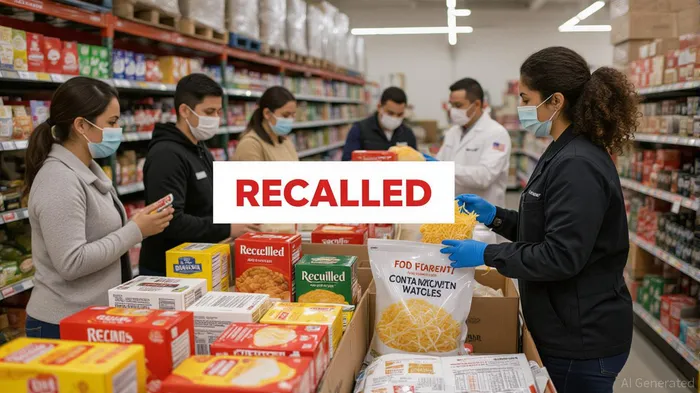 Retailers now face a dual challenge: managing immediate operational costs (e.g., product removal, refunds) and mitigating long-term reputational damage. note that such crises often lead to short-term sales declines, as consumers shift to competitors perceived as safer. For Aldi, which markets itself on affordability, the recall could strain its value proposition if shoppers associate its private-label brands with quality risks. Similarly, Walmart and Target, which rely heavily on private-label products for profit margins, may see prolonged erosion of customer confidence unless they demonstrate swift and transparent corrective actions.
Supply Chain Vulnerabilities and Strategic Adjustments
The recall has exposed systemic vulnerabilities in the food supply chain, particularly for companies like Great Lakes Cheese Co. Inc., a major supplier to national retailers. The contamination traced to supplier raw materials highlights the risks of over-reliance on third-party inputs and the need for stricter supplier vetting. In response, Great Lakes Cheese has reportedly halted or adjusted operations across nine manufacturing plants a move that could disrupt product availability, increasing costs in the short term.
For retailers, the incident has accelerated conversations about diversifying supplier networks and enhancing quality control measures. emphasizes that companies now face pressure to adopt more rigorous inspections and real-time monitoring technologies to prevent future recalls. However, such investments come at a cost. For example, Walmart and Target may need to allocate capital to audit suppliers more frequently or integrate blockchain-based traceability systems, which could temporarily squeeze profit margins. Investors must weigh these operational adjustments against the long-term benefits of reduced recall risks and improved brand resilience.
Financial Implications and Investor Sentiment
While direct stock price data post-recall remains unavailable according to a report, the broader financial implications are clear. warn that retailers could face increased operational costs from returns, refunds, and potential lawsuits. For Great Lakes Cheese, the recall may result in significant revenue losses and higher insurance premiums, though its role as a contract manufacturer for major retailers could provide some buffer if clients absorb costs.
The recall also amplifies regulatory scrutiny. The FDA's reclassification of the incident to Class II-indicating temporary but reversible health risks-signals heightened oversight of food safety practices. This could lead to stricter compliance requirements, further increasing costs for producers and retailers. For investors, the key question is whether companies can balance these regulatory demands with profitability. Those that proactively invest in supply chain transparency and quality assurance may emerge stronger, while laggards could face persistent investor skepticism.
Long-Term Investment Considerations
The 2025 recall serves as a case study in how food safety crises reshape industry dynamics. For Walmart, Target, and Aldi, the incident underscores the importance of aligning supply chain strategies with consumer expectations for safety and transparency. Companies that pivot swiftly-such as by diversifying suppliers, enhancing in-house quality testing, or leveraging AI-driven risk analytics-may attract long-term investors seeking resilient portfolios. Conversely, those that treat recalls as isolated events rather than systemic risks could face recurring challenges.
Investors should also monitor how regulatory frameworks evolve. The FDA's response to this recall could set precedents for future enforcement actions, influencing everything from production standards to insurance models. For example, mandatory metal detection systems in cheese processing facilities might become the norm, raising barriers to entry for smaller producers and consolidating market power among larger, well-capitalized firms.
Conclusion
The 2025 shredded cheese recall is more than a public health event-it is a stress test for the U.S. food retail sector. While the immediate financial impact on stock prices remains unclear, the long-term implications for consumer trust, supply chain resilience, and regulatory compliance are profound. For investors, the lesson is clear: companies that treat food safety as a strategic priority-rather than a compliance checkbox-will be better positioned to navigate future crises and sustain investor confidence. As the dust settles, the focus will shift to how retailers and producers adapt, innovate, and rebuild trust in an increasingly risk-aware market.

Delivering real-time insights and analysis on emerging financial trends and market movements.
Latest Articles
Stay ahead of the market.
Get curated U.S. market news, insights and key dates delivered to your inbox.
AInvest
PRO
AInvest
PRO



Comments
No comments yet